

One major aspect of the Second World War is the concept of the Good Neighbor, as Europe and Asia were closed off in more ways than one. Hollywood took advantage of this dynamic, of course, since all things south-of-the-border and tropical were huge trends with audiences, which brought on a shift in how Latin America and the Caribbean were portrayed onscreen. Kind of.
While it’s mainly associated with the Second World War, the phrase, “Good Neighbor Policy” was first coined by Herbert Hoover in 1928 during a goodwill tour to Central and South America and the Caribbean by way of atoning for America’s aggressive foreign policy in those regions up to that time. Among other wake-up calls, Hoover was approached by the president of Argentina, who warned him that United States involvement threatened the sovereignty of Central and South American nations. The Good Neighbor Policy was also a cost-cutting measure; it was expensive to maintain and send expeditionary forces to intervene in these various countries.

Interestingly, when Franklin Delano Roosevelt worked as Assistant Secretary of the Navy under Woodrow Wilson, he saw Latin American countries as incapable of governing themselves and the United States as, essentially, the Great Nanny.
FDR’s views evolved, though, probably because he was paying attention to what Hoover was hearing from Central and South American nations and the Good Neighbor Policy as a formal policy was adopted in 1933 after Roosevelt took office.
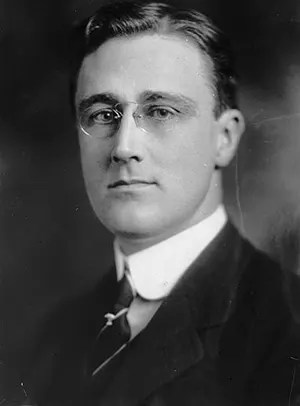
Roosevelt said in his first inaugural address:
In the field of world policy I would dedicate this Nation to the policy of the good neighbor–the neighbor who resolutely respects himself and, because he does so, respects the rights of others– the neighbor who respects his obligations and respects the sanctity of his agreements in and with a world of neighbors.
If I read the temper of our people correctly, we now realize as we have never realized before our interdependence on each other; that we can not merely take but we must give as well; that if we are to go forward, we must move as a trained and loyal army willing to sacrifice for the good of a common discipline, because without such discipline no progress is made, no leadership becomes effective. We are, I know, ready and willing to submit our lives and property to such discipline, because it makes possible a leadership which aims at a larger good. This I propose to offer, pledging that the larger purposes will bind upon us all as a sacred obligation with a unity of duty hitherto evoked only in time of armed strife.
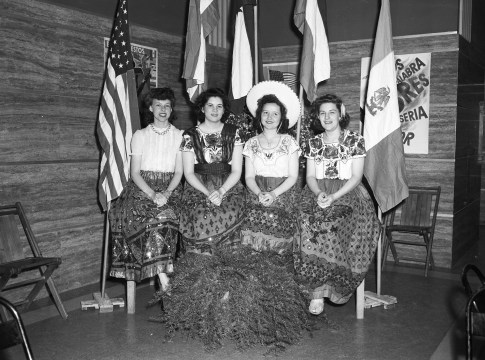
Roosevelt made good on his words by withdrawing troops from various Latin American countries such as Nicaragua in the following months and holding a “Pan-American Day” on April twelfth of that same year. Secretary of State Cordell Hull was instrumental in laying out the specifics of the Good Neighbor Policy, such as lower tariffs, and Americans were encouraged to travel to various Good Neighbor nations such as Cuba.
During the Second World War, the Good Neighbor Policy took on extra meaning. After Pearl Harbor, almost all Southern Hemisphere nations declared war on Japan and Germany out of solidarity. We were not only partners with our southern neighbors, but since they had resources we needed such as rubber, the good feelings benefited everyone. It wasn’t perfect by any means, however, as, for example, there were disagreements between the different nations about whether or not they would deport Axis nationals to the United States or not.

Hollywood benefited from the Good Neighbor Policy as well, with a rash of Latin American-themed movies and Latin specialty acts in films. On a side note, Argentina also had a thriving Good Neighbor-fueled film business, which is a whole other topic all by itself.
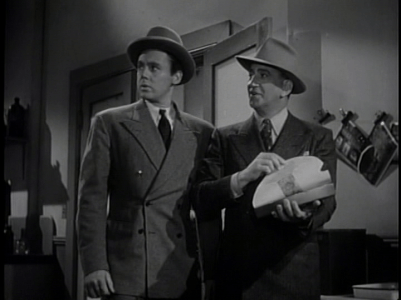
One such instance of Good Neighbor cooperation was a 1942 short film starring a young (and dark-haired) Van Johnson as American Agent Pritchard and John Litel as Chilean Subprefect Santiago Castillo, who partner up to bust an Axis smuggling ring. The short can be found in the special features section of the DVD or Blu-ray of Mrs. Miniver.
Films also promoted travel to South America, Now Voyager, That Night In Rio, Moon Over Miami, Week-end In Havana being just a few examples. Latin America was portrayed as exotic, idyllic and life-changing, not to mention tantilizingly and relatively close to home.
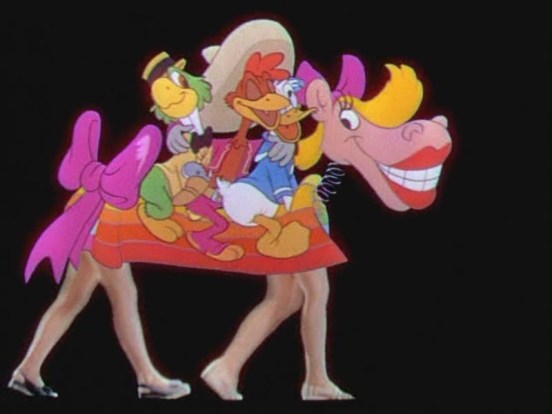
Sometimes, as in the case of The Three Caballeros, it was just plain strange and seductive.
Speaking of home, among the many beloved Spanish-speaking performers was Xavier Cugat, who was instrumental in popularizing Latin music in the United States, and in the nineteen forties he was a fixture in MGM films such as Two Girls and A Sailor, Bathing Beauty, and Week-end At the Waldorf. One of Cugat’s band singers was Lina Romay, a Mexican American and fabulous pin-up girl who was the daughter of the Mexican Consulate attache and born in New York.
Something else that was hugely popular were the Mexican Spitfire movies, about Carmelita, a temperamental woman from Mexico who marries a businessman named Dennis and comes to live with him in New York. Starring Lupe Velez, the stories got more and more formulaic as time went on, and Carmelita is always a firebrand, but there’s a lot of fun to be had.
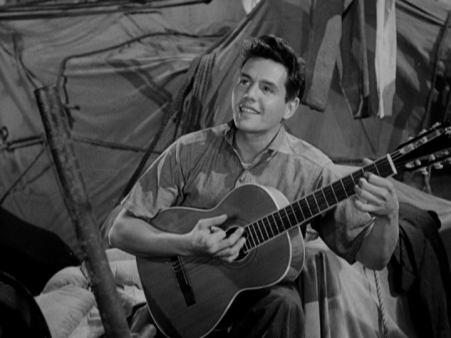
Audiences were also treated to new faces such as Desi Arnaz, who made his film debut in Too Many Girls in 1940. In 1943 he played Pat, a Cuban who joins the American Navy in The Navy Comes Through, and in addition to being a stalwart member of his crew, he entertains the men with various folk songs. When his guitar gets smashed by a Nazi shell, Pat is out for blood. “Now it’s personal,” he says.
Also in 1943 audiences were treated to the song that just might be the anthem of the Good Neighbor policy, “Good Night, Good Neighbor.” Nowadays, audiences are likely most familiar with Dennis Morgan’s rendition from Thank Your Lucky Stars, but the song was also covered by Irene Daye, who was a singer with Charlie Spivak’s orchestra.
While Hollywood’s take on the Good Neighbor Policy had its share of blesseds, its patron saint would no doubt be Carmen Miranda, the Brazilian Bombshell. Originally born in Portugal, Carmen would grow up in Rio de Janeiro and borrow her stage look from the colorful biana women so familiar in Brazil. Carmen was fun, she was an electric performer, and she always seemed to be cast in comedic roles. American audiences absolutely loved her, and rumor has it that when she made her debut on Broadway in 1939, Mickey Rooney came to see her show multiple times.
In my opinion, the quintessential Carmen Miranda and Good Neighbor film is 1943’s The Gang’s All Here. While it’s definitely Alice Faye’s movie, the film opens with a song about Brazil that segues into another song about New York, both of which spell out the joys of friendly relations:
To be sure, Latin Americans weren’t presented on equal footing with Americans. While they were exotic and very sexual, they were generally supporting players, they were often musicians, they not always given romantic roles, and unfortunately all Latin American countries were portrayed in the same way, which Latin Americans weren’t too happy about because they rightly thought their cultures were being diluted. Even Carmen Miranda, who was a big star in Brazil before becoming a big star in America, faced criticism about supposedly going tribal in Hollywood. She responded with a song, called “They Said I Came Back Americanized,” which didn’t smooth tensions all that much.
Unfortunately, almost as soon as the war ended, so did the Good Neighbor Policy for all intents and purposes, although it’s still part of American foreign policy. With Japan and Europe’s long recovery ahead and threats of neo-Naziism and Communism looming, the United States resumed its interventionist methods, bringing whole new tensions for Americans and our neighbors to the south.

Another post is coming out on Monday, and it’s a special announcement, so be sure to stop by, plus there will be the usual Substack stuff in the meantime. School is back in, things are SUPER busy, and I sleep a lot when I come home. Such is life…who can relate? See you all soon…
Now, Voyager (DVD and Blu-ray), The Three Caballeros (DVD), Two Girls And A Sailor (DVD), Mrs. Miniver (DVD), The Navy Comes Through (DVD), Weekend At the Waldorf (DVD), Moon Over Miami (DVD), The Mexican Spitfire series (DVD), Down Argentine Way (DVD), Week-End In Havana (DVD), That Night In Rio (DVD), The Gang’s All Here (DVD and Blu-ray), Stage Door Canteen (DVD and streaming) and Hollywood Canteen (DVD) are available to own from Amazon.
~Purchases made via Amazon Affiliate links found on this site help support Taking Up Room at no extra cost to you.~
If you’re enjoying what you see on Taking Up Room, please look for additional content on Substack, where you’ll find both free and subscriber-only articles. I publish every Wednesday and Saturday.
Bibliography
Friedman, Max Paul. “The Good Neighbor Policy.” Oxford Research Encyclopedias. 24 January 2018.
Friedman, Max Paul. “There Goes the Neighborhood: Blacklisting Germans in Latin America and the Evanescence of the Good Neighbor Policy.” Diplomatic History, vol. 27, no. 4, 2003, pp. 569–97. JSTOR. Accessed 15 Aug. 2023.
Inman, Samuel Guy. “The Rise and Fall of the Good Neighbor Policy.” Current History, vol. 32, no. 188, 1957, pp. 193–99. JSTOR. Accessed 15 Aug. 2023.
Mandrell, James. “Carmen Miranda Betwixt and between, or, Neither Here nor There.” Latin American Literary Review, vol. 29, no. 57, 2001, pp. 26–39. JSTOR. Accessed 15 Aug. 2023.
McPherson, Alan. “Herbert Hoover, Occupation Withdrawal, and the Good Neighbor Policy.” Presidential Studies Quarterly, vol. 44, no. 4, 2014, pp. 623–39. JSTOR. Accessed 15 Aug. 2023.
 Taking Up Room
Hi there, here’s my much belated award post … https://weegiemidget.wordpress.com/2023/08/17/news-for-sunshine-awards-and-a-blogging-recognition-award-read-on/
LikeLiked by 1 person
Ooh, nice! Thanks, Gill.
LikeLiked by 1 person
Well deserved for a great blogathon co host!
LikeLiked by 1 person