
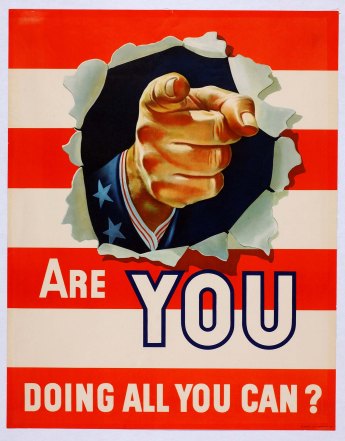
Those who were on American soil, and for that matter, Canadian soil during the war had a different kind of battle to face, as well as an odd kind of limbo. At first there were practice blackouts in major cities and fear that Japanese and German ships would make their way to our shores, but for the most part North America was insulated from the fighting.
Instead, as we all know, Americans and Canadians had to fight the day-to-day loneliness of missing loved ones overseas and seeing everyday life affected by the war. Rationing, shortages, continual urges to buy war bonds, donate to the Red Cross, and maybe even get a war job made the war pretty hard to forget even if we were relatively safe.
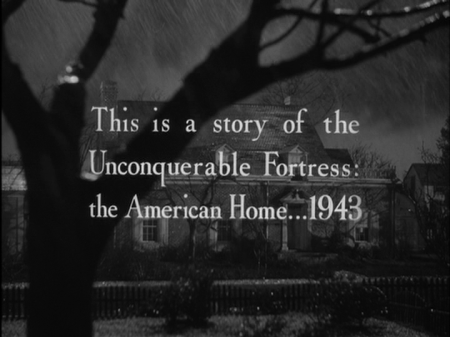
In movies, the American home was portrayed as the Unconquerable Fortress. It was the ideal. It was something to remember when far away and something to be worked towards. Seeing these films no doubt meant something different to the soldiers and civilians who saw them, but their aim was to encourage and inspire. The war may seem far away, but it’s always underneath; everything that happens to the characters in these movies is charged with meaning and they’re living on borrowed time.
It’s hard to say when the first movies about the home front began to show up, but it would have been soon after America entered the war, possibly starting with Woman of the Year, which came out in January of 1942. While that movie is fantastic, as far as the home front was concerned it only dipped its big toe in.
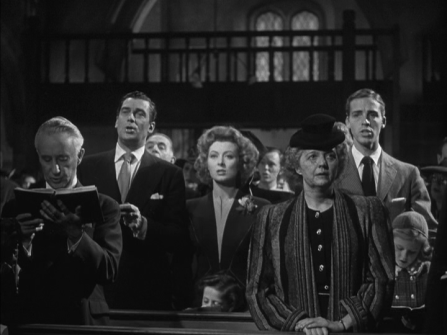
One of the first films to really portray the home front is Mrs. Miniver, whose final words were so inspiring Roosevelt had them printed up as leaflets and dropped over occupied Europe:
Surely you must have asked yourself this question. Why in all conscience should these be the ones to suffer? Children, old people, a young girl at the height of her loveliness. Why these? Are these our soldiers? Are these our fighters? Why should they be sacrificed? I shall tell you why. Because this is not only a war of soldiers in uniform. It is a war of the people, of all the people, and it must be fought not only on the battlefield, but in the cities and in the villages, in the factories and on the farms, in the home, and in the heart of every man, woman, and child who loves freedom! Well, we have buried our dead, but we shall not forget them. Instead they will inspire us with an unbreakable determination to free ourselves and those who come after us from the tyranny and terror that threaten to strike us down. This is the people’s war! It is our war! We are the fighters! Fight it then! Fight it with all that is in us, and may God defend the right!
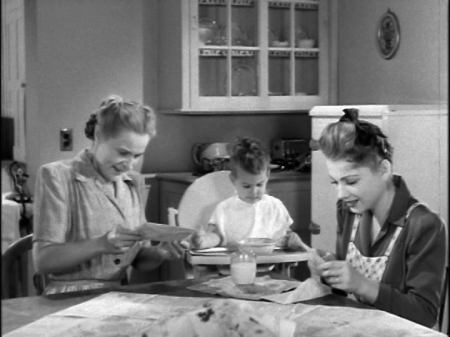
Other films such as The Clock showed how much war had sped up life for so many, with Alice and Joe’s whirlwind courtship and marriage. The Fighting Sullivans portrayed the five doomed Sullivan brothers and their family patiently waiting back home in Waterloo, Iowa.
Two other heavyweight home front movies are The Human Comedy and Since You Went Away. The former, which came out in 1943, told the story of the Macauley family of the fictional town of Ithaca, California, who patiently work, play, and sing together in the evenings. Teenager Homer Macauley (Mickey Rooney) works in the telegraph office and delivers everything from singing telegrams to death notices to servicemen’s families.
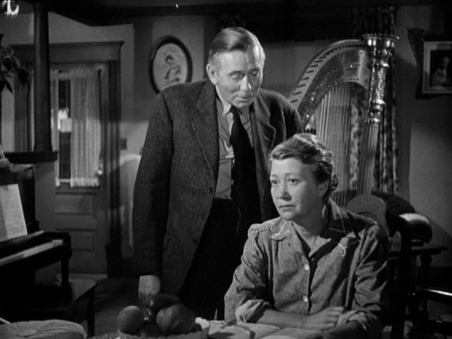
The film intersperses the Ithaca parts of the story with scenes of oldest brother Marcus Macauley (Van Johnson) dreaming of home and playing songs on his accordion with his company, including “Leaning On the Everlasting Arms.” It’s a wee bit preachy but also very compelling, and earned Mickey Rooney an Oscar nomination. It’s also said to be Louis B. Mayer’s favorite movie.
Since You Went Away, which was based on a novel by Ohio journalist Margaret Buell Wilder, released the following year, and portrays the struggles of the Hilton family, the unseen patriarch of which, Tim Hilton, has gone off to war. His wife, Anne (Claudette Colbert) and daughters, Jane (Jennifer Jones) and Brig (Shirley Temple) struggle with not only missing him, but navigating a tricky world of rationing, reality, and changing relationships.
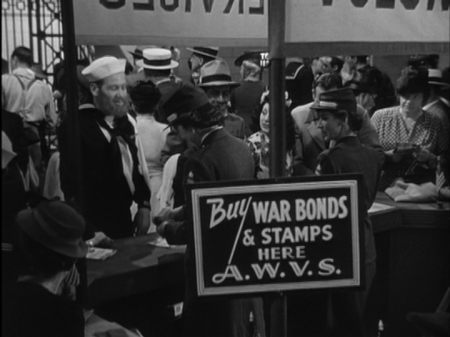
Producer David O. Selznik, who was forever trying to recapture his Gone With the Wind success, simply wanted the film to show life as it was during the war as the average person would have seen it, with long tracking shots of various anonymous people in crowds and snatches of conversation overheard.
While home front movies were, for the most part, slices of life, albeit fictional life, they were also idealized. I remember watching Since You Went Away with my mom, who was born in 1941, and she said that the film, while she liked it, didn’t reflect the pain people went through during the war. It’s not the only example; the town of Ithaca in The Human Comedy seems almost too idyllic to be real.
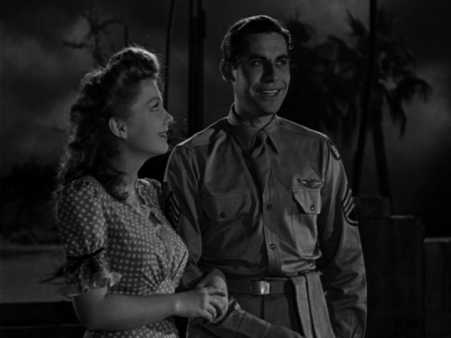
Naturally, this was due to the Production Code putting the kibosh on more direct portrayals, reducing what people really knew to passing references or cryptic allusions. Still, the films all managed to present many of the same important messages that would have resonated with the public during the war.
Make sacrifices.
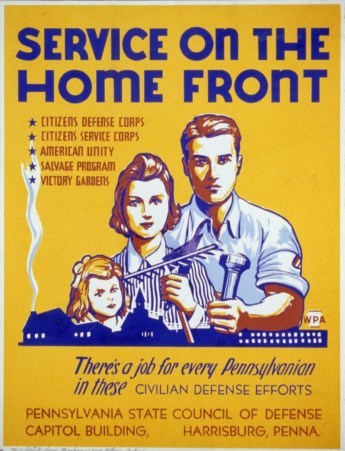
Fighting the war was a tall order. Buy those war bonds, work at that war job, hang those service stars in the window when the men in the household go off to war, expect food shortages. Make it last, make do, use it up, wear it out.
Always be mindful of the war.
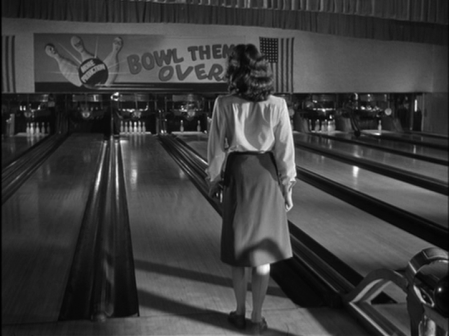
As if anyone could forget for too long, even when at the movies, or in Jane’s case, the bowling alley.
The Allies’ cause is just.
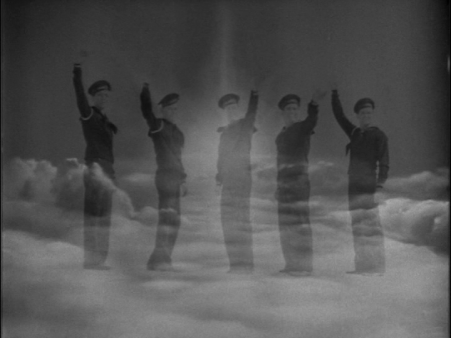
This goes without saying nowadays, but during the war it would have been a needed reminder, especially in the time when the outcome was very much in doubt.
You’re not alone.
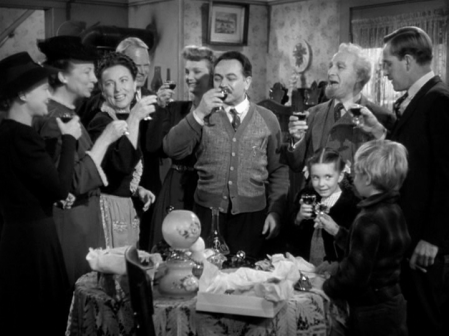
So many home front movies show its characters building community with others, whether it’s the people in their town, other soldiers in one’s company, or even former enemies. When the stuff hits the fan, real friends stick around.
We owe our servicepeople more than we can repay.
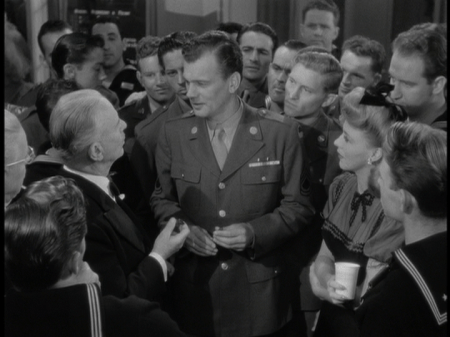
Ergo, movie audiences were to be glad to host them for dinner, serve them at their local canteens, and maybe even write to them, even if they don’t really know them. Most importantly, audiences were told to keep morally upright and preserve what had been before the war so that the soldiers had something to look forward to. Speaking of which…
Don’t sacrifice morals for the war effort.
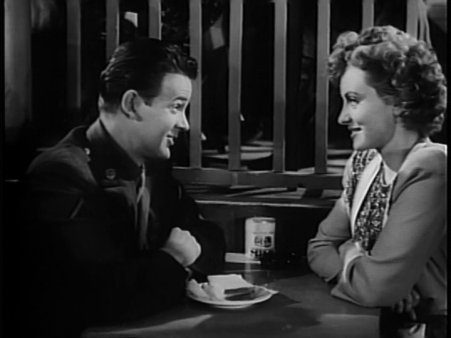
There were some shenanigans going on during the war, and that’s why, among other preventative measures, fine establishments such as the Hollywood Canteen and the Stage Door Canteen had rules about not making dates with soldiers. It was true in real life and true in the movies.
Don’t be a hoarder.
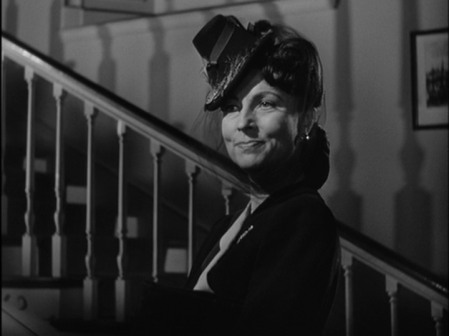
Also true in real life and true in the movies, although there were ways of preventing hoarding, usually by watchful shopkeepers and the OPA. The black market was also a thing, unfortunately and it was natural to stock up on items that were going to be rationed. Hoarding was explicitly frowned upon both on and off the screen. Exhibit A: Emily Hawkins in Since You Went Away.
People don’t have to be monetarily rich to do their part.
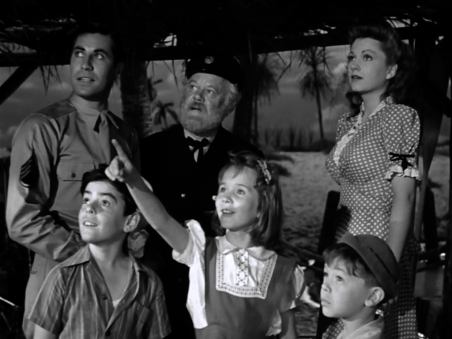
In 1944’s Sunday Dinner For A Soldier, one of the poorest families in town, the Osbournes, looks forward to hosting dinner for a soldier and finds themselves with an embarrassment of riches; namely, four fryers and, courtesy of a neighbor, chocolate ice cream.
Gangplank marriages are romantic. Let’s hope they work out.
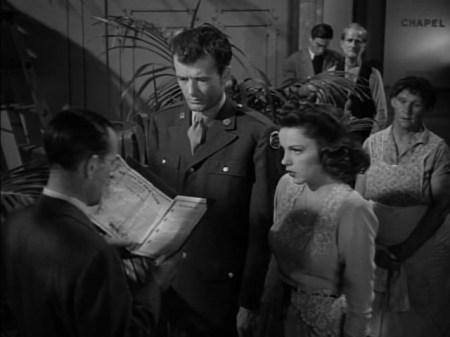
The movies were not above showing people meeting and marrying in very short order, but not without a few words of caution. Jersey and his Maisie in Stage Door Canteen were dating for two years before the war broke out, so they were in for the long haul. Rather dicey were those who married quicker, such as Joe and Alice in The Clock, who met and married in two days.
Real-life statistics reflect the pitfalls of wedding first and asking questions later: While marriage rates spiked in 1942, and even higher in 1946, divorce rates also spiked in 1946 once everyone came back and the uniforms were off.
Send loved ones off with smiles.
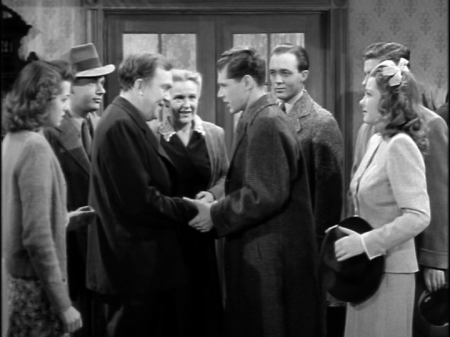
This was tough, obviously, both in movies and in life, but it was at least something to aim for.
If the worst happens, we will go on.
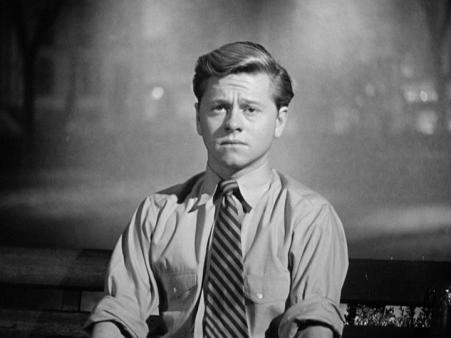
The Human Comedy spells it all out. At a crucial moment in the story, Homer’s deceased father, who also narrates the film, seems to tell him:
It’ll take a little time…for the pain…to die in you too. The part that’s only flesh, the part that comes and goes. That dying is hurting you now. Wait a little while. When it leaves you’ll find new courage and strength that’ll bring you closer than ever to the best that is in all men. You must go on. Nothing must stop you for a minute. You are what we’re fighting the war for. You are what we have left behind, to live the hopes that we have only dreamed, the matchless dreams of what man can be.
An obvious question is, how do home front films hold up today? Well, they do and they don’t. While they still may be fine films, the subject matter is naturally dated and will become more so as time passes, but to be honest, that’s one of the things I like best about them. They show a little bit of what people during the Second World War thought about and worried about and dealt with on a daily basis, so despite being mostly fiction, they’re also historic artifacts, making them very valuable from so many angles.
Another post is coming out on Saturday. Thanks for reading, all, and I hope to see you then…
The Human Comedy (DVD), The More the Merrier (DVD), Since You Went Away (DVD and Blu-ray), I’ll Be Seeing You (DVD), The Clock (DVD and Blu-ray), Sunday Dinner For A Soldier (DVD), Our Vines Have Tender Grapes (DVD) and The Fighting Sullivans (DVD) are available from Amazon.
~Purchases made via Amazon Affiliate links found on this site help support Taking Up Room at no extra cost to you.~
If you’re enjoying what you see on Taking Up Room, please subscribe to my Substack page, where you’ll find both free and paid subscriber-only reviews of mostly new and newish movies, documentaries, and shows. I publish every Wednesday and Saturday.
 Taking Up Room
One thought on “During World War Two: All the Folks At Home”