

Off we go…
I don’t know why I thought 1936’s Dodsworth was based on a Charles Dickens novel. Maybe it’s because the name sounds very British. But no, the novel was written by Sinclair Lewis, published in 1929, and includes Lewis’s favorite recurring character, the ever-dependable, ever-surprising midwestern town of Zenith (Some English BA I am).
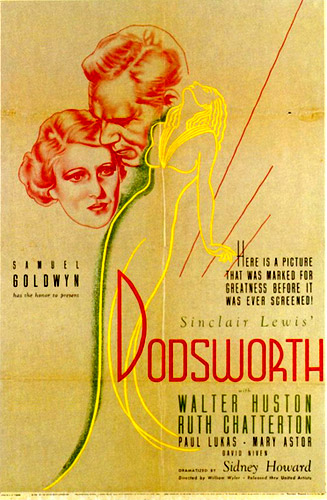
Only in this case, Sam Dodsworth and his wife, Fran, leave Zenith behind to see the world, and lose more than they bargain for in the process. Meanwhile, another character, Edith Cortwright, gains in more ways than one, both for the story and for Mary Astor, our guest of honor.
It’s slightly off-topic, but Dodsworth is the third Sinclair Lewis property I’ve come across so far and the first I’ve seen doesn’t see at least an appearance by one George F. Babbitt. He got his own novel, of couse, and he’s in Elmer Gantry for a little bit. In Dodsworth, Mr. Babbitt is nowhere to be found, maybe because he and Dodsworth are of different social classes.
But I digress.
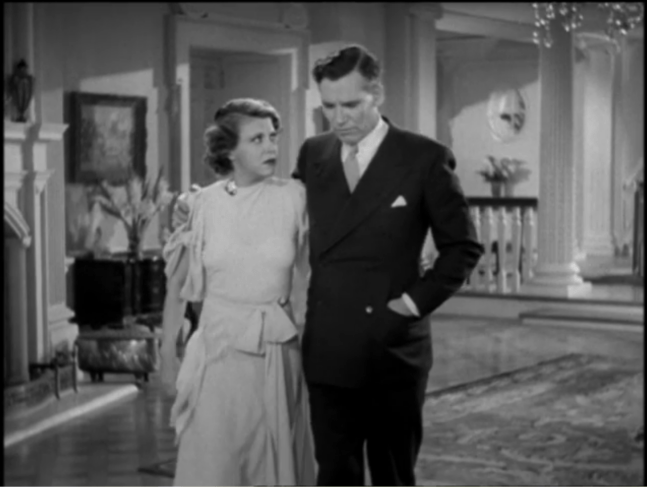
At the movie’s opening, Sam (Walter Huston) has just sold off his automobile empire and walked away from his life’s work of twenty years. His daughter, Emily (Kathryn Marlowe) is on her way back from her honeymoon with her new husband, Harry (John Payne), and Sam and his wife, Fran, are wondering what they should do with all their newfound free time.

Why, go to Europe, of course. Sam and Fran board the Queen Mary to England, where they meet all sorts of colorful characters, and not all of them have very well-defined boundaries. Captain Lockert (David Niven) is a charming fellow at first, but when he kisses Fran she puts him out of the suite she shares with Sam, feeling very guilty and tainted.
Sam, for his part, meets a divorcee named Edith Cortright (Mary Astor) who lives in Italy. Fran thinks she’s a bit aloof at first, but after the Dodsworths move on to Paris, there’s a tacit friendship going on, although Edith is a lot nicer than Fran is.
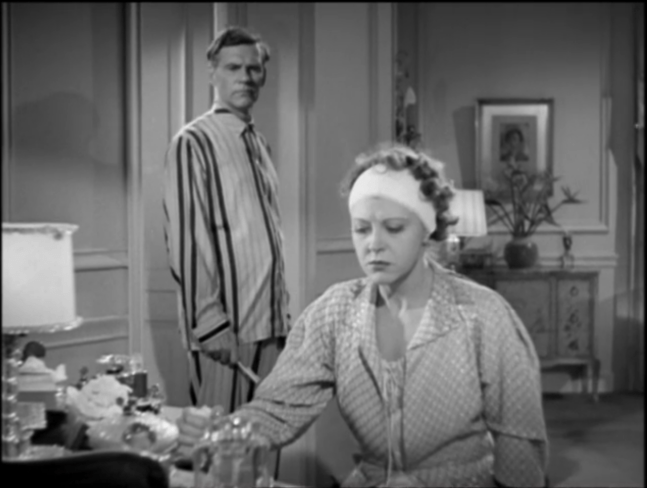
Fran, meanwhile, has met the charming Arnold Iselin (Paul Lukas) and is quite taken with him. Apparently she got over feeling icky about Captain Lockert. Anyway, Fran begs Sam to let her stay with Arnold by herself. Sam, meanwhile, just wants to go home.
Back in Zenith, Sam is glad to see his friends and vice versa, but he’s also a wee bit cranky. Fran hasn’t written all that much, and Sam finally asks one of his business associates in Europe to discreetly tail her. Long story short, Sam hightails it back to Europe, where he and Fran realize they’ve grown apart, and Fran hates the idea of getting old. She thinks she’s a woman of the world now, and not even Emily and Harry having their first child makes her want to go back to Zenith. She doesn’t want to acknowledge that she’s a grandmother, either.
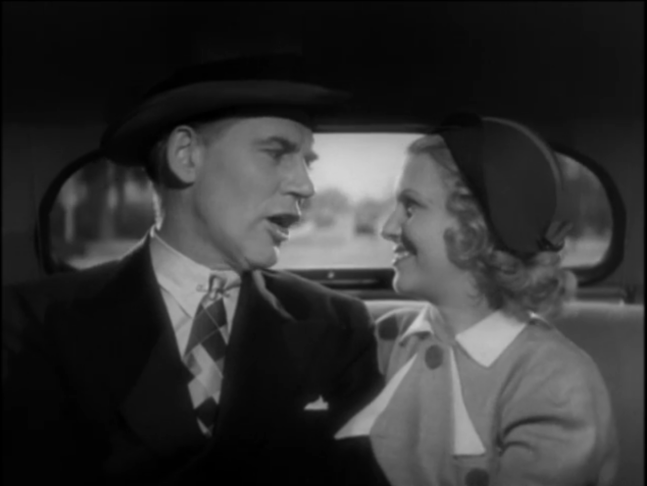
Sam goes to Edith in Italy, and Fran starts seeing a younger guy, the Baron Kurt von Obersdorf (Gregory Gaye). Divorce is inevitable, or is it? Although, it might be a blessing, at least for us viewers, because Fran gets pretty irritating and pretentious about halfway through the movie.
Dodsworth is a wonderful film, and a surprisingly frank look at relationships given the Production Code’s warnings against glamorizing infidelity. Maybe it’s because no one is portrayed in an especially bad light. They might be annoying and make dumb decisions, but there’s always the hope of redemption, or, if all else fails, retribution.
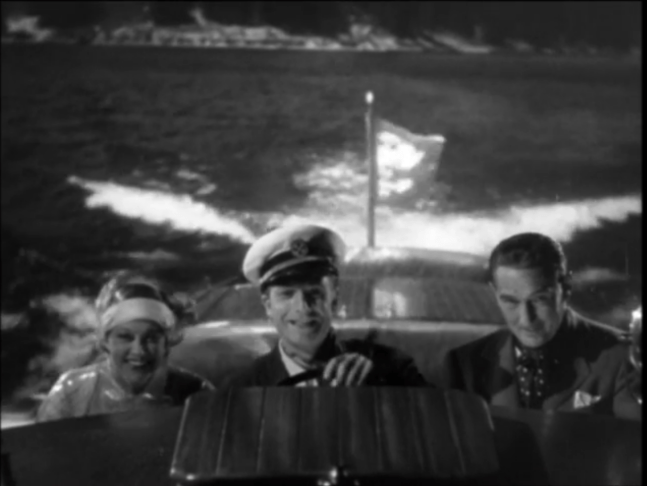
While we’re here to talk about Luso Mary Abbott’s performance in Dodsworth, her part is relatively small. She’s basically a supporting player, but no less memorable. The lion’s share of the drama, though, goes to Walter Huston’s Sam, who’s in almost every scene and plays an amazing part, recreating his role in the Broadway play. Actors like these don’t need to be told what to do so much as to be turned loose.
The reviews, of course, were enthusiastic, some almost a little too gushy. World Film News and Television Progress said, “If you have hands to clap prepare to clap them now. Here, at last, is a film worthy of one’s entire stock of superlatives. Here is a film which is so much better than every film made since the introduction of sound that I feel ashamed at wasting my enthusiasm on the others.”
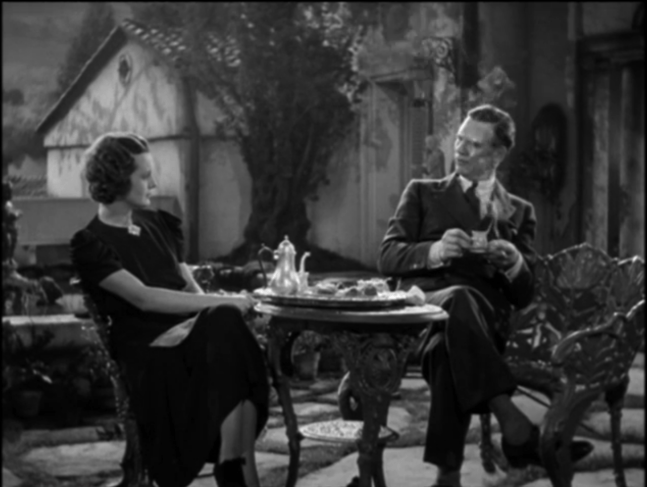
While a lot of the reviews mostly praised Walter Huston, Mary Astor got her share as well. The October, 1936 issue of New Statesman and Nation said, “If Mary Astor had done nothing else she could call herself an actress for her look of radiant bliss in the last thirty feet of this film. [It is] a look that sends this audience into the street as happy as Mr. Huston…”
Variety was similarly glowing: “Mary Astor contributes a performance so vivid and appealing and of such fine artistic merit that she seems now to be just coming into full screen maturity.”


The New York Times was also favorable: “If we had more words to use we should employ them to compliment Mary Astor for her alert and intelligent playing of the Edith Cortright rôle…”
Words like these must have been at least a little encouraging to Mary Astor, if she knew about them, because in 1936 she was in the midst of a terrible custody battle for her daughter, and what appeared to be excerpts from her diary were leaked to the press, supposedly detailing an affair with George S. Kaufman in graphic prose. Fortunately, the diary was declared inadmissible by the court and burned, and Astor won joint custody.


Through it all, Mary was shored up by her role in Dodsworth. According to TCM, Mary later wrote, “When I went into court and faced the bedlam…that would have broken me up completely, I kept the little pot boiling that was Edith Cortright.”
Unfortunately, Dodsworth is largely forgotten today, and it’s too bad, because it’s a fine piece of work that deserves to be noticed. Contributions from such stars as Mary Astor make it all the better.
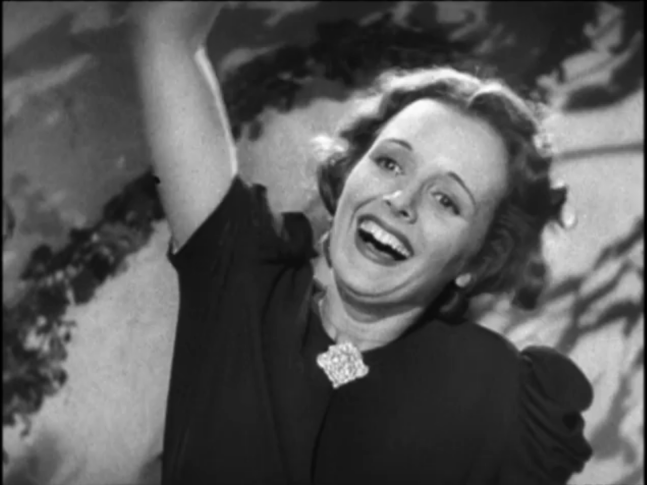
For more of the Luso World Cinema, please see Le at Crítica Retrô and Beth Ann at Spellbound With Beth Ann. Thanks for hosting this, ladies–it’s always fun to go back to Luso World! Thanks for reading, all, and I hope to see you on Sunday for another post…
Dodsworth is available to own on DVD and Blu-ray from Amazon. It is also free to stream for Prime customers.
~Purchases made via Amazon Affiliate links found on this site help support Taking Up Room at no extra cost to you.~
If you’re enjoying what you see on Taking Up Room, please subscribe to my Substack page, where you’ll find both free and paid subscriber-only reviews of mostly new and newish movies, documentaries, and shows. I publish every Wednesday and Saturday. You can also subscribe to my Club 15 Tier, which gives you at least one extra Taking Up Room post every month for a small fee.
 Taking Up Room
Glad you enjoyed this one so much, Rebecca. Terrific film with terrific performances.
I love how mature the attitude towards relationships and divorce is here. I also love that nobody is blamed or painted as a villain.
LikeLike
I agree that this film shouldn’t be forgotten. It’s incredibly good and what I like the most is that the characters are complex. Mary Astor does shine and the compliments from the press were deserved.
Thanks for joining us at the blogathon!
Le
LikeLike