

Absolute silence…
The title, “Smilin’ Through” seems to have a lengthy history. The song, “Smilin’ Through,” was written by Arthur A. Penn and published in 1919. The song is vaguely connected to a play of the same name from the same year by Jane Cowl and Jane Murfin. The play was adapted into a feature film in 1922, a paen to both the Victorian Era and the spiritualism that was so popular at the time and starring Norma Talmadge and Harrison Ford.
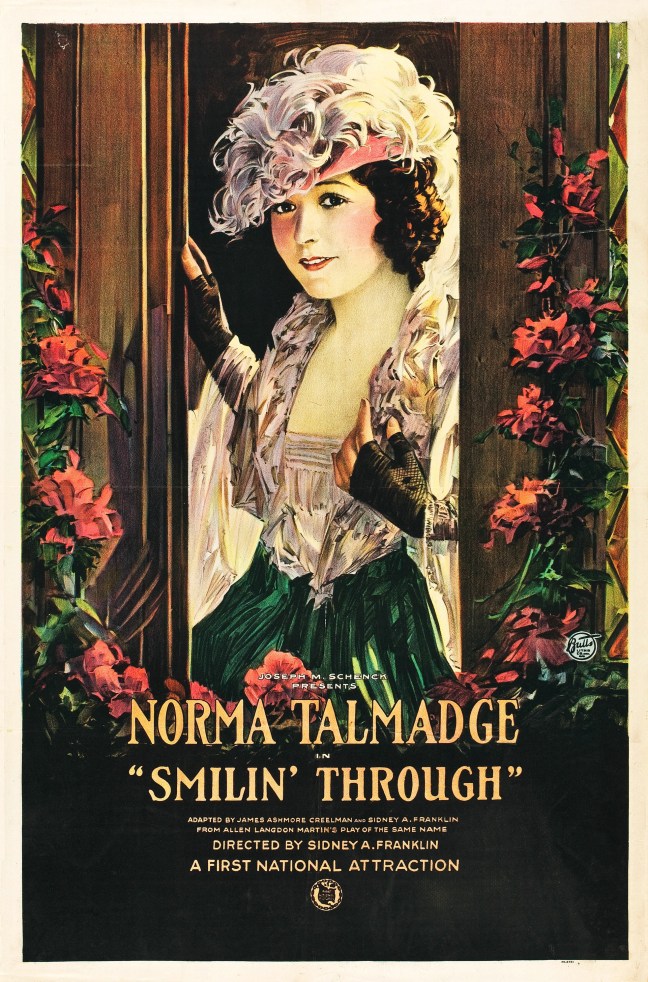
Obviously, not that Harrison Ford, of course. They’re not even related. Anywhoo…
The movie opens with an old man, John Carteret (Wyndham Standing) puttering around a remarkably spacious attic looking through his trunks and lost in memories of his wife, Moonyeen (Norma Talmadge), who died many years before. John touches Moonyeen’s wedding dress. He pores over sheet music for the song, “Smilin’ Through,” which was his and Moonyeen’s song.
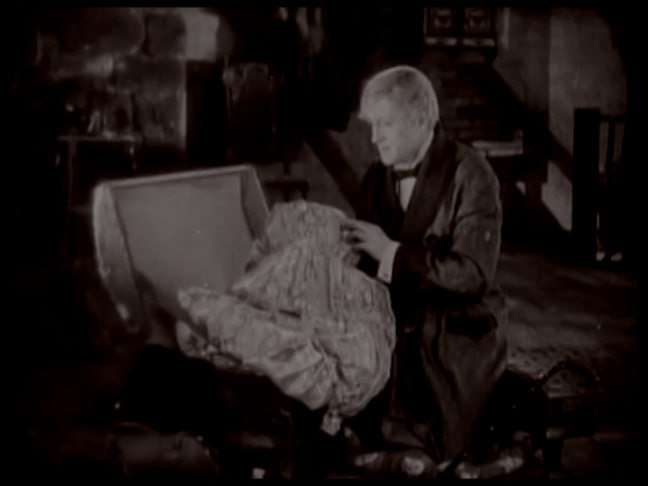
Just as things start to get the better of him, he remembers that Moonyeen still comes to him and the joy he finds as the guardian of her niece, Katherine (Norma Talmadge), whom he adopted from Ireland when she was a little girl.
Naturally, Katherine is very popular with the boys, who try all sorts of affectations to win her over. None of them impress her, and they’re mostly pretty silly, but then she meets Kenneth Wayne (Harrison Ford) at a dance. Kenneth has been raised in America but his family has property in England, and he’s come to take possession of it.
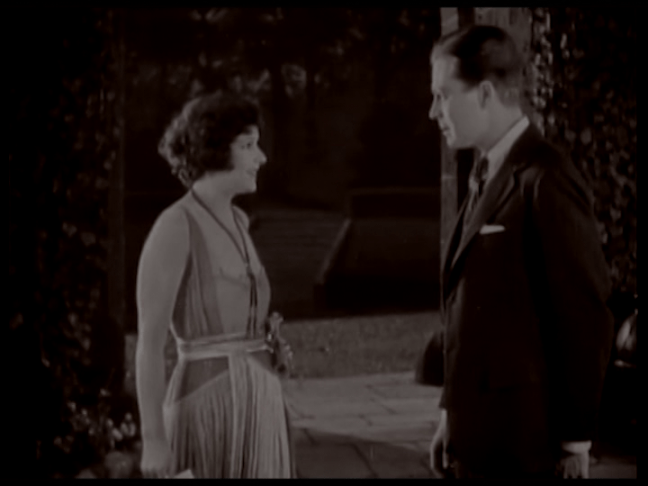
Katherine and Kenneth hit it off. The two of them stay outside and talk for hours, and when John and his lifelong friend, Dr. Owen (Alec B. Francis) find them, John isn’t too pleased because Kenneth is the nephew of Jeremiah Wayne, his old enemy. He forbids Katherine from seeing Kenneth again.
Our lovers are mystified, but they meet on the sly and fall in love. By then, it’s 1914 and the First World War has started, so Kenneth goes off to war. Before he leaves, though, he proposes to Katherine, who rapturously accepts.
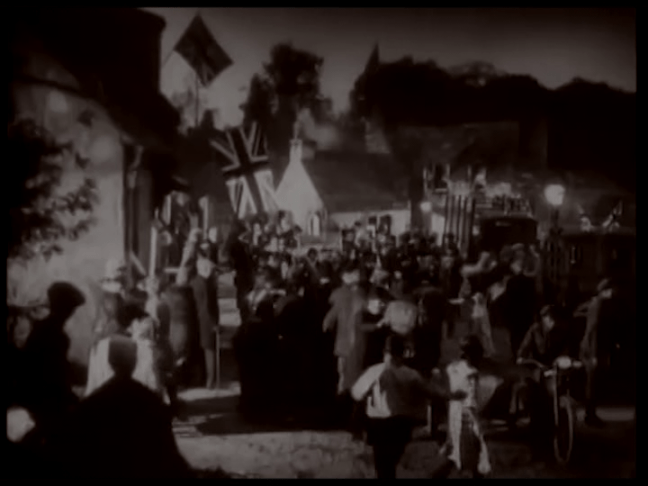
Considerably less than thrilled is John, who doesn’t want Katherine marrying a Wayne, and he won’t tell Katherine why. Dr. Owen warns John that he’s breaking Katherine’s heart, and just because he hates the name of Wayne doesn’t mean she should suffer. Katherine and Kenneth are respectful but adamant: They’ll get married when Kenneth comes back, whether John blesses the union or not.
Katherine sees Kenneth off, and when she comes back, John finally tells her his tragic tale, and he’s firmly set on the idea that Katherine and Kenneth should stay apart. I won’t ruin the story, but it involves a wedding, unbridled happiness, a jealous rival, and a tragic death. Katherine’s got a lot to think about, and it will be interesting to see what Kenneth finds when he comes back. If he comes back, that is.
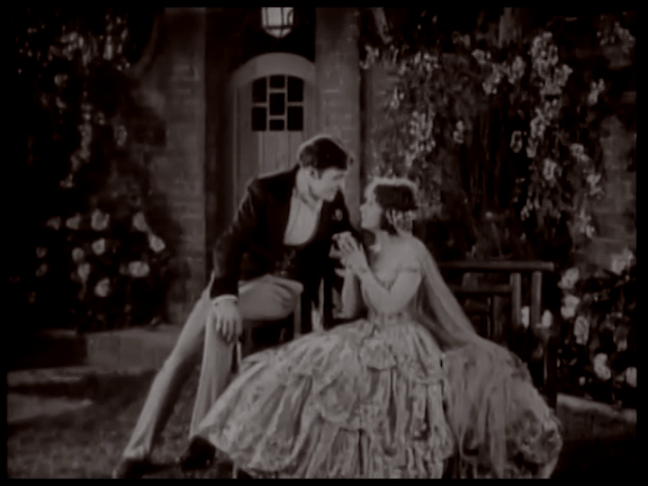
Smilin’ Through might reside firmly in the postwar Edwardian era and the early Roaring Twenties, but it’s a very Victorian film. Besides the fact that the story starts in the 1850s, it includes all kinds of elements that Victorians loved. It’s got a death scene. It’s got a jealous rival. It’s got a lifelong grudge. It’s got a bereaved individual who is so devoted to their lost love that they never remarry and spend their life in solitude. It’s got deep and sustained mourning.
It’s also heavily spiritualist, which was a big trend for a while in the Victorian Era. John has a doll likeness of Moonyeen that he takes with him out to the garden, and Moonyeen’s spirit appears to him there as well in his dreams.
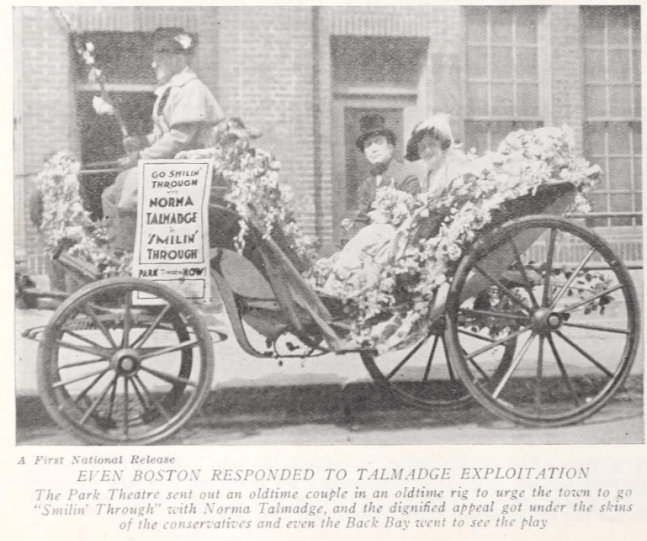
Yikes, that doll. I get that Victorians held tightly to any tangible evidence of their loved ones, but the doll thing is a little creepy. It’s like Pygmalion in reverse.
It also reminds me of Mary Todd Lincoln after her husband was murdered. She had long practiced spiritualism, and even had seances at the White House. After Lincoln died, Mary had what was called a “ghost photo” created, in which it appeared that Lincoln was standing behind her with his hands on her shoulders as she posed in her widow’s weeds. The photo was fake, of course, possibly achieved via double exposure, but no one knows for sure.
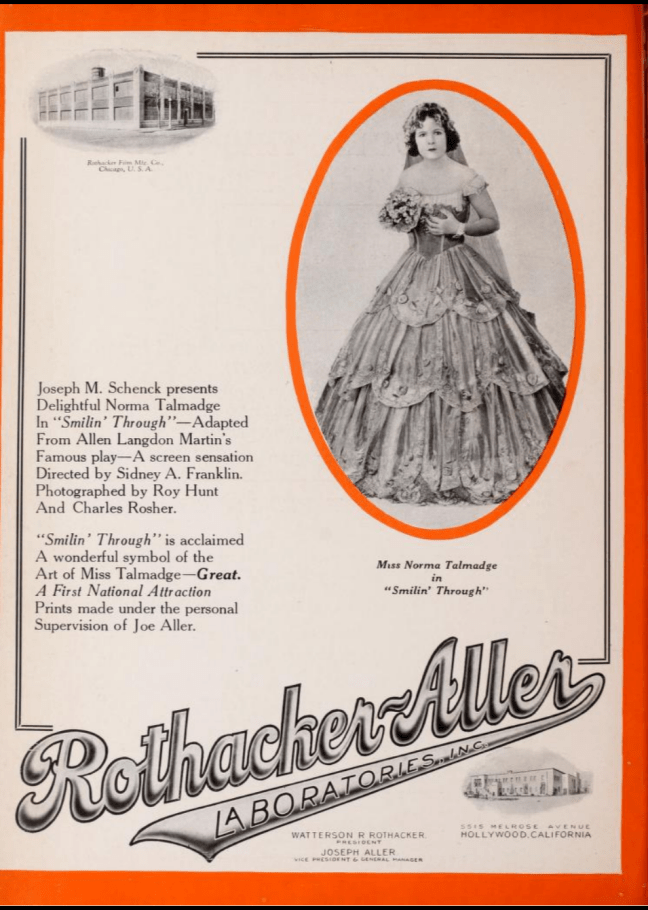
Mary would have been right at home in the world of Smilin’ Through. Spiritualist elements aside, though, it’s a pretty, graceful, entertaining movie, with some impressive composite shots. It was also highly successful at the time of release, although one review called it “pretentious,” and theaters had fun promoting the film. Mary Pickford was a big fan as well, as was Sir Arthur Conan Doyle.
As much as I liked the film, my experience fell short in that my copy is a really awful unrestored transfer from the notoriously cheap Alpha Video. Some scenes are barely visible. The score isn’t great, either, as it’s often the same four notes in a continuous loop, sometimes for twenty minutes on end. The scene might change and the music might change, but no matter what, it’s the same four notes in a continous loop. It was cringe-y at first, but after a while I blocked it out.


Fortunately, there’s a gorgeous restored version out there courtesy of the Eye Filmmuseum, with vivid tinting in every scene, and this helps tremendously. The intertitles are in Dutch, though. Oh well. Thank goodness for subtitles, because Smilin’ Through is an enjoyable watch.
For more Silent Pioneers, please see Maddy at Classic Film and TV Corner. Thanks for hosting, Maddy–this was great! Thanks for reading, all, and I hope to see you on Tuesday for a new Julia Child post…
Smilin’ Through is available on DVD from Amazon. It can also be seen on YouTube.
~Purchases made via Amazon Affiliate links found on this site help support Taking Up Room at no extra cost to you.~
If you’re enjoying what you see on Taking Up Room, please subscribe to my Substack page, where you’ll find both free and paid subscriber-only reviews of mostly new and newish movies, documentaries, and shows. I publish every Wednesday and Saturday. You can also subscribe to my Club 15 Tier, which gives you at least one extra Taking Up Room post every month for a small fee.
 Taking Up Room
Thanks for writing about this movie!
I really wish more of Norma Talmadge’s films were available. She was one of the biggest movie stars in the world between 1918 and 1928, and now so few remember her. The work I have seen from her is intriguing. You can see why SMILIN THROUGH in particular was such a favorite with her public: it’s sentimental and touching.
LikeLike
You’ve piqued my interest with this one, Rebecca. Will keep an eye out for it. It sounds very poignant. Shame about the quality of the version you watched though.
Thank you so much for joining. I’m glad you’ve enjoyed it so much.
Maddy
LikeLike
Those Victorians loved big ticket plot items, didn’t they? Death! Revenge! Jealousy! Love! Ghosts! I’m looking forward to this one. Thanks for sharing this review.
LikeLike
Love you to join Barry and me…
LikeLiked by 1 person
Thanks, Gill! I’ll take a look. 🙂
LikeLiked by 1 person
Cool, looking forward to seeing your choice.
LikeLiked by 1 person