
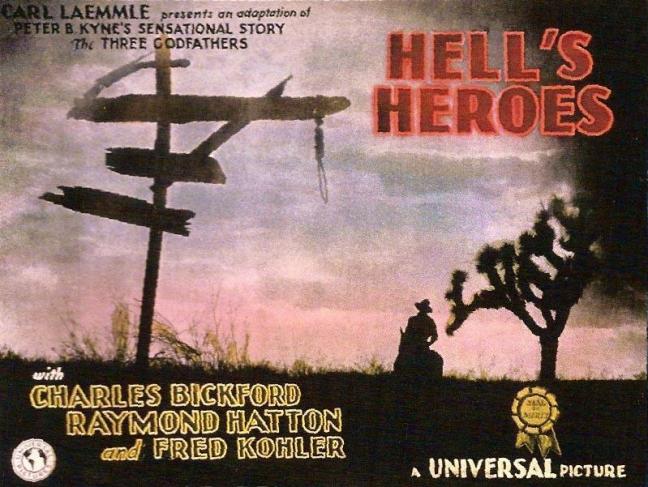
Who’s been to Bodie? We’ve talked about this infamous ghost town before, and it’s only natural that such a picturesque place would be fodder for film crews. The 1929 movie, Hell’s Heroes was not only one of the first, but the only known feature film to show Bodie prior to the 1932 fire that left only ten percent of the town.
The movie opens with three guys, José (Joe De La Cruz), Tom “Barbwire” Gibbons (Raymond Hatton), and Bob Sangster (Charles Bickford) riding around in the desert with Barbwire playing “Oh! Susanna,” on his harmonica. They’re on their way to New Jerusalem, which, according to the sign, is a Bad Town For Bad Men, and just to punctuate the tagline, there’s a noose swinging merrily in the desert breeze.
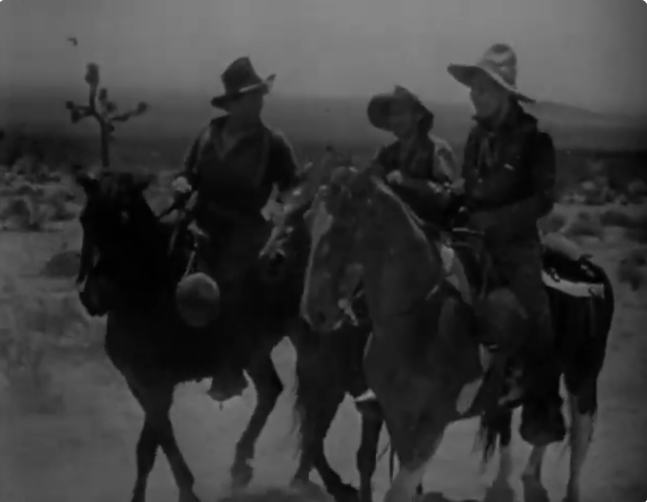
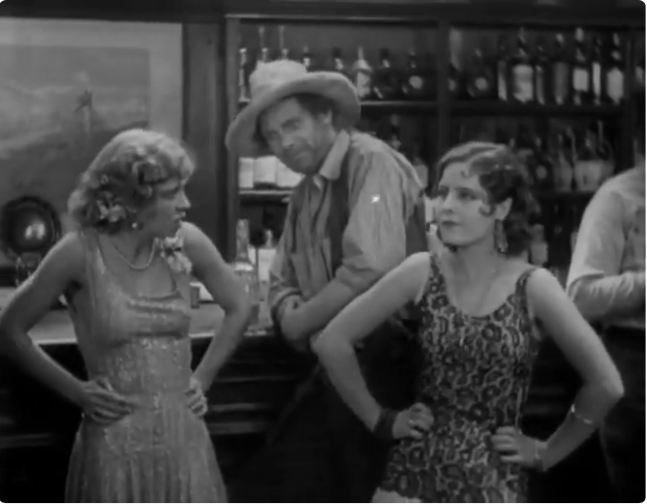
Our three heroes ride into town because Bob wants to see his girlfriend, Carmelita (Maria Alba), who’s a dancer at the local saloon. Bob and Carmelita like slapping each other around. Don’t ask why. Well, among other things, Carmelita has a little jealousy problem, and if she slaps Bob he slaps back. It’s disturbing, even if it always ends with a hug.
Since our three guys are supposed to be bad men, they rob a bank and shoot the teller, after which they hightail it out of New Jerusalem, only to return on pain of death. They cover a remarkable stretch of ground in a short amount of time, and forty miles outside of New Jerusalem they figure they’re safe.
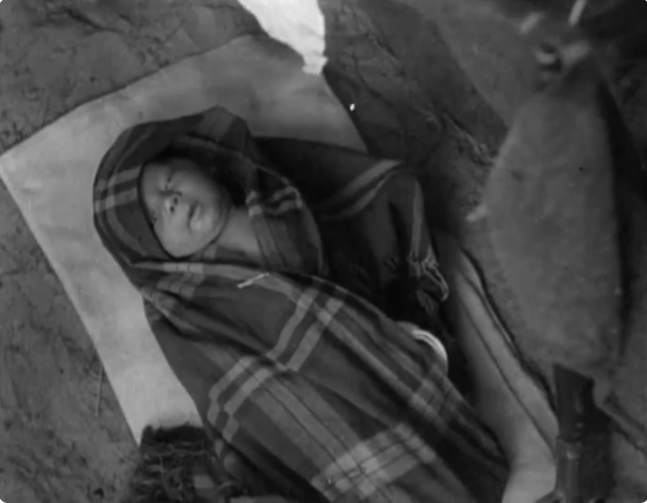
Then they come upon a woman in an abandoned covered wagon who’s giving birth. The horses are gone, the rest of the wagon train is gone, and she’s stuck by herself. Our three Bad Men have enough finesse to stick around and help her, and she gives birth to a little boy. After agreeing to take the baby to his family in New Jerusalem, Bob, Barbwire, and José realize the baby’s dad is the teller they just murdered.
Oops. Well, that’s awkward.
A promise is a promise, though, and so the guys set out for New Jerusalem. Problem is, it’s forty miles away, their horses have wandered off, and they’re low on water, so getting back to civilization is a slog. Then Barbwire dies. And José leaves because he knows there isn’t enough water for all of them. Bob is the only one left. His only water source is full of arsenic, and we know that because there’s a sign posted next to the little puddle of bad water.
With no other options, Bob figures he’ll take his chances with the arsenic-laced water, gulps a whole lot, and keeps staggering towards New Jerusalem with the baby, who’s remarkably quiet and docile considering the unusual conditions.
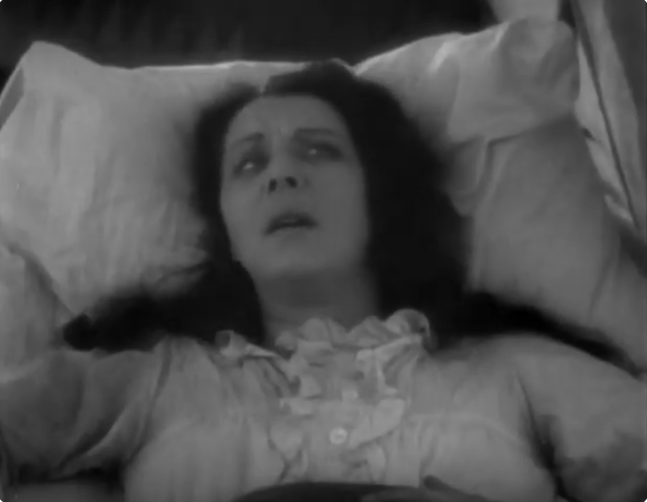
Hell’s Heroes is based on a 1913 short story, The Three Godfathers, and stays pretty close to the source material in most respects. The biggest difference is the ending, which has Bob handing the baby off to a female hurdy gurdy player. The film’s ending is a bit less pretty although relatively more respectable, with (spoiler alert) Bob staggering into a church and dying in front of the altar, the baby safely delivered.
It could have been a lot worse, though. Director William Wyler’s original ending had poor Bob getting ready to be strung up the minute he got into town and who knows what happens to the baby.
Hell’s Heroes is a lot like other very early sound films. The dialogue is a bit stilted, not only because of the limits of the primitive recording equipment, but because everyone had to be really, really careful of other sounds getting picked up by the mics. The crew, for instance, had to stay completely silent during shots and there were mics hidden in the sagebrush while a dozen men pulled an improvised sound booth along on tracks. However, the finished product paid off.
Charles Bickford is the especial standout among the actors, because in the late 1920s he was already a very respected stage player. Later on, as we film buffs know, Bickford would be known as a steady character man, playing priests, executives, and other dependable individuals, so for us today it might be unusual to see him playing a scoundrel.
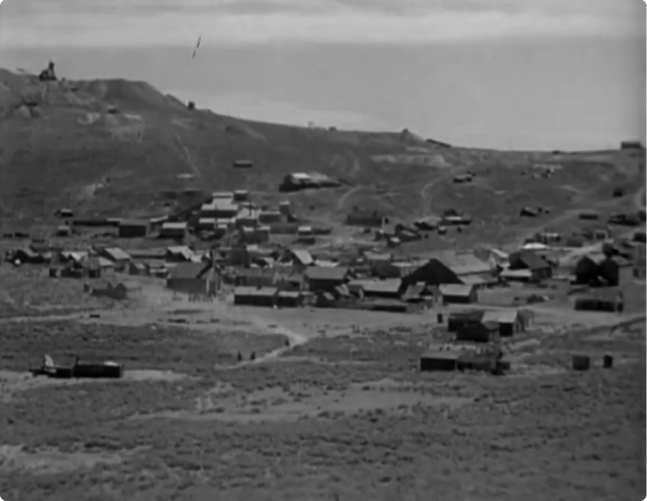
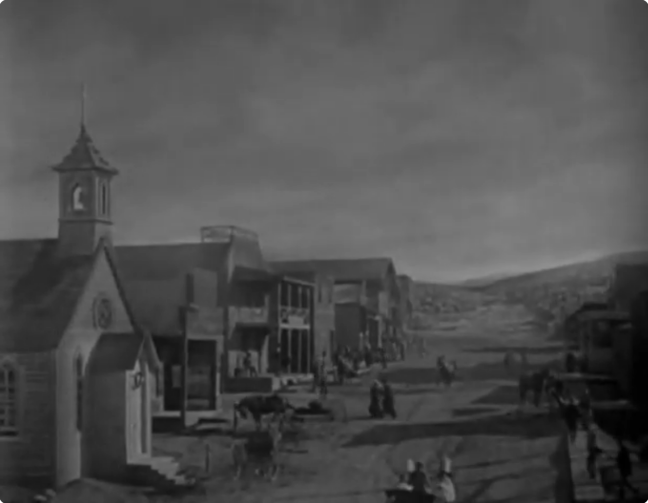
Bodie is showcased pretty well, although it’s doubtful any of the interiors were used. We do, however, get a pretty good look at the outside of the Methodist Church. At the time of filming, Bodie had one-hundred twenty residents and most of the town was owned by the Cain family, whose former residences now house California State Park rangers.
The film was a huge success, pulling in a respectable seventy-seven million dollars in today’s money, and none of the reviews had anything really negative to say about it. In fact, the reviews were downright gushy, using such adjectives as “powerful drama,” “the most impressive picture,” and “the hardest-hitting talkie.” The January 25, 1930 edition of Universal Weekly said, “If we are to have talkies then by all means let us have good ones. “Hell’s Heroes” is one of the very few good ones we have seen, since this new medium has been devised.”
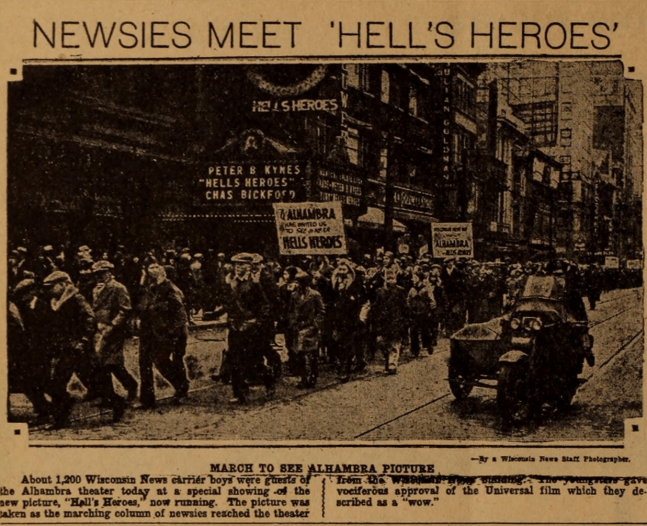
The January 18, 1930 issue of Hollywood Filmograph lavished praise as well:
Its photography is of a masculine beauty seldom equaled. Its story is forceful, although not of the usual motion picture type. Its acting is powerful and fine. Its direction is intelligent. Its dialogue is live and real.
Charles Bickford — Raymond Hatton — Fred Kohler. It is doubtful if in the whole galaxy of motion picture artists a better trio to play the three bad men who sacrificed their lives to save a baby of a man they had killed, could have been found. They all gave perfect performances, with Hatton perhaps a shade in the lead. They were great.
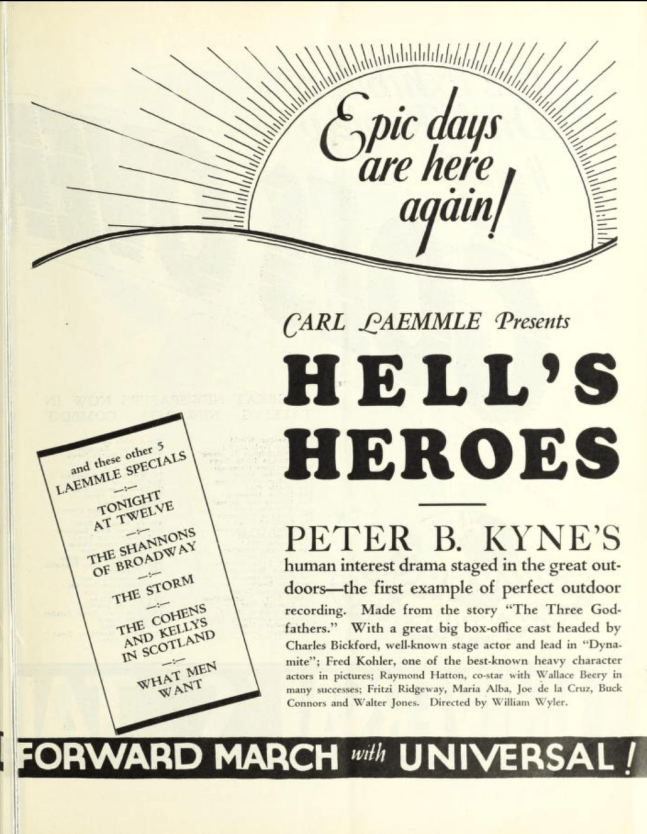
Marguerite Tazelaar of the New York Herald-Tribune said, “HELL”‘S HEROES has something new and original in its method of telling a story in dialogue set entirely out of doors…”
They weren’t wrong. Hell’s Heroes became such a touchstone of the early talkie era that other movies such as Destination Unknown and Undertow were compared to it and in 1930 Universal released a pretty awful animated parody entitled, “Hell’s Heels” starring Mickey Mouse knockoff, Oswald the Lucky Rabbit.


Seen today, we might not gush as heartily over the idea of filming a talkie outdoors, but Hell’s Heroes is definitely a landmark achievement, and the novelty of seeing a little bit of Bodie in the early twentieth century is off the charts. While other productions have filmed there since, some things just can’t be recreated.
Another post is on the way Tuesday. Thanks for reading, all, and have a good one…
Hell’s Heroes is available on DVD from Amazon. It’s also available to stream on YouTube.
~Purchases made via Amazon Affiliate links found on this site help support Taking Up Room at no extra cost to you.~
If you’re enjoying what you see on Taking Up Room, please subscribe to my Substack page, where you’ll find both free and paid subscriber-only reviews of mostly new and newish movies, documentaries, and shows. I publish every Wednesday and Saturday. You can also subscribe to my Club 15 Tier, which gives you at least one extra Taking Up Room post every month for a small fee.
 Taking Up Room
I almost got to Bodie twenty years ago. One day.
LikeLiked by 1 person
I hope you can someday! It’s amazing. I went once in the eighth grade and have been itching to go back ever since.
LikeLike