
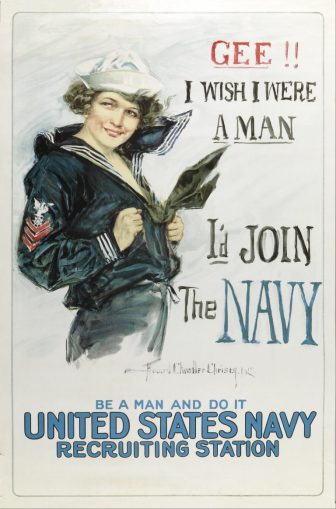
Believe it or not, World War One nostalgia was big during World War Two, or at least Hollywood tried to make it that way. Shocking, right? My parents were both little kids during the war and even they were shocked when I told them, but it was a legit thing, although it’s not often talked about by historians.
Why would Americans, who were embroiled in a massive worldwide conflict with the highest of stakes, look back with fondness, or look back with any kind of feelings besides horror and sadness, on another massive conflict that cost the lives of thousands of men and wounded or disfigured thousands more?

In researching these questions I couldn’t nail down any concrete answers, but what became immediately clear was that the First World War seemed like a constant topic of conversation in print media and so on during the early nineteen-forties. What makes this even more interesting is that, according to some historians, there was a concerted effort to sweep the First World War under the rug during the twenties and thirties.
I don’t know if I quite agree with this assessment, though, because there were plenty of cultural depictions of the war in books and film during the twenties and thirties (see a complete list of First World War movies here), although they weren’t always very popular. Either way, the war wasn’t completely gone from the public’s collective mind. We may have looked carefree in the twenties and careworn in the thirties, but life is never that simple.
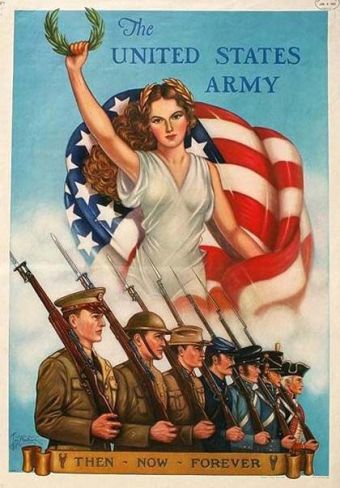
So what would make people want to look back? As I read the various bits published during the Second World about the First, and thought about the movies made about the First World War during the nineteen-forties, a few points stuck out:
The First World War wasn’t so far off and it may have seemed like a simpler time.
I may be just spitballing here, but this point seems kind of obvious. When the Second World War started in 1939, the First World War was only twenty-one years in the past. A lot of the people who were young and maybe serving in the First World War were now deep into whatever their lives had become since the war had ended, and they may have felt nostalgic about their younger days. It’s a very natural thing to do as we all know, even if our younger days coincide with a terrible time in history.
My question is, though, since the United States was only in the First World War for a year, did that change the way we were affected by it personally? At least on the surface, this seems likely because we didn’t lose as many men and the cost we ultimately paid was therefore much lower than nations such as Britain, Canada, Germany and France, who saw so many men killed that young adults of that time became known as the “Lost Generation.”
People were interested in how technology and the world itself had changed since 1918.


Another no-brainer, this topic was constantly in the media during the Second World War because there was such a sea change in how each war was fought. Airborne warfare and radio communication, for instance, were both in their infancies during the First World War, and by the Second we had B-17s, Norden bomb sights, sophisticated radios for talking across the miles, and lightweight but intricate aerial cameras.
There was also a clear purpose to the Second World War, whereas the first one was constantly debated because no one was ever really sure why we were fighting it other than political tensions between Balkan nations and other nations of Europe.
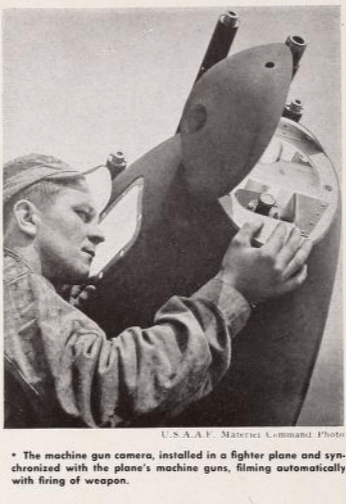
In addition, Radio and films were being recognized for their emotional impact and expediency in delivering propaganda during the Second World War as opposed to the First. Sherman H. Dryer in his 1942 book, Radio In Wartime, said this:
The first World War was a paper and ink war. The technicians were journalists. Newspaper policies, attitudes, standards and prejudices dominated the strategy of propaganda and its execution. The best job was one told briefly, factually, occasionally “documented” with photographs, real or faked. The ingenuity of the technicians was usually applied not to how information should be told, but to what should be told. They originated slogans, wrote feature stories, and in the area of atrocities went on imaginative sprees…But World War II demands some different standards for propagandists. The movies and particularly the radio have entered our lives…This war is not a paper and ink war. It is more than anything a war of spoken words, and the packaging of words in the paraphernalia of broadcasting. Perhaps it would be more accurate to say this is a war of sounds — the human voice set on a stage of music, sound effects and other devices. Already the radio has arrogated to itself what was in the first war the exclusive service of the press — the dissemination of news. (Dryer, pgs. 92-93)
There was very likely a certain amount of guilt associated with what happened after the First World War.
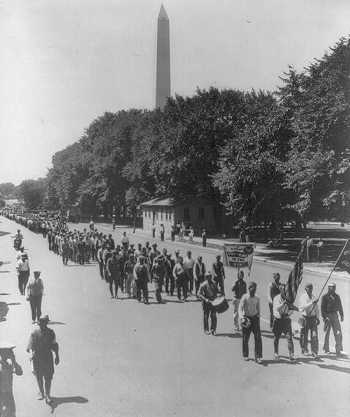
There was a sense, especially as the thirties went on, that the Treaty of Versailles was only a temporary solution, and so a shadow of future conflict hung over the world. Back home, there were promises made to the men who fought in the First World War that were not fulfilled. They thought they were coming home to a better life and would be paid back for their sacrifice.
Instead, the world saw one of the most decadent, licentious decades in living memory, the nineteen-twenties, followed by the stock market crash on October 29, 1929 and then one of the most stringent and uncertain yet possibility-driven decades, the nineteen-thirties.

Meanwhile, the men who fought in the First World War had trouble finding jobs, as many of them came back to find the jobs they’d done before their time overseas were no longer available to them. They had also been promised a hefty bonus of around a thousand dollars to be payable in 1945, with the ability to borrow against that amount until then starting in 1927.
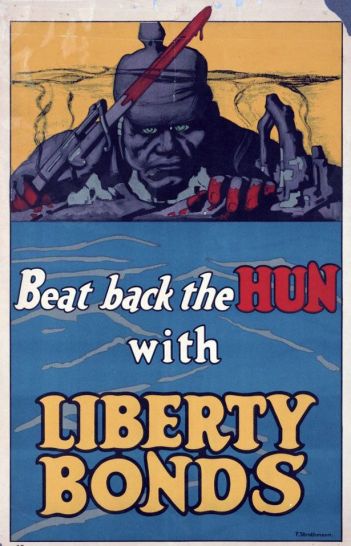
Long story short, after the stock market crash, the tense financial situation made honoring these agreements impossible, and from May to July of 1932 thousands of veterans set up camp in Washington, D.C. for what was called a Bonus March. Unfortunately, they ended up being forcibly evicted by police and Army troops, with the Bonus March being one of the direct reasons Herbert Hoover lost to Franklin Delano Roosevelt in the next election.
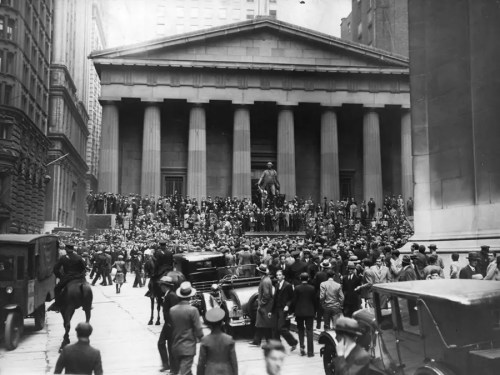
Americans may or may not have wanted to think about the First World War, but it was pretty hard to avoid. Hollywood didn’t mind helping out in that regard, though, and here are a few of the World War One-themed films of the Second World War period.
The Roaring Twenties (1939)
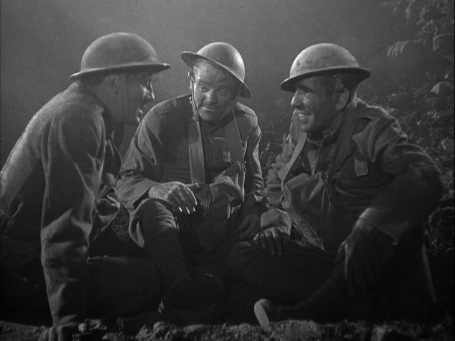
The First World War is the impetus for this excellent buddy-turned-enemy drama starring James Cagney, Humpherey Bogart, and Priscilla Lane. I’m not going to ruin anything, but suffice it to say, one of the characters takes great delight in watching enemy soldiers get blown sky high and the other one doesn’t. It sets up a lot for these characters as time goes on. The film also delves into the trouble many soldiers had finding jobs and adjusting to civilian life once they came back from the front. Read my review here.
The Fighting 69th (1940)
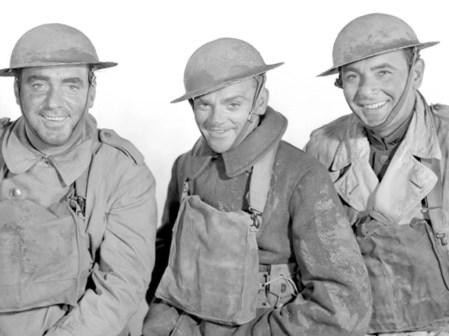
I saw this movie a really long time ago, probably right around the time I first saw Yankee Doodle Dandy, and it’s one of the movies that got me interested in Hollywood, as it features James Cagney, an actor I was already familiar with. Cagney plays Jerry, a scrappy, rebellious fellow who hates following orders to the point that it costs his company dearly on the front, but eventually he gets a clue and redeems himself.
Sergeant York (1941)
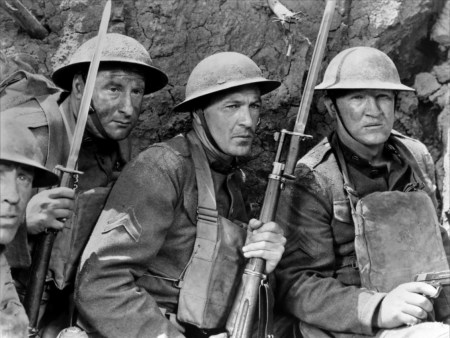
The Warner Bros. tour-de-force about the great war hero, Alvin C. York, Sergeant York not only portrays a wonderful story about a great man, but it also helped sell the idea of Americans protecting their homeland so that everything they loved could remain and thrive. York did cause some controversy because America was still committed to isolation at the time of its release, but it also did extremely well at the box office. According to TCM, Gary Cooper was the real Alvin York’s choice to play him onscreen.
Yankee Doodle Dandy (1942)
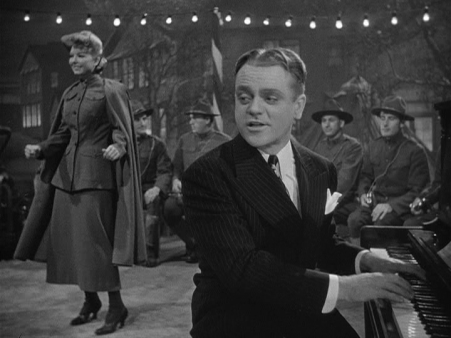
Yet another Cagney vehicle, Yankee Doodle Dandy is, of course, the famed biopic about George M. Cohan. The film shows Cohan attempting to enlist in the Army when the United States entered the First World War, but he’s too old to go. Instead, he writes the jaunty, rousing classic, “Over There,” which was sung by Frances Langford as Nora Bayes. The film does an effective job of bridging the First World War with the Second, as it ends with troops going off to war singing “Over There,” with a gratified Cohan marching alongside the parade. Read my review here.
For Me And My Gal (1942)
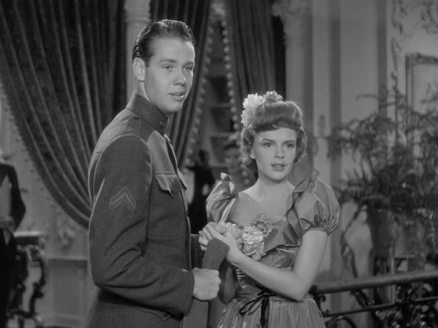
For Me And My Gal was in the thick of the First World War, as much of the story is driven by Jo’s brother, Danny going off to war, and her friend, Jimmy following. Audiences in 1942 must have felt a pang when Jo said goodbye to Danny at a restaurant, with everyone looking after him wistfully, because they were no doubt thinking about sending their own men off. For Me And My Gal was Gene Kelly’s first movie credit, and his character, Harry, had to be toned down a bit because test audiences thought he was too unsympathetic and were galled by his deliberate attempts to avoid going off to war. Read my review here.
This Is the Army (1943)
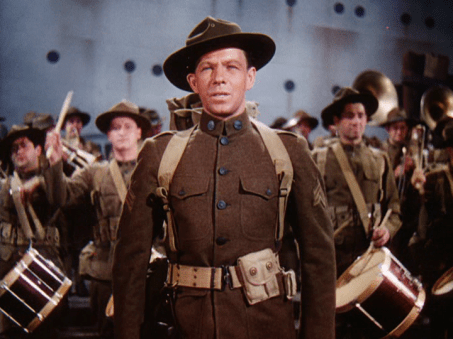
Roughly half of This Is the Army was devoted to Irving Berlin’s World War One soldier show, Yip Yip Yaphank, which was directed by Berlin’s heavily fictionalized onscreen counterpart, Jerry Jones, played by George Murphy. The film, while showing bits from the soldier show and from the battlefield, seems to idealize the First World War just a little bit, with the former members of the Yip Yip Yaphank at a reunion reminiscing and telling each other, “It was a pretty good war, the old war.” Read my review here.
Wilson (1944)

A highly fictionalized and romanticized portrayal of Woodrow Wilson’s life and presidency, Wilson received poor press, although many critics loved it, and lost two million dollars for 20th Century Fox. On the bright side, the Princeton-Yale football game scene features some of the strangest-looking football gear ever put on the screen.
Not every movie portrayed the war as heroic, however. 1945’s The Pride of the Marines showed a certain cynicism about that time in light of what many were concerned about as the Second World War drew to a close. There were jokes about a second Bonus March and worries about combat veterans being cast out by a society that no longer had places for them. However, that’s a topic we’ll get into on another day.
The Sixth So Bad It’s Good Blogathon comes up on FRIDAY, all. Thanks for reading, and I hope to see you then…
The Roaring Twenties (4K, DVD and Blu-ray), Sergeant York (DVD and Blu-ray), The Fighting 69th (DVD), This Is the Army (DVD and streaming), For Me and My Gal (DVD and Blu-ray), Yankee Doodle Dandy (DVD), Wilson (DVD), and The Pride of the Marines (DVD) are available to own from Amazon.
~Purchases made via Amazon Affiliate links found on this site help support Taking Up Room at no extra cost to you.~
If you’re enjoying what you see on Taking Up Room, please subscribe to my Substack page, where you’ll find both free and paid subscriber-only reviews of mostly new and newish movies, documentaries, and shows. I publish every Wednesday and Saturday.
Bibliography
Dryer, Sherman H. Radio In Wartime. New York: Greenberg Publishers, 1942.
Licursi, Kimberley J. Limay. Remembering World War One In America. Lincoln, Nebraska: University of Nebraska Press, 2018.
 Taking Up Room