
President Kennedy, I presume…
The assassination of John F. Kennedy is one of those events that made such an impact, everyone who was alive and aware during that time remembers exactly where they were and what they were doing when they first heard about it. While there’s no way to recreate that time exactly, the 2009 docuseries, JFK: Three Shots That Changed America gives a pretty good idea of what people saw on their screens as the assassination played out.
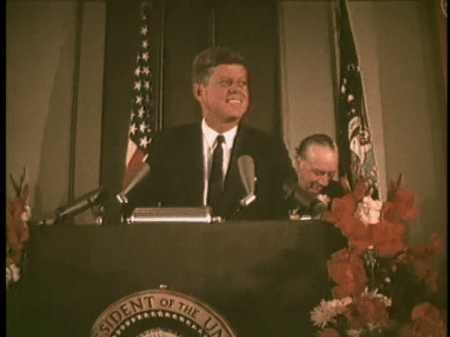
This three-hour documentary isn’t narrated; it starts with blurry shots of the Kennedys and a few intertitles sprinkled throughout by way of clarification. The series marks the exact time of each stage of the assassination and the events that followed with clock numbers showing the time (think the clock radio in Groundhog Day) and we see the news coverage exactly as it was presented.
Irony is plentiful in the first part of the documentary, which shows the Kennedys at a breakfast in Fort Worth, where Kennedy is presented with a cowboy hat and boots. No doubt wanting to avoid hat hair, he quips, “l’ll wear them at the White House on Monday,” much to the delight of the assembled Texans. The whole morning is full of happy, smiling faces on both sides enjoying their time together, which makes the events in Dallas all the more ominous.
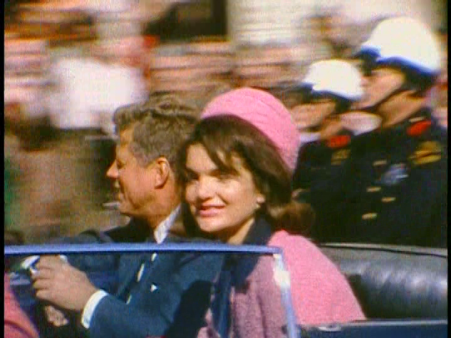
Naturally the Zapruder film takes center stage for a lot of the action, with several interviews with Mr. Abraham Zapruder in the series, many of them consisting of walk-throughs of what the gentleman saw that day. Also naturally, he didn’t expect his film to, as we would say nowadays, go viral, but after it did there was nothing he could do about it.
After Kennedy had been shot, and then his trip to Parkland Memorial Hospital and his subsequent death, there was very little fanfare, just a state of shock and frenzy. As the news broke, Americans, likely women, were watching such daytime TV delights as a Thanksgiving episode of As The World Turns and a fashion showcase of new winter raiments, many featuring faux fur and strategically placed zippers.
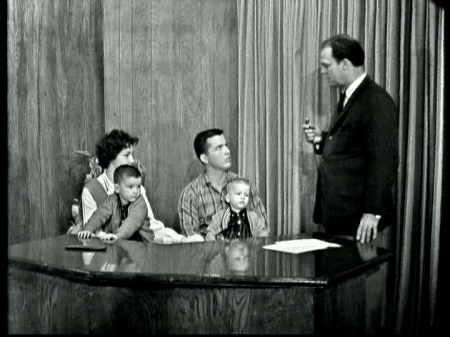
Then it was all replaced by breathless newsmen who had clearly been running around trying to get some kind of coherent copy together before the cameras started rolling. It’s crude by today’s standards in terms of how the sets look, but it got the news out and that was the main thing. Today’s news services could take a cue from them, that’s for sure, but that’s another topic.
A lot of the footage, while focusing on the Kennedys, shows everyone’s confused and grieved faces and people talk about where they were at the time they heard about Kennedy being shot. Naturally, there is already speculation about the whys and wherefores of the event. A New York City gentleman told a reporter that he didn’t think the assassin was a “right-wing radical” and opined that the assassin was a Communist. At another time a newscaster mused, “One might say at this point that it is to be hoped that this assassin, whoever he is, is not connected with any particular political group, so-called ‘hate group’ or otherwise. This will result in a very great rendering of the political flesh of this country.”
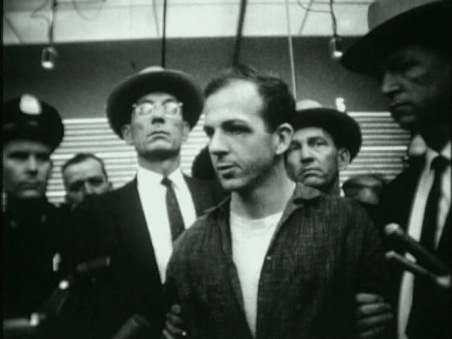
However, the series doesn’t solely zero in on Kennedy. The spotlight moves to Oswald, who was shot the next day, and then to Robert F. Kennedy, who was murdered in the kitchen of the Ambassador Hotel in Los Angeles in June of 1968, and briefly to Martin Luther King, Jr., who was shot at the Lorraine Motel in Memphis in April of that year. The film shows a world in turmoil, unable to comprehend or even have time to stop and think about what they were experiencing as it happened.
The series also does a good job of showing the culture of 1963, and the thing that always strikes me is how innocent we were. It’s like the lead-up to 9-11. We were so naïve before, and then afterwards shaken to our very souls. It was that way during the Kennedy assassination and what followed.
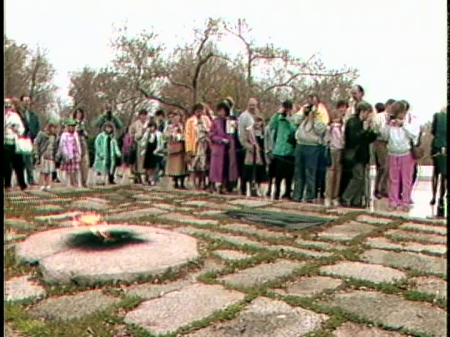
Of course, a good chunk of the last episode is devoted to conspiracy theories and how the assassination has come to be viewed over the years, both as an historically significant event and as a cultural touchstone. We see Oprah asking her TV audience if anyone thinks Oswald acted alone or as part of a conspiracy (the majority raise their hands for the latter), we see the various hearings as new information comes to light, and we see the assassination’s portrayal in pop culture, which has been everything from The Simpsons to Seinfeld to Oliver Stone’s infamous Kevin Costner vehicle, JFK. It’s sixty years later and we’re nowhere near done talking about Kennedy and wondering what really happened.
One thing the series definitely does not go into is the way the sites of these events look today. The Ambassador Hotel was torn down in 2005 and replaced by what’s been called the most expensive public school in the State of California. Parkland Memorial Hospital has been completely renovated and revamped, with the site of Trauma Room One now a waiting room and the table Kennedy laid on removed to the Radiology Department. Incidentally, after Kennedy’s death Trauma Room One was sealed and a wreath placed on the door.


The Lorraine Motel, where King was shot, remained a motel until 1982, after which it was briefly used for low-income housing and is now a part of the Civil Rights Museum, with King’s former room receiving special consideration.
Old City Hall, the building where the Dallas Police Department once was and where Oswald was shot, now houses the University of North Texas College of Law, its historically significant areas frozen in time. To commemorate the sixtieth anniversary of the Kennedy assassination, the school has recently opened an exhibit that allows visitors to follow in Oswald’s footsteps, from his incarceration to his final doom in the parking garage:
The currrent owners of the theater where Oswald was apprehended by police have also chosen to commemorate the anniversary:
As has the Sixth Floor Museum:
It goes without saying that a lot of time has passed since JFK, RFK, and Martin Luther King, Jr. were assassinated and some things have changed quite a bit. Other things, not so much. As time passes and those with firsthand knowledge leave the scene, the vicarity of documentaries such as JFK: Three Shots That Changed America will become more and more important.
For more of the Two Jacks Blogathon, please click here. Thanks for reading, all, and I hope to see you tomorrow…
JFK: Three Shots That Changed the World is not available on DVD at this time, but Part 1 and Part 2 can be seen on YouTube.
If you’re enjoying what you see on Taking Up Room, please subscribe to my Substack page, where you’ll find both free and paid subscriber-only reviews of mostly new and newish movies, documentaries, and shows. I publish every Wednesday and Saturday.
 Taking Up Room
This sounds like a fascinating documentary. Thanks for providing the links to Parts 1 & 2 on YouTube.
You make an interesting point about the naivety of a nation, and how that suddenly ended on Nov. 22, 1963. It’s also interesting to hear what happened to the buildings where all those high-profile assassinations took place.
LikeLiked by 1 person
Thanks, Ruth, and it is. Hope you can see it.
LikeLike