
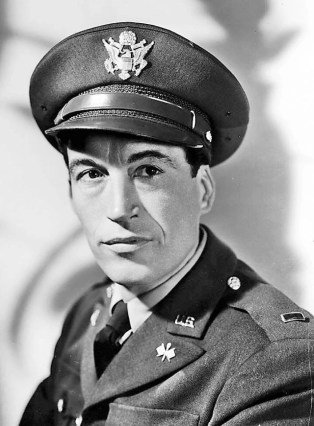
We’ve come to the last of our five directors who went overseas during World War Two. John Huston was the youngest of the lot. Like his contemporaries, Huston distiguished himself during the war by making documentaries, and while they mostly did all right, one was too fake while another was too real.
John Huston was born on August 5, 1906 in Nevada, Missouri to Walter Huston and Rhea Gore and from the get-go his life was pretty exciting. Dad Walter, was of course, the great actor Walter Huston, but for a brief time he worked as a civil engineer, returning to acting in 1909, specifically vaudeville. Rhea was a journalist who liked to play the ponies. Houston’s home life was broken up when his parents got divorced.
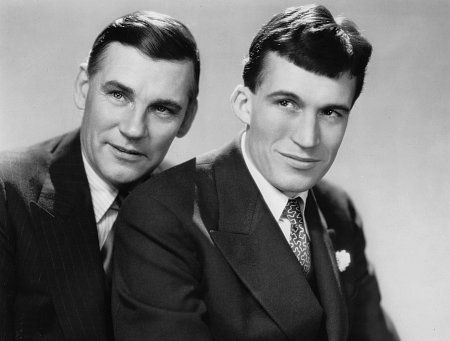
For his part, Huston, who had been sickly as a child due to an enlarged heart and kidney disease, took up painting, boxing, and was an honorary member of the Mexican cavalry. However, he decided early on that he wanted to be an actor and moved to New York in 1924 to study acting, although he also worked as a journalist and short story writer to pay the bills.
Stability was not a byword for Huston in his early career, as he was given to fast living, and a brief stint in Hollywood as a screenwriter and actor came to an abrupt halt when Huston hit a female pedestrian while driving one night. According to TCM, Huston was cleared of any wrongdoing, but he was so guilt-stricken that he tried to start over as a screenwriter in London.
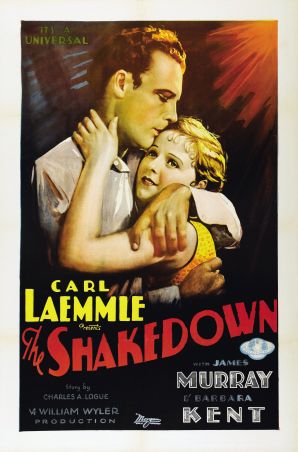
It didn’t last. Huston became so poor that he was sleeping on park benches and essentially begging for food. Fortunately, he turned his life around, albeit divorcing his first wife, Dorothy Harvey and marrying his second, Lesley Black, and re-established himself in Hollywood in 1937 with a Warner Bros. screenwriting contract.
This time, things took off, and Huston wrote and co-wrote a number of prestigious scripts, such as Jezebel, Sergeant York and High Sierra. His personal life still wasn’t great, though, as Huston was not exactly monogamous. Ironically enough, his major breakthrough as a director, The Maltese Falcon, was written while Huston was carrying on an affair with Marrietta FitzGerald, wife of lawyer Desmond FitzGerald, who would go on to be one of the top brass of the CIA.
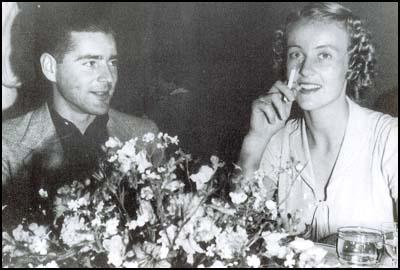
Unlike his fellow four directors, Huston was young enough to be drafted, and he reported to the Army in 1942, with his latest film, Across the Pacific to be finished by director Vincent Sherman.
Huston’s first Army-made documentary was 1943’s Report From the Aleutians, which followed a group of Army personnel stationed in the Aleutian Islands. Life was pretty monotonous there. The soldiers didn’t get any movies, there was no canteen, and obviously no nightlife, so they had to make their own entertainment.
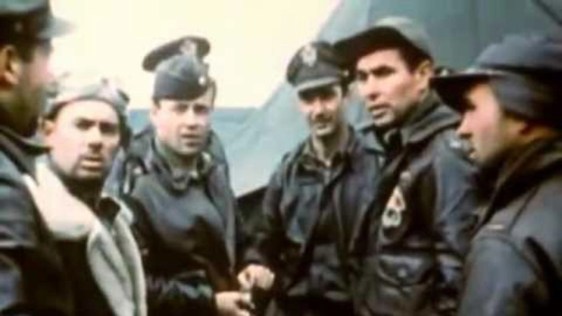
The next film Huston made was Tunisian Victory, a detailed 1944 account of the combined forces invasion of North Africa, in which the Nazi forces were pushed out and their supply lines crippled. It was a long and difficult process, and the film really drives home how important the invasion was. It was almost, but not quite, a rehearsal for D-Day.
After that, Huston made a short film about the Battle of San Pietro, but there was a slight problem: He and his crew didn’t show up until after the battle was over. While the film shows some authentic shots of the carnage and the rubble, the battle shots had to be recreated. The same thing had to be done in Tunisian Victory but to a lesser extent. In their favor, though, both Tunisian Victory and San Pietro show a very grim picture of war from both the civilian and the military points of view. We see the grief on people’s faces and kids playing games amid the rubble.

Unfortunately, the Army and Huston were continually at loggerheads because Huston didn’t portray the Army in the way that they wanted him to. They thought Huston’s films were too anti-war and didn’t make Americans out to be unstoppable fightiing machines. San Pietro narrowly escaped being shelved except that one General George C. Marshall went to bat for Huston, saying the film needed to be seen by new recruits. Huston never apologized for how his films had been made. Per cartoonist Bill Mauldin, Huston’s response to the Army was, “If I ever make a picture that’s pro-war, I hope they take me out and shoot me.”
However, not even the Army could hide from Let There Be Light, although they tried. The film was made at the Mason General Hospital (adjacent to Pilgrim State Hospital) on Long Island because the doctors there were willing to work with Huston. Its original purpose was to help employers and the general public see that men returning from the front with emotional or mental problems were not insane and could adjust to life at home like anyone else.
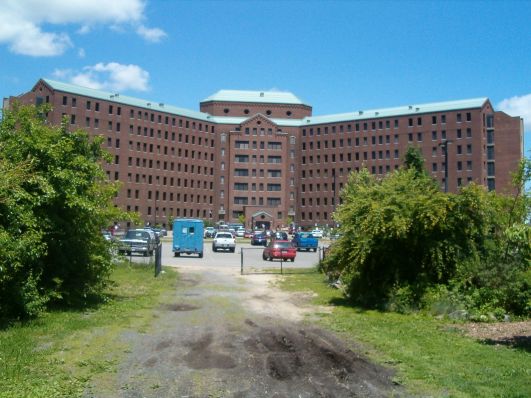
Seeing the film today, it’s presented in a very sensitive and unobtrusive manner, with the cameras on both the patient and the doctor, which would have eliminated the need for retakes and inserts. We see these men go from jumpy and barely able to speak to having fun, enjoying a baseball game, and complaining like they used to. It can be hard to watch but at the same time there’s a lot of hope. We see these men get their discharge papers and wave happily from the bus as they’re off home.
PTSD was kind of a tabu subject during the nineteen-forties. They didn’t even call it PTSD back then; it was known as “battle fatigue” or “psychoneuroses,” and very few would touch it. People just wanted to return to regular life and forget about the war as if nothing had happened. Others knew differently but even so, the Army, which wanted to preserve the image of the American warrior, confiscated and shelved the film for forty years. Its first premiere was at the Los Angeles County Museum on November 8, 1980 and then at the 1981 Cannes Film Festival. It was selected for preservation by the National Film Registry in 2010.
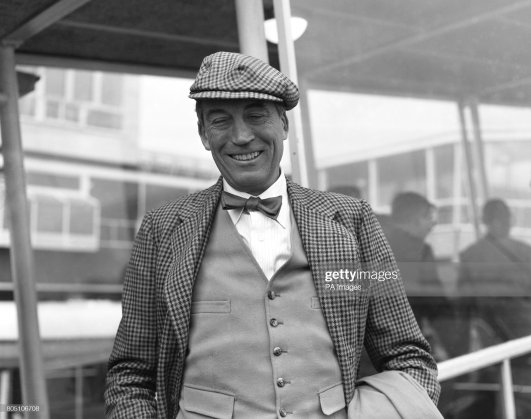
When Huston himself got home, he eased back into Hollywood with screenplay writing for such films as The Stranger, and had a huge hit in Treasure of the Sierra Madre. Huston was still a notorious ladies’ man, but he also seemed steadier and more focused. He was instrumental in the formation of the Committee of the First Amendment in response to the House Unamerican Activities Act.
Huston’s postwar movies embraced the changes that had gone on in America since the war, such as in The Asphalt Jungle, Key Largo and The African Queen, and may have inadvertantly helped bid goodbye to the old guard, as Huston directed Clark Gable and Marilyn Monroe’s last movie, 1961’s The Misfits.
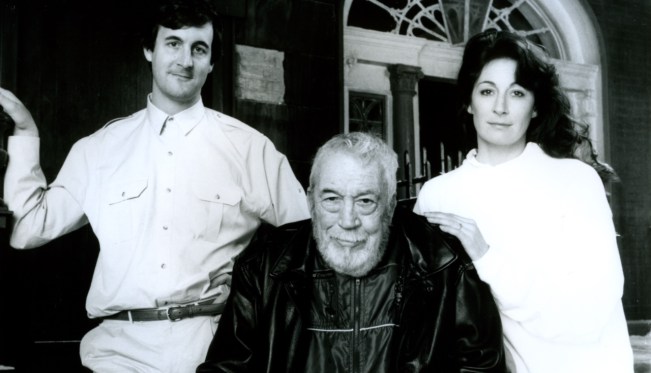
John Huston, who would work steadily until his death in 1987, directed his last movie, The Dead, from his wheelchair. The film starred his daughter, Anjelica and his son, Tony wrote the screenplay. After his wild life, it must have given Huston satisfaction to have made such a life for himself, and to have done groundbreaking work during the war that was, by the eighties, just beginning to be recognized.
Another post is coming up on Saturday. Thanks for reading, all, and have a good one…
Jezebel (DVD and Blu-ray), High Sierra (DVD and Blu-ray), Sergeant York (DVD and Blu-ray), The Maltese Falcon (DVD and Blu-ray), Across the Pacific (DVD), Tunisian Victory (DVD and Prime), San Pietro (Prime), Let There Be Light (DVD), The Stranger (DVD and Blu-ray), Key Largo (DVD and Blu-ray), Treasure of the Sierra Madre (DVD and Blu-ray), and The African Queen (DVD and Blu-ray) are available to own from Amazon.
~Purchases made via Amazon Affiliate links found on this site help support Taking Up Room at no extra cost to you.~
If you’re enjoying what you see on Taking Up Room, please look for additional content on Substack, where you’ll find both free and subscriber-only articles. I publish every Wednesday and Saturday.
Bibliography
Five Came Back. Directed by Laurent Bouzereau. Narrated by Meryl Streep. Netflix, 2017.
War and Film In America: Historical and Critical Essays. Edited by Marilyn J. Matelski and Nancy Lynch Street. Jefferson, North Carolina: MacFarland, Incorporated, Publishers, 2017.
 Taking Up Room