
Grab the Kleenex…
There was no shortage of tearjerker movies during the World War Two period, and one of the most successful was 1943’s The Human Comedy. The public loved it. The critics loved it. It was also reputed to be Louis B. Mayer’s favorite movie. How does it hold up today? Surprisingly well in a lot of ways, albeit minus its wartime immediacy.
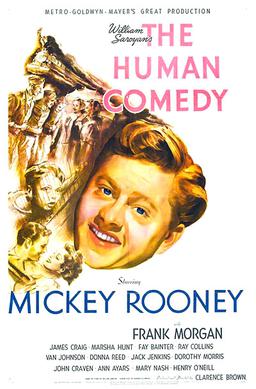
There’s not much of a conventional plot to The Human Comedy; in fact, it feels a lot like life, where not much happens and then everything does. The film takes place in the fictional San Joaquin town of Ithaca, California, which is home to a lot of typical, everyday Americans, but we’re mostly focusing on the Macauleys, a nice working class family who lost its patriarch, Matthew (Ray Collins) two years previously.
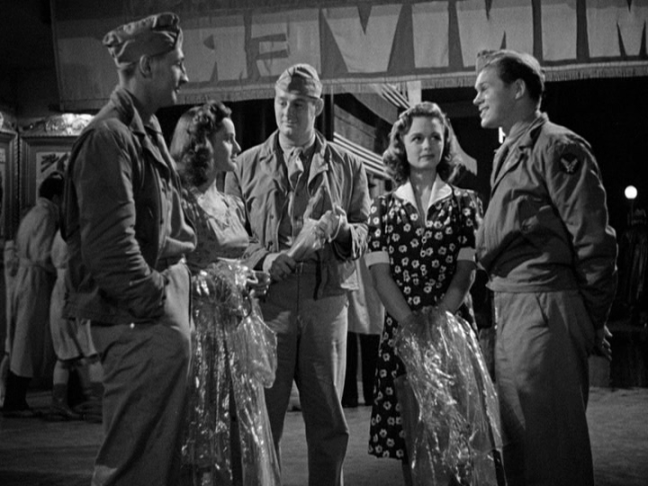
Matthew’s family continues to plug along, but the war is a constant in their lives just as it is for everyone else. Oldest son, Marcus (Van Johnson), is in the Army and stationed in North Carolina. Only daughter, Bess (Donna Reed) is a college student but wants to work in a war plant because college feels useless. Same thing with next door neighbor, Mary (Dorothy Morris), who’s Marcus’s girl and patiently waiting for him to come back.
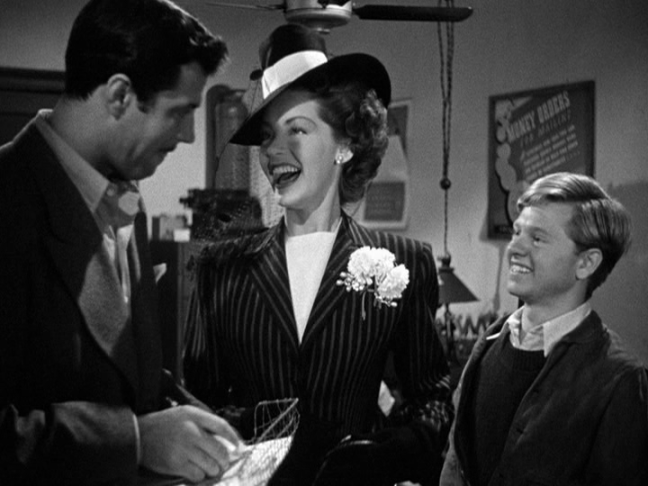
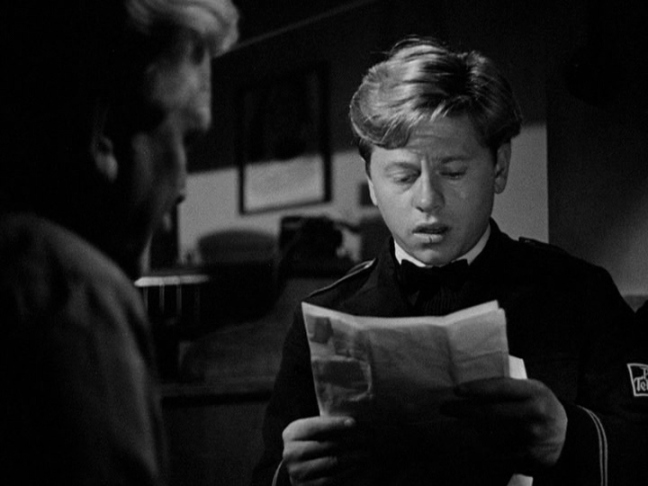
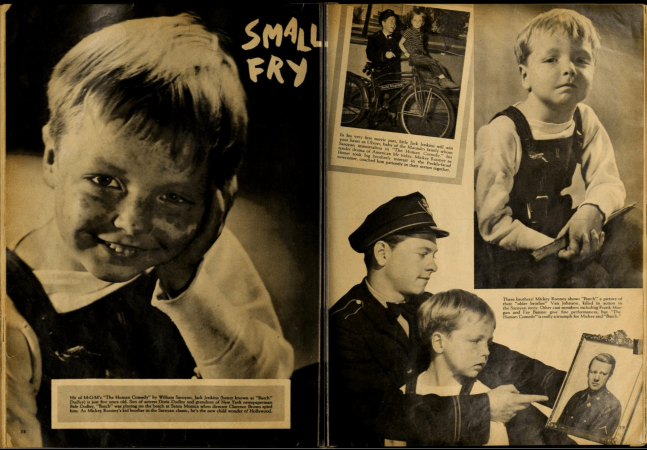
In the meantime, middle son Homer (Mickey Rooney) has just started working as a delivery boy at the local telegraph office. His job is rewarding, but it’s awkward when he has to deliver singing telegrams. It’s also grim, as Homer finds himself informing people that their loved ones have been killed in the war.
There’s no easing into it, either. On his first night at the office, Home has to inform a local mother, Mrs. Sandoval, that her son, Juan, isn’t coming back. Mrs. Sandoval treats Homer with motherly kindness, giving him a piece of candy before collapsing into a chair and singing for her lost boy. Homer sits and watches helplessly with tears in his eyes.
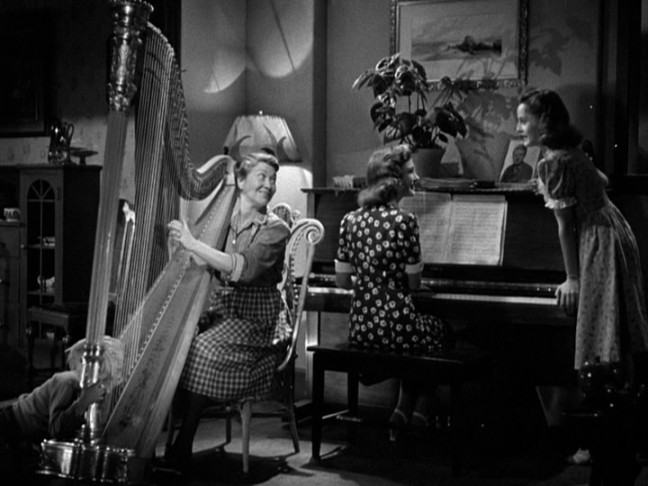
Homer can relate, because he’s not only got a brother in the Army, but the Macauley family has a loving home life, with singing in the evening and Mary coming over to join in. There’s also a lot of longing too, as everyone misses Matthew and Marcus.
That’s not to say everyone is perfect. Homer gets in trouble at school and narrowly misses a track meet, but his teacher, Miss Hicks (Mary Nash) finally lets him go because she finds the track coach annoying, and cheers for Homer from her window while he runs the low hurdles.
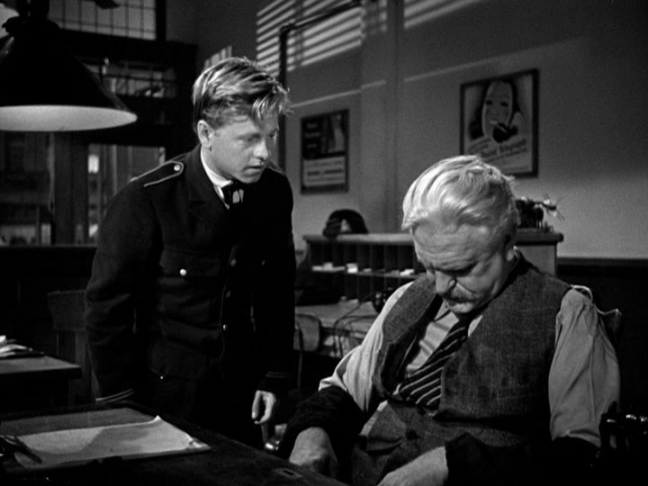
Homer’s boss, Tom Spangler (James Craig), has a busy life as well. Besides running the telegraph office, he’s in love with Diana Steed (Marsha Hunt), who initially seems pretty silly but turns out to be a very good match for him.
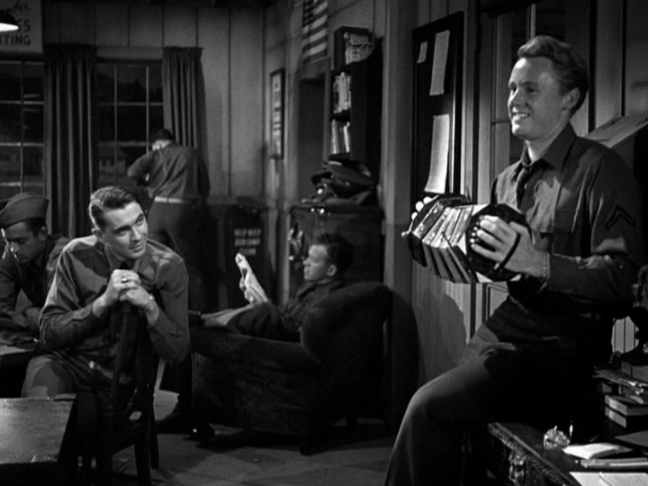
Meanwhile, Marcus is at camp dreaming about Mary. He’s made good friends with a guy named Tobey George (John Craven), who doesn’t have a family or know anything about where he came from. Marcus tells him that doesn’t matter because Tobey is still an American, and proceeds to tell him all about Ithaca and his family, so much so that Tobey feels as if he knows them.
Life goes on, and the characters are left to wonder how they’ll respond if the worst happens.
Hollywood, as we all know, always has its sniffer out for plays and books that might make good movies, even if they haven’t been released yet. A best-seller is even better. The Human Comedy, on the other hand, first began life as a treatment by respected playwright and author William Saroyan.
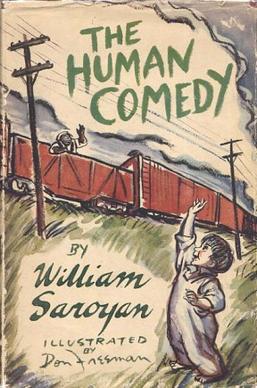
Saroyan’s first treatment, unfortunately, was too long, and would have needed four hours of screentime to unfold properly. While MGM execs liked Saroyan’s story, they found the prospect of a four hour movie pretty daunting. Saroyan thought that was that and turned his treatment into a novel, which sold like gangbusters.
MGM and Saroyan took another stab at The Human Comedy, whittling the treatment down to just under two hours. It’s still a pretty straight adaptation of the book, though, starting with Ulysses staring at a gopher digging a hole and then meeting his mother at the chicken coop, where he helps her collect eggs. Apparently this was Mayer’s favorite scene.
A lot of Saroyan’s story was drawn from life. An Armenian American, he grew up in Fresno and worked at a telegraph office, so naturally he was able to draw on that for The Human Comedy. The wartime aspect, obviously, was a new and timely element.
The public and the critics ate up The Human Comedy, to the tune of $8.1M at the box office, or $316M in today’s money. Adjectives such as “splendid,” “poignantly dramatic,” and “magnificent” were applied to it.
Motion Picture Daily opined that, “”The Human Comedy” will require selling. Initially, anyway. After that, word-of-mouth and its distinctive qualities should do the bulk of the job. If the public will forego any insistences about perfunctories in story, if it will accept a package of heart and emotions, of wholesomeness and simple dignities, it will accept this extraordinarily effective film.”
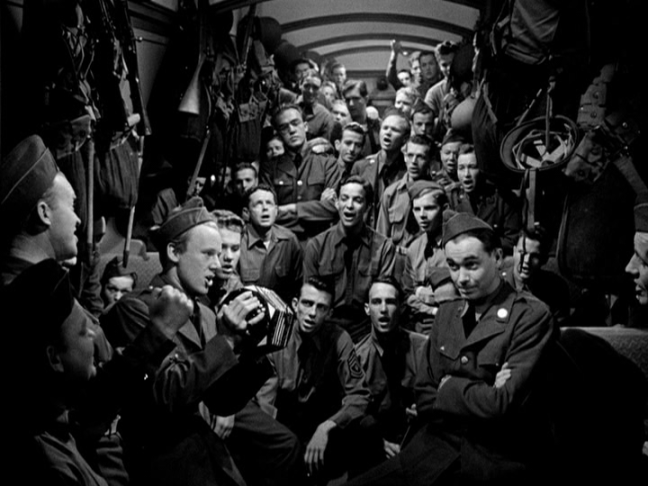
So how does the film hold up today? It’s a very graceful story with note-perfect performances, but it’s not without its flaws. Besides obviously being very dated and idealized, although to a World War Two film buff this is an asset, it’s also slightly bombastic. In one scene, Marcus and Tobey lead their fellow soldiers in a rousing rendition of “Leaning On the Everlasting Arms,” and Frank Jenks, who plays a soldier named Larry, breaks the fourth wall, asking the audience to join in.
Now, there’s nothing wrong with this, and I’m no stranger to “Leaning On the Everlasting Arms,” but I felt a little put on the spot.
On the other hand, the film gently conveys important messages that would have hit home in more ways than one for Americans during the war; for instance, that America is an exceptional country with many different types of Americans from all different backgrounds, all united under one flag.
Most importantly for wartime audiences, The Human Comedy had a lot of wise words for those who lost loved ones.
I’ve quoted this particular speech before but I’ll do it again:
It’ll take a little time…for the pain…to die in you too. The part that’s only flesh, the part that comes and goes. That dying is hurting you now. Wait a little while. When it leaves you’ll find new courage and strength that’ll bring you closer than ever to the best that is in all men. You must go on. Nothing must stop you for a minute. You are what we’re fighting the war for. You are what we have left behind, to live the hopes that we have only dreamed, the matchless dreams of what man can be.


The Human Comedy might be a bit dated and in some ways a little over the top, but it earns the emotions it inspires, and that’s never a bad thing.
For more of the Cry Me A River Blogathon, please see the Classic Movie Blog Association website. Thanks for hosting this, all–we had a great idea! Thanks for reading, all, and I hope to see you on Monday for another post…
The Human Comedy is available to own on DVD from Amazon. The original novel can be purchased here.
~Purchases made via Amazon Affiliate links found on this site help support Taking Up Room at no extra cost to you.~
If you’re enjoying what you see on Taking Up Room, please subscribe to my Substack page, where you’ll find both free and paid subscriber-only reviews of mostly new and newish movies, documentaries, and shows. I publish every Wednesday and Saturday. You can also subscribe to my Club 15 Tier, which gives you at least one extra Taking Up Room post every month for a small fee.
 Taking Up Room
This one is really a shameless emotional ride. When I first read the book and saw the film I was a little too hard on it because I didn’t open my heart to it. But, on a later viewing, feeling a little more vulnerable, well – get the Kleenex. An excellent choice and read.
LikeLiked by 1 person
Thank you, and yeah, you definitely have to be in the right mood for this one. That’s cool you read the book. It looks really good.
LikeLike
There really is something special about the classic Hollywood studio system during the WWII era. Even those some of those films may be dated, the total commitment to the US cause, and the attempt to put at least some realism in the narratives, mean that nearly all of them are worth watching. Thanks for highlighting one I’ve not yet seen — I’ll have to seek it out.
LikeLiked by 1 person
You’re very welcome–hope you enjoy it. Thanks for reading, too. 🙂
LikeLike
Wonderful review! After reading your post I really want to watch this now! Thank you! 🙂
LikeLike
Scriptwriters did an admirable job adapting this to film. I read Saroyan’s book, which has its moments but isn’t nearly as memorable as this movie. Like you said, it doesn’t age well in all aspects, but Mickey Rooney carries this film like the pro he is. You’ve inspired me to see it again soon!
LikeLiked by 1 person
Oh good, glad you enjoyed it! And yeah, it sounds like the book is a bit laborious.
LikeLiked by 1 person
I’ve only seen this once — back in the ’80s (I can just picture the VHS tape I rented from the local video store) — and your post definitely makes me want to see it again, if for no other reason than to see why it was such a hit with audiences back in the day. I greatly enjoyed your insights on the movie — and you made me laugh with feeling put on the spot with the sing-a-long demand! Really good stuff, Rebecca!
Karen
LikeLike