
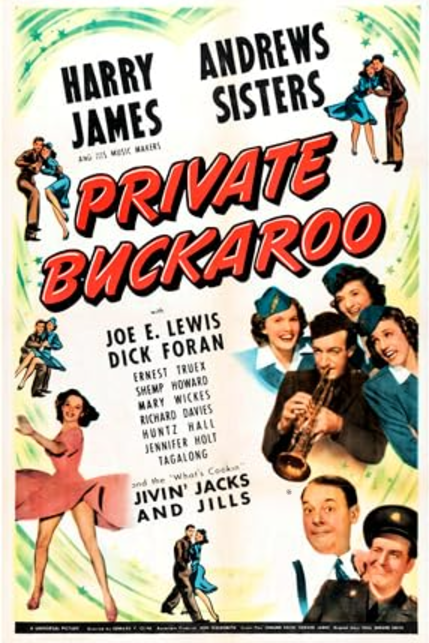
Remember the 1941 Abbott and Costello movie, Buck Privates? Maybe. Remember 1942’s Private Buckaroo? No? There’s a good reason for that. Two, actually. One, it stinks. Two, it has no plot, but we’ll do our best.
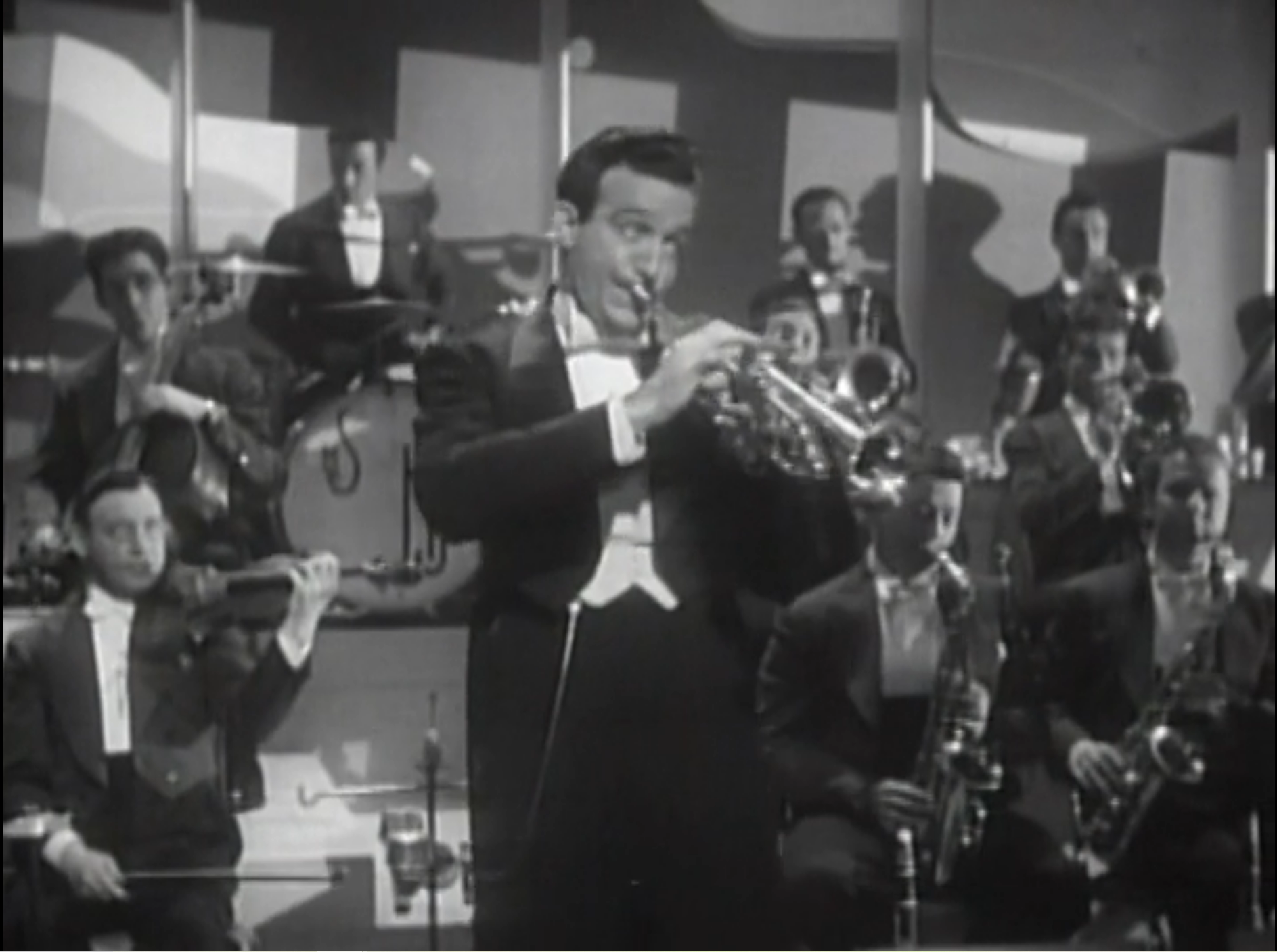
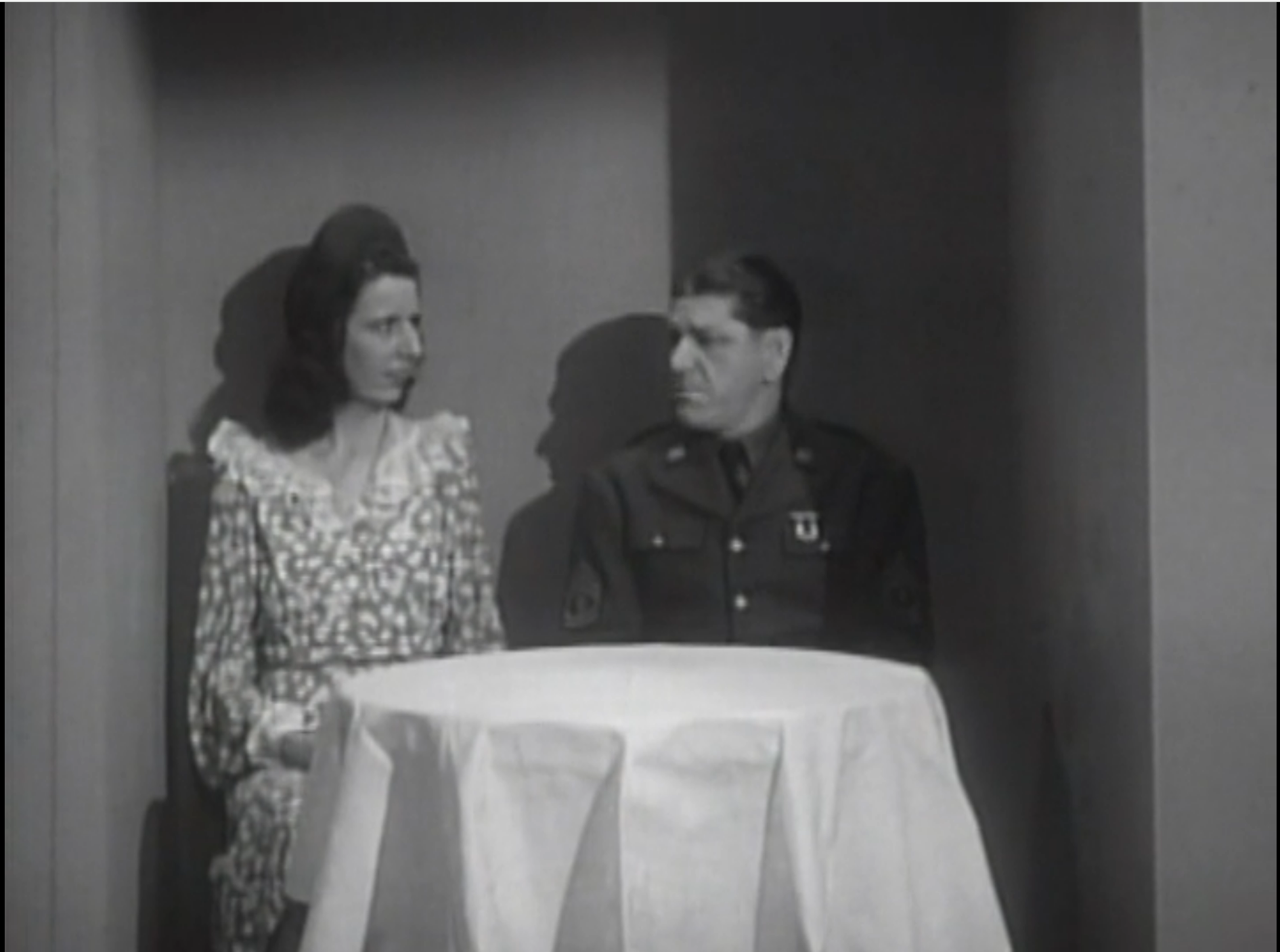
It all opens at a club, where Henry James is giving out with Helen Forrest and his orchestra on “You Made Me Love You,” and Bonnie-Belle Schlopkiss (Mary Wickes) and her fiance, Sergeant “Muggsy” Shavel (Shemp Howard) are waiting to get in. The money Bonnie-Belle slips the usher nets them a table in a teeny alcove in front of the kitchen between the two doors.
The table is less than satisfactory, as every time the doors open Muggsy and Bonnie-Belle are trapped like rats. Before long, they get tired of it and move their table out into the middle of the action, where a decadent breast of Guinea hen seems to magically appear.
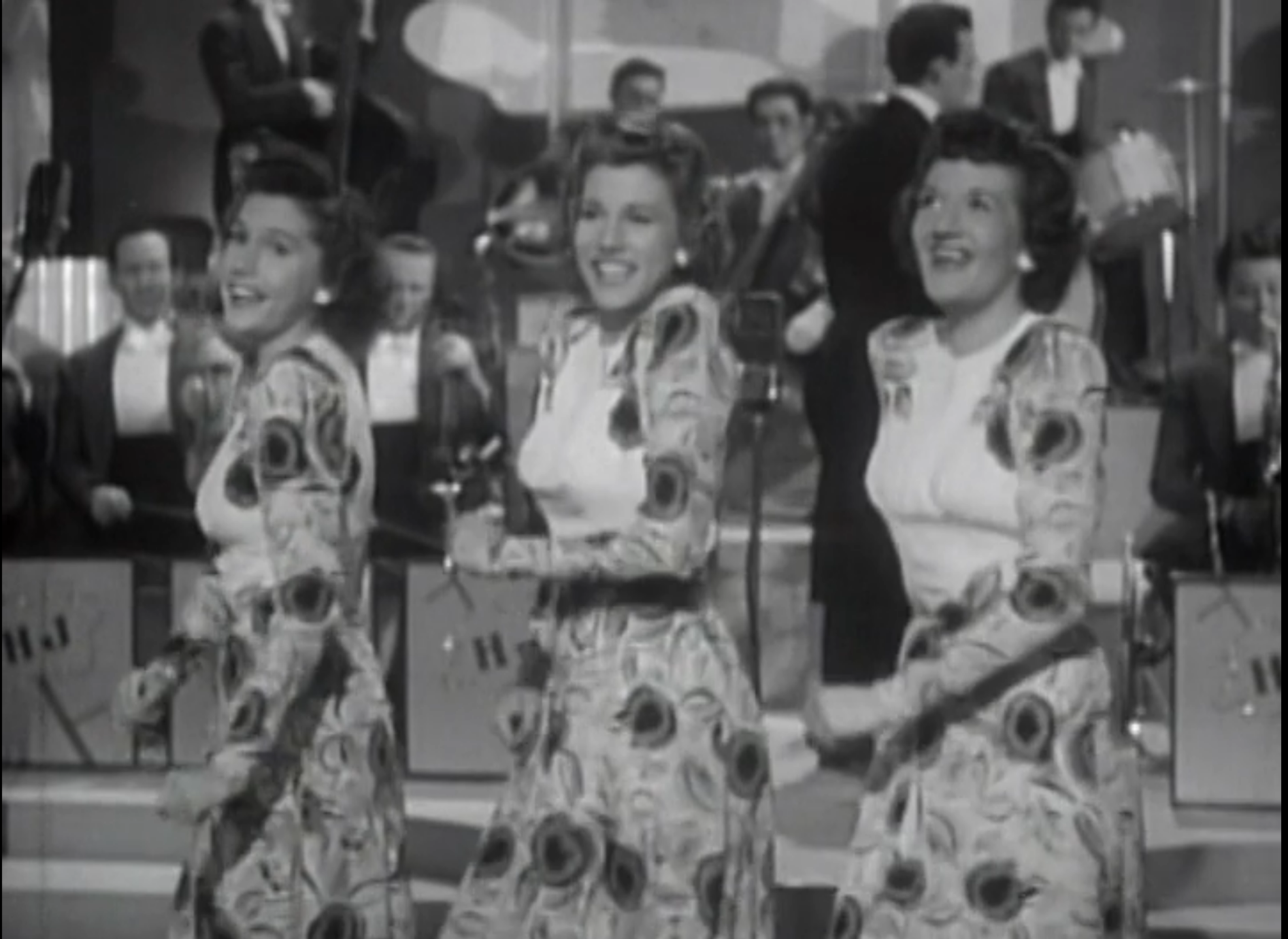
And oh yeah, Harry James and the band are still playing, now joined by the Andrews Sisters and Lon Prentice (Dick Foran) in his cowboy outfit, the latter of whom sings the very forgettable title song. The evening is a triumph…and then Harry finds out he’s been drafted.
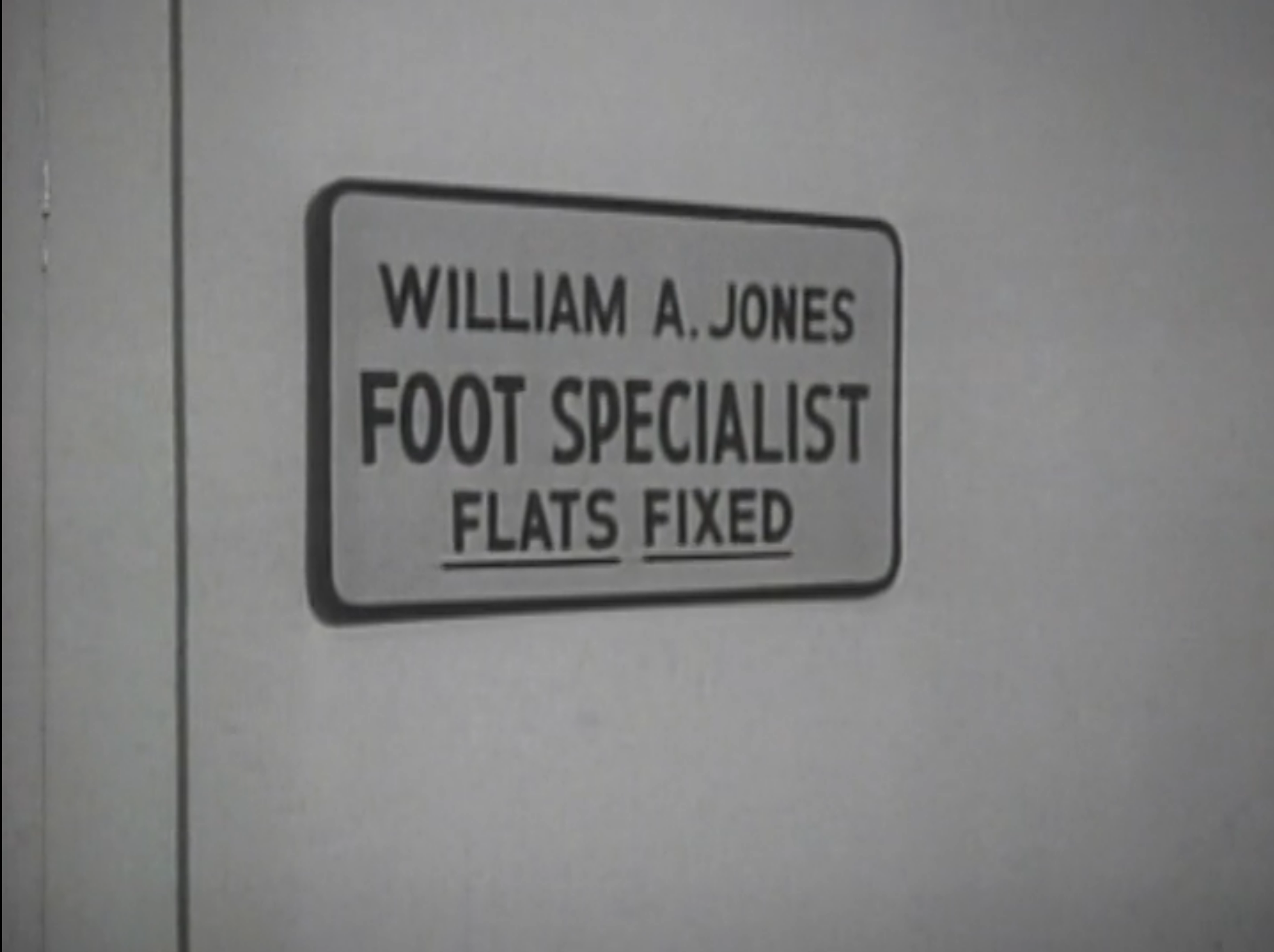
Where Harry goes, the band goes, including Lon, who’s very put out that the draft board passed him over for having a flat foot. Luckily, there’s a podiatrist right next door to the Army recruiter’s office, so after a quick visit, Lon’s raring to go.
Well, at least until he gets to boot camp, then Lon suddenly becomes a prima donna, doing the absolute bare minimum. Everyone else is jumping at the chance to do as much as he can while Lon lounges on his cot. Why he doesn’t get kicked out is anyone’s guess, but that might be a thing in a movie with a plot.
What do we get instead? Bonnie-Belle flirting with Lancelot Pringle McBiff (Joe E. Lewis) and sitting with Lancelot and Muggsy on benches watching everyone else do stuff. Harry James pretending to learn how to blow a bugle. A local family who like setting literal traps for the soldiers while they train. A kid named Tagalong who wheedles soldiers out of quarters by promising to introduce them to her sister. More music. A lot more music. Naturally, the Andrews Sisters and Helen Forrest follow the guys to camp, where they appear out of nowhere anytime there’s a song to be sung. Not that that’s a bad thing, just random and unrealistic.
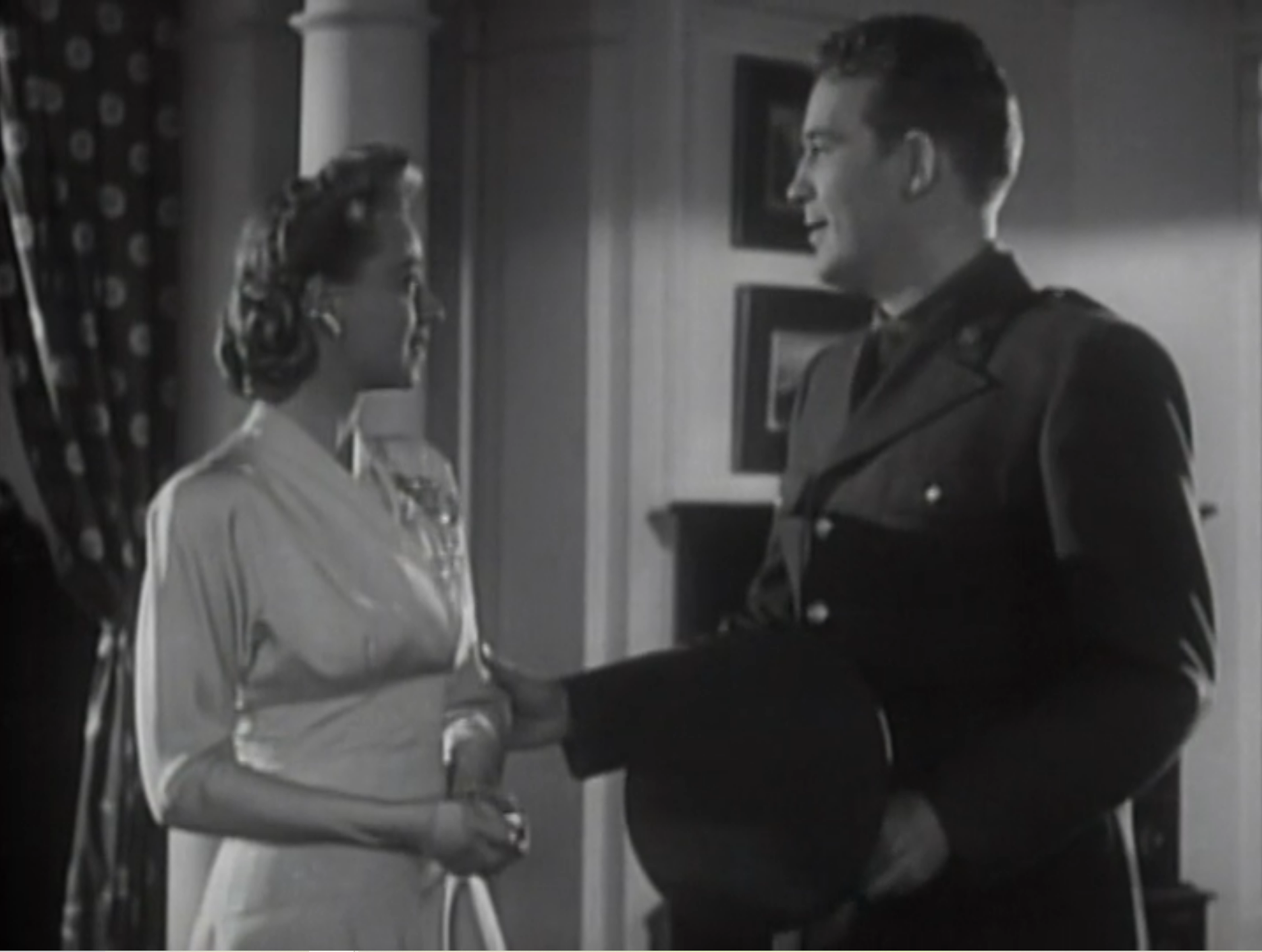
On the bright side, we get to hear the sisters Andrew sing, “Don’t Sit Under the Apple Tree.” And cameo by a very young Donald O’Connor.
Ugh, this movie. It doesn’t go anywhere. It just moves the schtick to a new location and expects it to still be fun. And why is Mary Wickes paired with Shemp Howard? They’re not just the Odd Couple, but Bonnie-Belle just doesn’t like Muggsy, especially after she finds out he only paid five dollars for her engagement ring. Bonnie-Belle is constantly shooing Muggsy away while she makes eyes at Launcelot, and if he doesn’t oblige, she always looks as if she wants to belt him. Both actors were completely wasted in these roles.
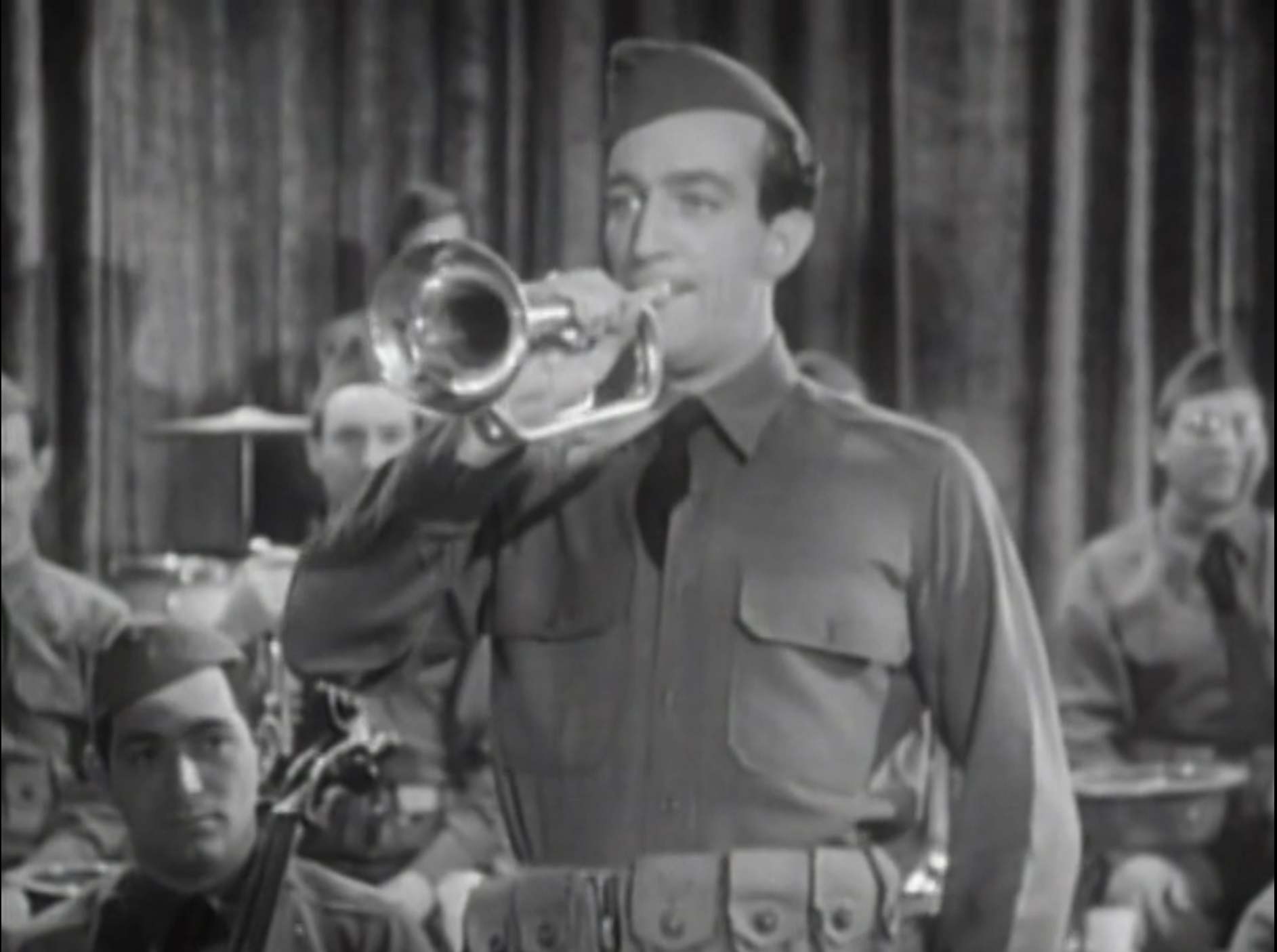
Also, if Private Buckaroo was meant to be a musical showcase, why not focus on that instead of trying to force a plot out of it? The stuff that happens around the music just drags it all down and it’s not funny or enjoyable in any way. I kept hitting the “OK” button on my remote trying to see how far I was into the movie and hoping it was almost over. Longest. Hour. And. Seven. Minutes. On. The. Planet.
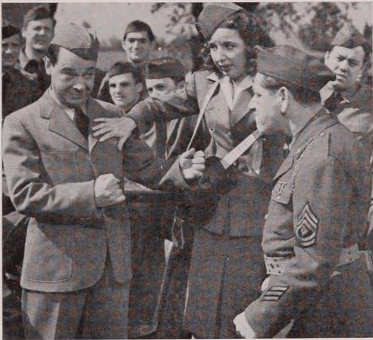
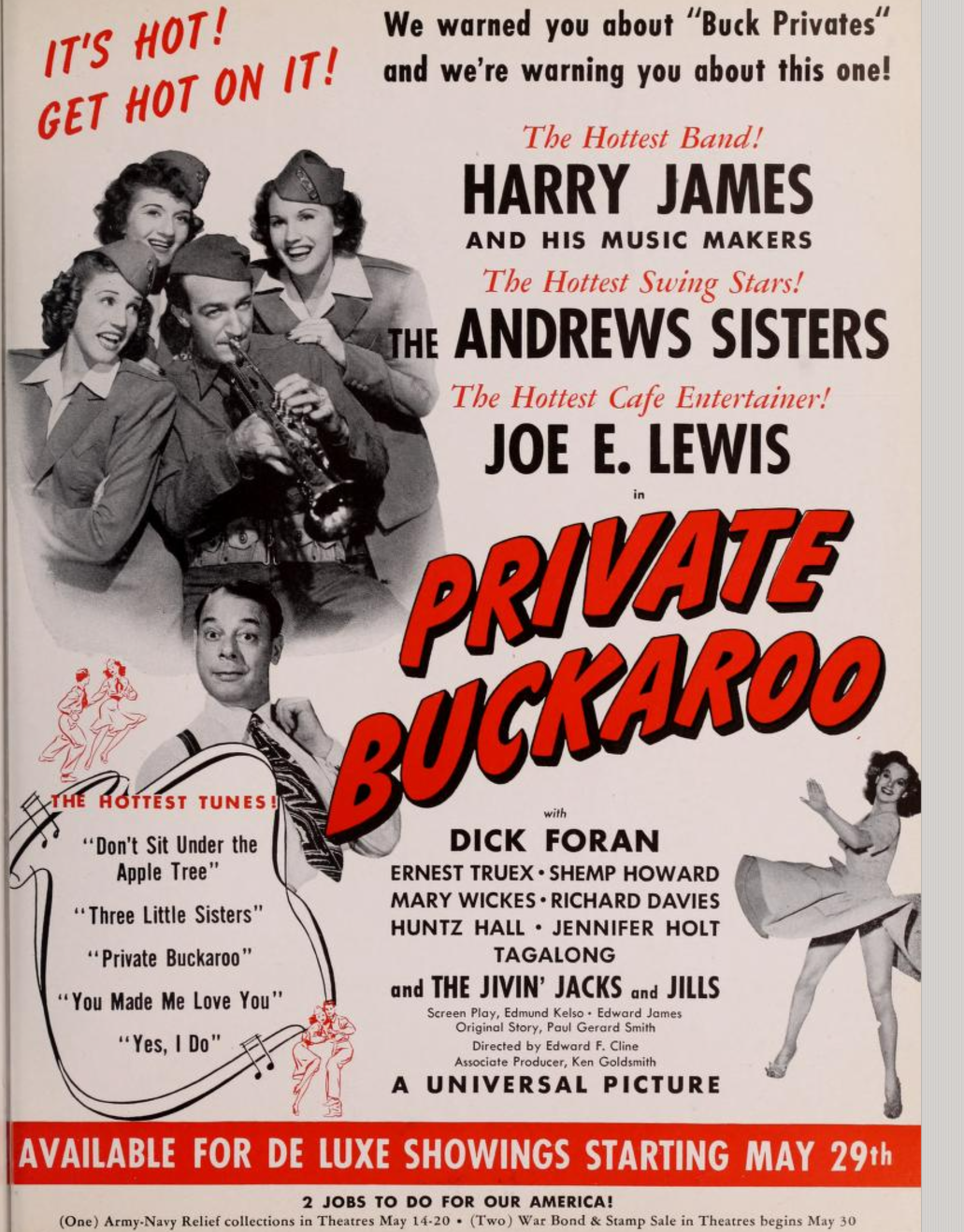
Universal seemed a bit overly optimistic about Private Buckaroo, promoting it in connection with Buck Privates, even though the only carryover from the previous movie was the Andrews Sisters. Harry James was also heavily promoted, as he was a huge star at the time and seemed to do no wrong.
The reviews, however, were less than glowing and they all said the same thing: Private Buckaroo has no plot.
Well, they said a bit more than that. Film Bulletin plugged the film without giving an opinion on it. Motion Picture Herald opined, “The 16 tunes and their performers roam the running time, as do Shemp Howard, Ernest Truex, Mary Wickes, Jennifer Holt, Richard Davies and the other players, in search of a story or some other reasonable reason for being on the screen instead of on the radio, dance floor or anywhere else. They don’t find it.”
Variety was downright generous: “Despite total lack of plot structure, 12 musical numbers are spotted along the route of sufficient merit in both rendition and setup to make this one a strong filmusical programmer…Director Edward Cline makes full use of broad comedy interludes which, although obviously dragged in, carry the footage between musical numbers in a more than moderate fashion.”
Amazingly enough, this thing made a little money–$1.2 million in 1942 dollars, to be exact, which was probably a good thing, as Harry James’s trumpet was apparently insured for $2,500 and the distinguished Young Man With the Horn was paid the handsome sum of $32,000 for his trouble. After the film’s release, everyone seemed pretty happy to forget about it beyond a passing mention in actor bios and obituaries, such as Patty Andrews’ or Helen Forrest’s. Other than that, the film slipped easily into public domain, where it today awaits discovery on streaming services and YouTube, although I don’t know who would look for it besides film buffs.
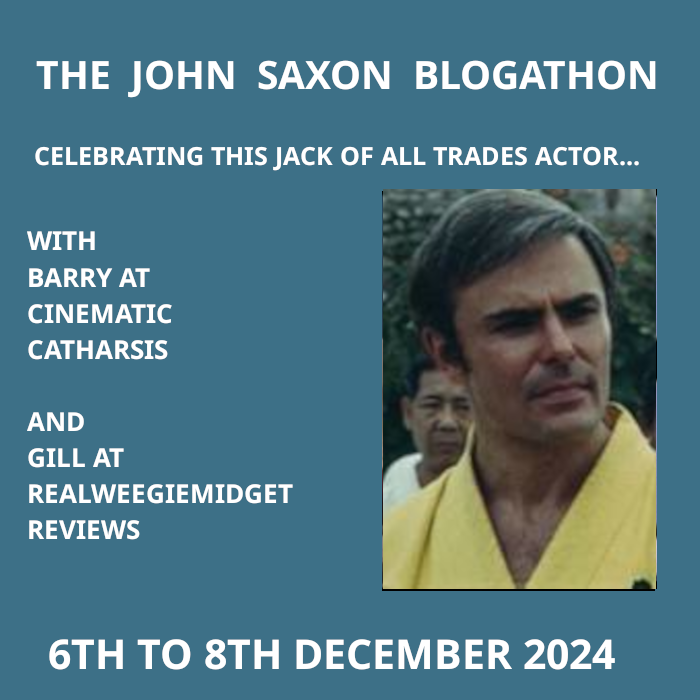
Coming up in December (click on the link for more info):
It’s hard to believe there are mere days left in 2024, right? Did this year seem long to anyone? Anyway, December looks to be a fun month. Thanks for reading, and see you all on Monday for another post…
Private Buckaroo is available on DVD from Amazon and is free to stream for Prime customers. It’s also available on YouTube.
~Purchases made via Amazon Affiliate links found on this site help support Taking Up Room at no extra cost to you.~
If you’re enjoying what you see on Taking Up Room, please subscribe to my Substack page, where you’ll find both free and paid subscriber-only reviews of mostly new and newish movies, documentaries, and shows. I publish every Wednesday and Saturday.
 Taking Up Room