
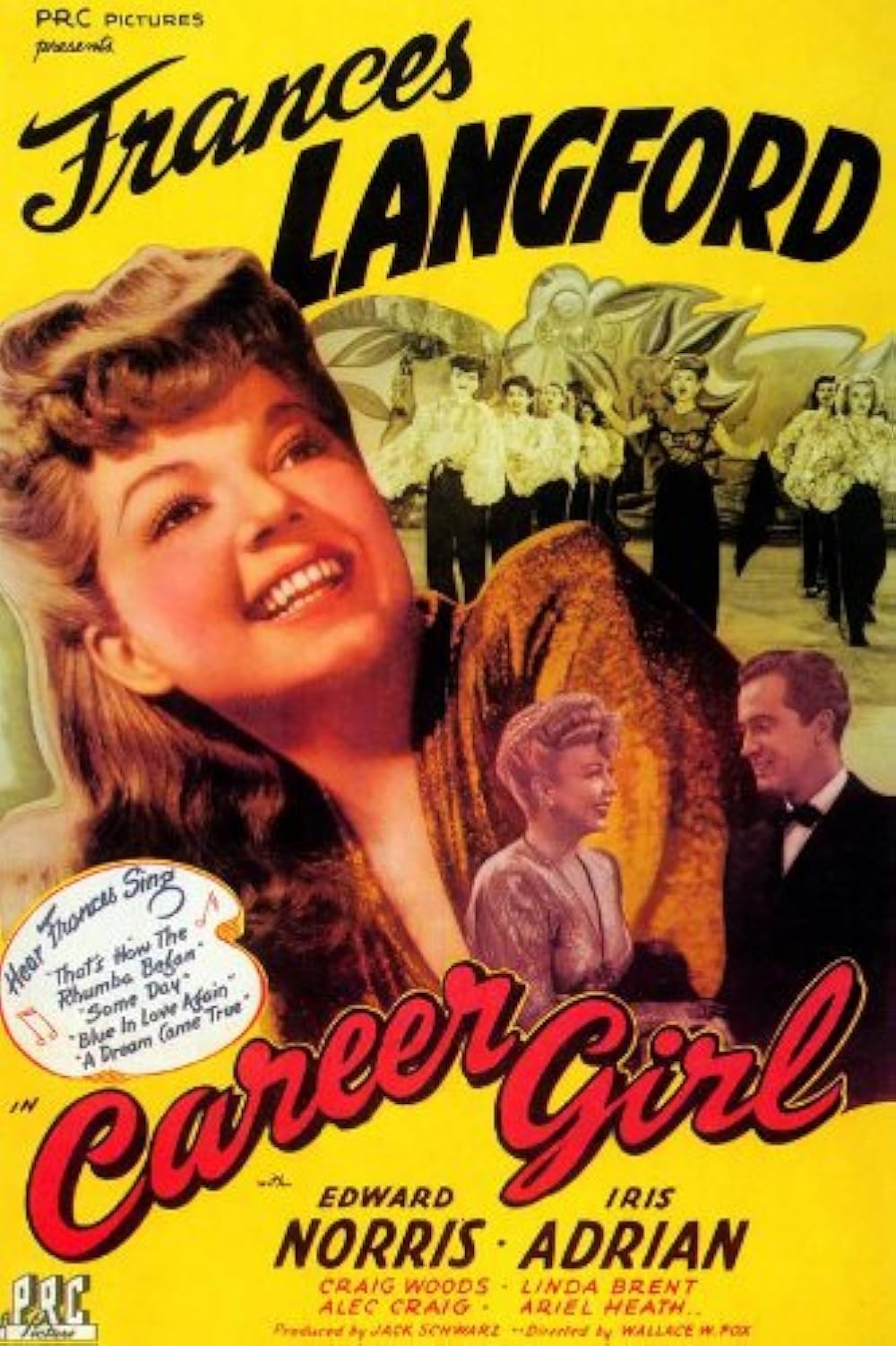
Frances Langford was one of the biggest stars in entertainment between the mid-thirties and the mid-fifties. During the World War Two era, she tirelessly entertained the troops, becoming almost a mascot of the Armed Forces. She did, however, find time to make some movies of varying quality, and on the lower end of the spectrum is the kinda-fun-but-mostly-weak 1944 movie, Career Girl.
The movie opens at the Hotel New York, where Joan Terry (Frances Langford) is about to check out. It’s too expensive for her and she’s on her last one-hundred ten dollars. She’s not worried, though, because she’s going to make it big on Broadway.

Joan’s fiance, James (Craig Woods) wants her to come home to Kansas City, Kansas and be his Mrs. Blake, wife of a wealthy coal magnate. He’s not being romantic but sexist; he only let Joan go to New York to humor her, or so he says. Joan won’t hear of it, though. She’ll go back to Kansas City when she’s good and ready. The kindly concierge points her towards the respectably affordable Barton Hall, a women’s hotel for hopefuls and working women.
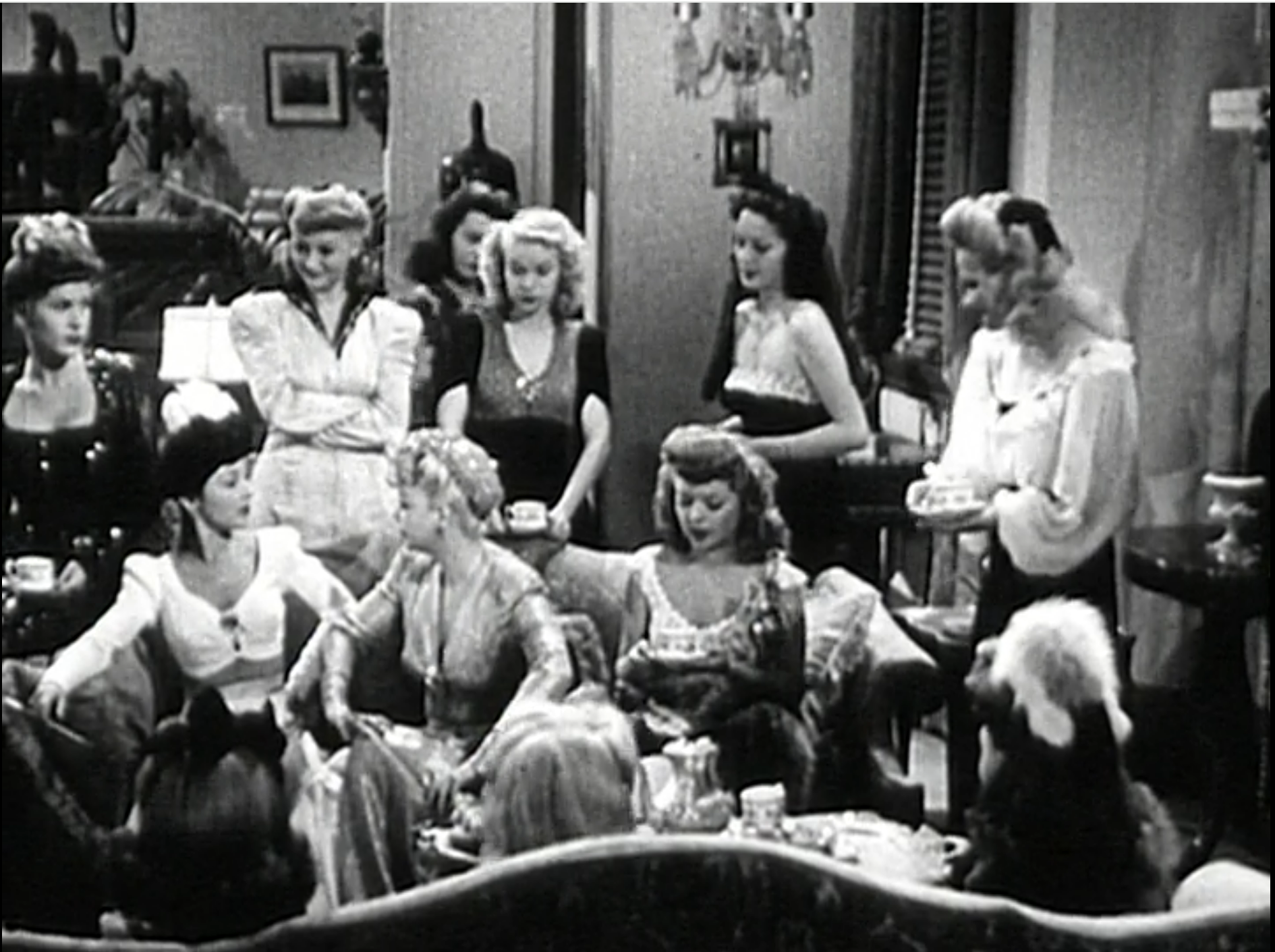
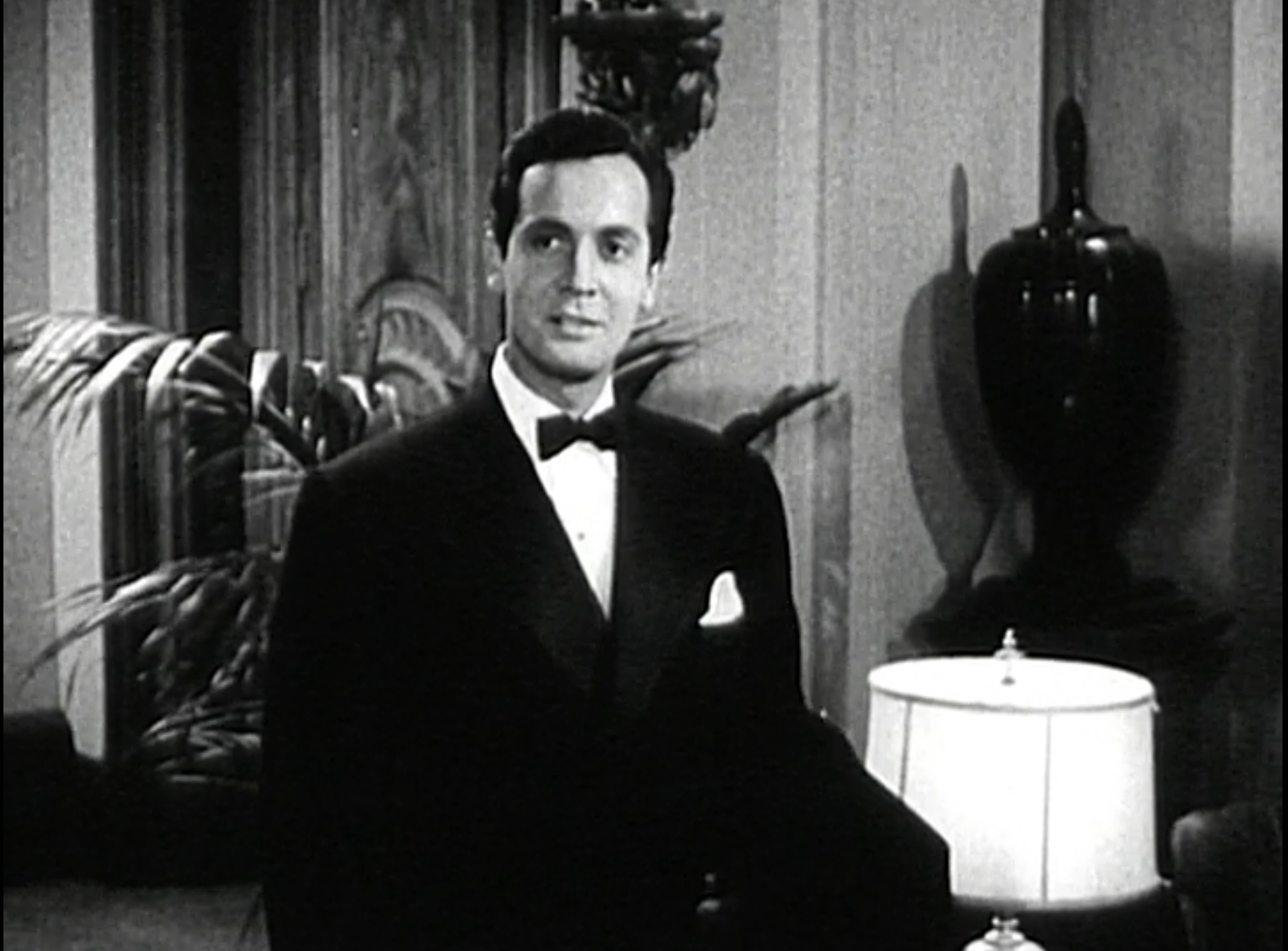
The women of Barton Hall are more like a sorority than anything. Everyone seems pretty nice, but of course we have a token mean girl, Thelma (Linda Brent), just to keep things real. Joan fits in right away and makes friends with everyone. She even has a little hint at a romance with Steve (Edward Norris), a prestigious businessman who sends flowers to Thelma’s old room by mistake. Joan does the honorable thing and comes down to return them, and she’s all set to go back upstairs when Steve asks her to dinner. They spend the night club-hopping and having a grand time. Too bad Steve has to go to “the coast” on business.
(Sorry. I’m a California girl, and it’s always funny when people in movies refer to California as “the coast,” as if we have the only one. Ah, Hollywood.)
Joan starts pounding the pavement looking for work, and she can’t find a darned thing. Even when one of her housemates, Janie (Gladys Blake) gets an audition for her at her employer’s office, his reaction is a resounding “meh,” except that no one said “meh” in the 1940s.
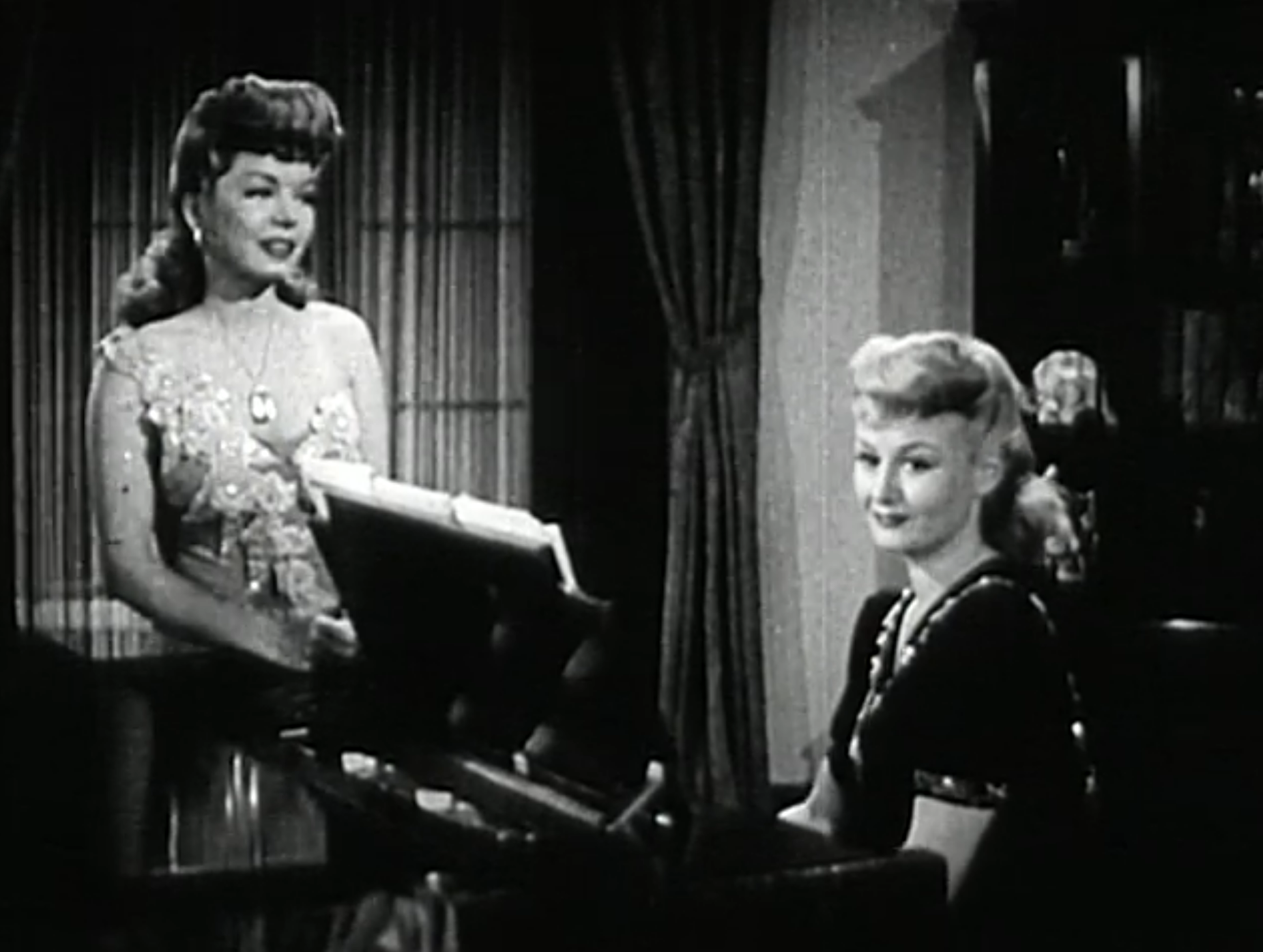
Eventually, of course, Joan runs out of money, and she’s about to head back to Kansas City, but as the story would have it, the ladies talk her into singing at the Barton Hall talent show, with Janie accompanying her. It just so happens that Steve is back from the coast and he’s dropped in to see Joan, but he’s disappointed to find out she’s leaving.
The Barton Hall fam don’t want to let Joan go, though, and they hatch a plan. They’ll form a corporation, Talent Incorporated, and pay Joan twenty-five dollars a week until she gets a job, and then they’ll have a share in her success. Joan is kind of aghast at first, but she’s also touched.
A lot happens from here on out in a very short span of time. James shows up looking for Joan and makes a beeline for Steve’s office, presumably to throw down. Housemaid and aspiring actress Sue (Ariel Heath) has been carrying around a play with her that Thelma turned up her nose at. And the members of Talent, Incorporated benefit more from their deal with Joan than anyone anticipated.
While Career Girl is pretty cute, there’s not much to it. It wasn’t exactly well-received, and it wasn’t just because it was competing with the likes of Cover Girl and Double Indemnity in 1944. I hate to say it because I like Frances Langford, but there was quite a bit they could have done better. The look of the chorus girls’ costumes at the end of the movie is a little awkward, which I can’t say too much about at the risk of getting a little less PG-rated. Suffice it to say, they make the pink aprons in Something For the Boys look smart by comparison.
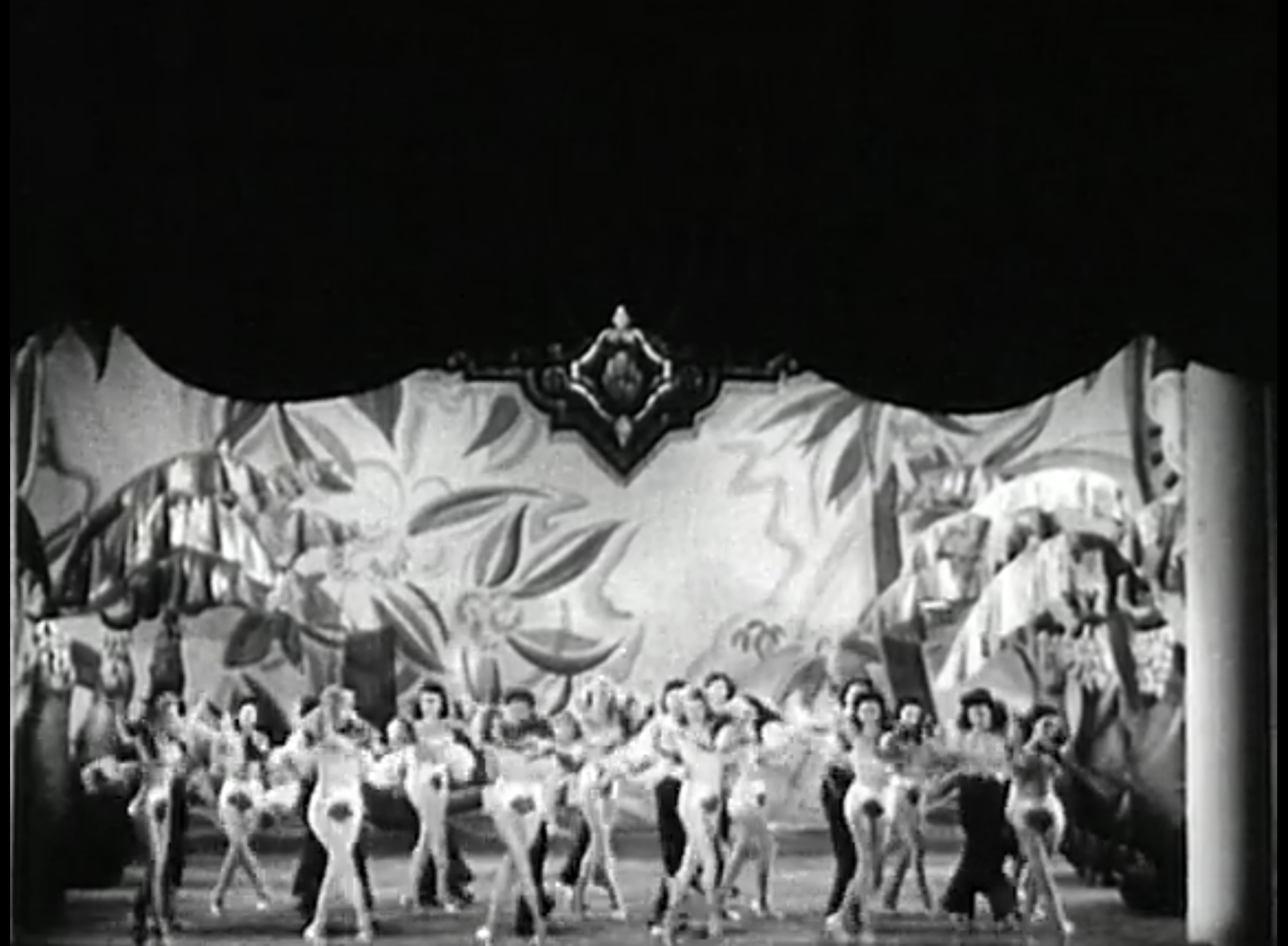
The filming angles are also fairly awkward. In the theater scenes we can barely see anyone’s face except for when Frances comes out for her star closeups, and the staging is awful. My guess is they probably used a real theater and put the camera where they thought the shot would look the best. It comes off as terribly amateurish, but they tried, I guess.
As Career Girl was produced by Poverty Row studio, PRC, or Producers Releasing Corporation, the very likely thing is that most of the budget went to paying Frances Langford, who would have been the major attraction, especially at the height of the Second World War, so there wasn’t a lot of money left over for decent filming, or, for that matter, decent music. Unfortunately, Career Girl doesn’t boast a single standard or anything that’s become known outside the movie, just a few low-energy songs. Not even Frances Langford could elevate the music too much, which is a shame because she could really bring it, even when a song was mediocre.


Career Girl got a healthy amount of publicity, especially for a low-budget wonder, but it wasn’t exactly favorable. The movie was featured three times in Photoplay‘s Brief Reviews, which had a checkmark grading system. Three checks meant a film was outstanding, two meant a film was very good, and one meant just “good.” In all three issues Career Girl garnered no checkmarks.
The reviews were only mildly approving, as though people were having trouble summoning any positive energy. The December 18, 1943 issue of Showman’s Trade Review said, “Direction by Wallace Fox is good, but struggles against the handicap of an old and familiar story with dull dialogue.”
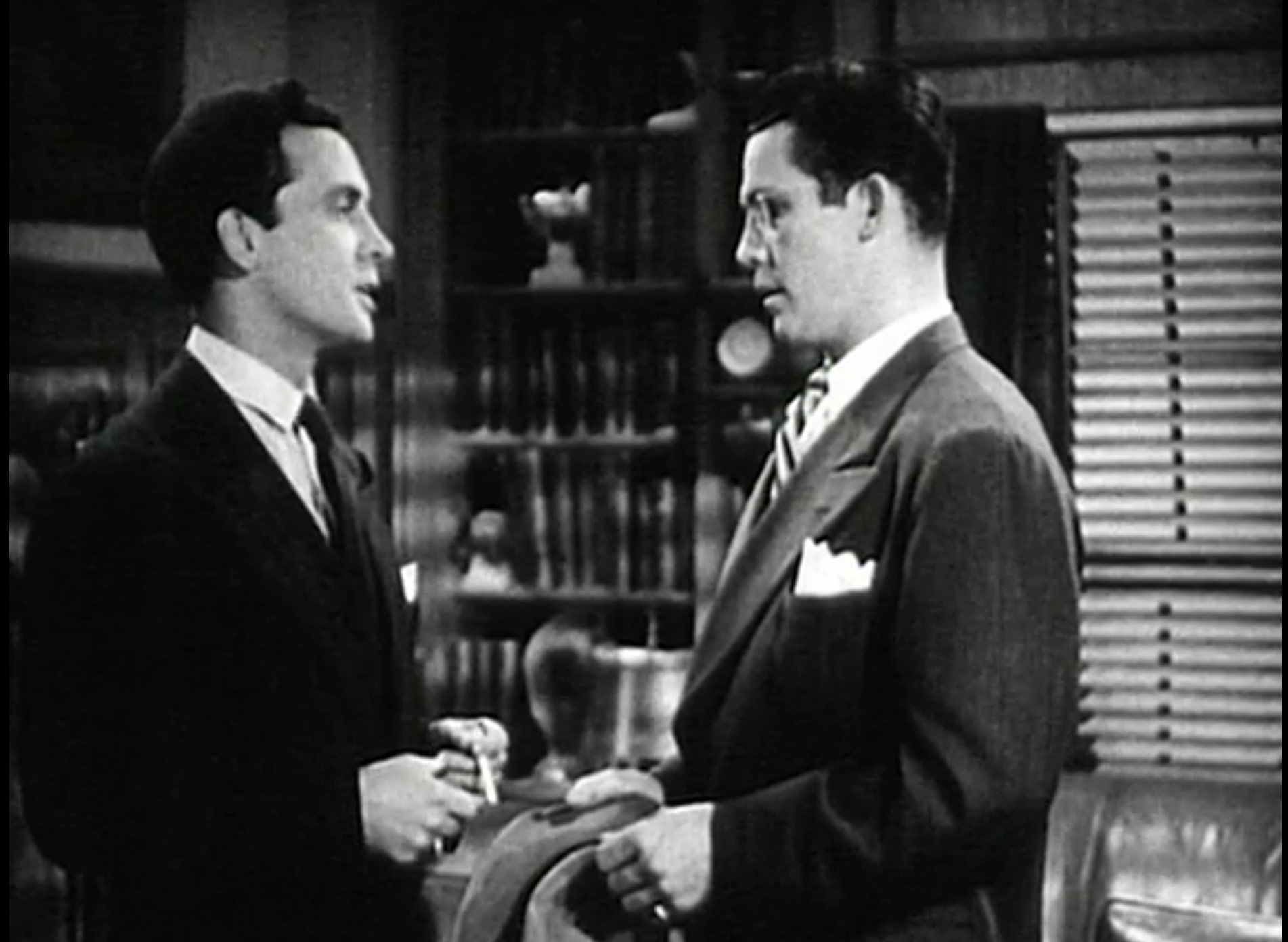
Spanish-language magazine Cinelandia said that “…The film is slow in the game and there is a kind of rigidity in the characters that give director Fox little chance,” while also using adjectives like “nice,” and “lively” in their assessment.
Photoplay, which was clearly not a fan of Career Girl, was downright succinct, ending their review with, “Back to Kansas City!”
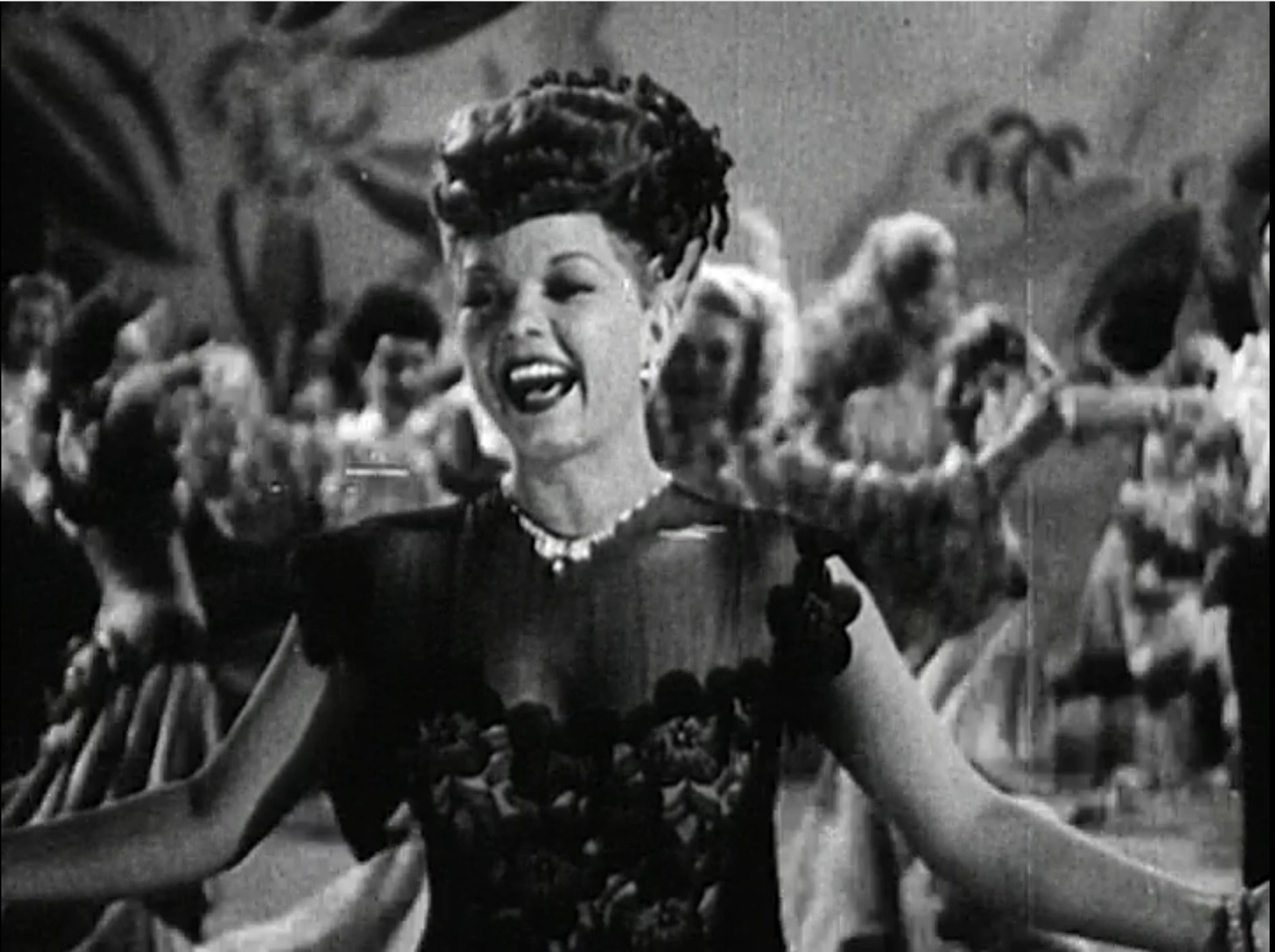
Career Girl might have gotten panned, but it didn’t hurt Frances Langford’s career much, if at all, because in addition to her singing career, she also starred in the highly successful radio show, The Bickersons, in the late nineteen-forties. Career Girl is now, not surprisingly, in the public domain, and even today it’s hard not to use the word, “weak” when describing it even if it does have its good moments. It’s mildly enjoyable, and it’s a nineteen-forties time capsule, and that’s not a bad thing on occasion.
Coming up in August (click for more info):

All right, another post is coming out tomorrow. Thanks for reading, all, and I hope to see you then…
Career Girl is available on DVD from Amazon and is free to stream for Prime customers.
~Purchases made via Amazon Affiliate links found on this site help support Taking Up Room at no extra cost to you.~
If you’re enjoying what you see on Taking Up Room, please subscribe to my Substack page, where you’ll find both free and paid subscriber-only reviews of mostly new and newish movies, documentaries, and shows. I publish every Wednesday and Saturday.
Bibliography
Parish, James Robert and Michael R. Pitts. Hollywood Songsters: Garland to O’Connor, Volume 2. Milton Park, Oxfordshire, England: Routledge, 2003.
 Taking Up Room