
What’s up, Doc?
As the cliche says, “Money makes the mare go.” That metaphorical mare is often a picky eater, especially when art and money meet, and not even one of the greatest purveyors of the art we call film, Warner Bros., is immune. Judy Garland’s 1954 movie, A Star Is Born is at once one of Warner Bros.’ greatest films and one of its greatest missteps.
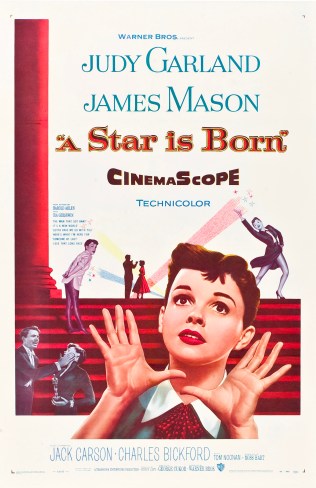
The movie opens at a benefit show at the Shrine Auditorium, where Esther Blodgett (Judy Garland) and Norman Maine (James Mason) are both set to perform. Esther is a singer with an orchestra, and Norman is supposed to make a personal appearance except that he’s drunk out of his mind. He hops onto the back of a cowgirl’s horse, terrorizes some ballerinas, and nips a hat off of an unsuspecting pearly’s head.
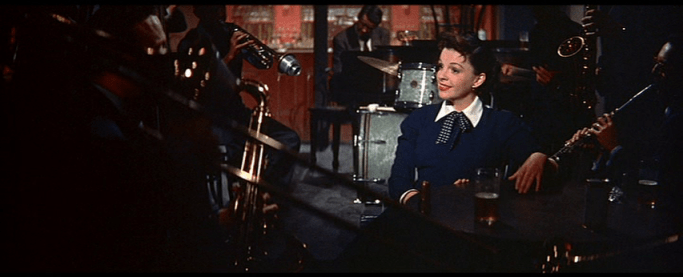
While Esther and her orchestra are giving out on “Gotta Have Me Go With You,” Norman saunters onstage, but what could have been an embarrassing moment turns into a face-saving triumph, thanks to Esther’s quick ad-libbing. Things don’t end there, though. After sleeping his bender off, Norman finds Esther and the band at an after-hours cafe where they’re still playing, only for fun this time. Esther’s a little freaked out by him, but accepts Norman’s offer of a ride back to her apartment. He wants to get her a screen test at his studio because he thinks she has real talent and needs to go for the brass ring.
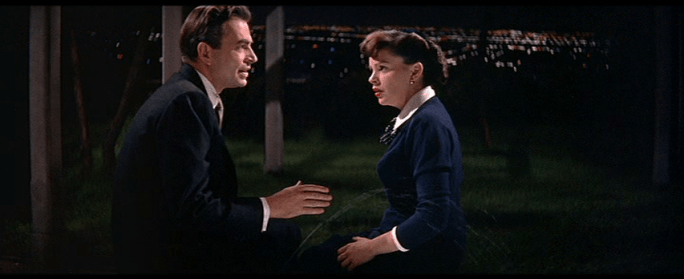
It’s not quite that easy, though. Norman gets roped into filming a movie out in the Pacific, and then gets sick from too much time in the cold water. Meanwhile, Esther has moved out of her apartment into a boardinghouse, where she works at a drive-in while doing bit work in commercials.
As fate would have it, though, Norman and Esther find each other, the screen test happens, and Esther’s star begins to rise, only her name is changed to Vicki Lester. Her first movie is a real success, and she and Norman fall in love, sneaking off to get married by a justice of the peace and buying a comfortable house right on the beach.
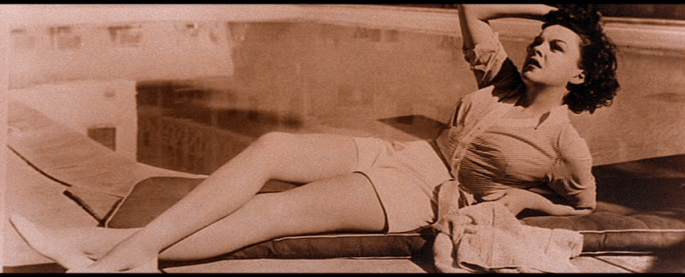
At the same time, though, Norman’s star plummets hard because he’s considered too big of a risk and his movies aren’t profitable anymore. His drinking is still a real problem, despite his promises to stop, and it wears on his and Esther’s marriage, so much so that it may threaten everything Norman wants for Esther.
A Star Is Born marked Judy Garland’s return to the screen after her departure from MGM, and she and her new husband, Sid Luft, wanted everything to be perfect. Among the many familiar names involved, George Cukor was set to direct, Ira Gershwin and Harold Arlen wrote the music, Moss Hart wrote the script, Irene Sharaff was the costumer, and an uncredited Roger Edens supervised some of the musical sequences and arrangements, namely, “Born In A Trunk.” There was also plenty of location shooting, such as at the Shrine Auditorium, the erstwhile Roberts Drive-In, and the Warner Bros. studio itself.
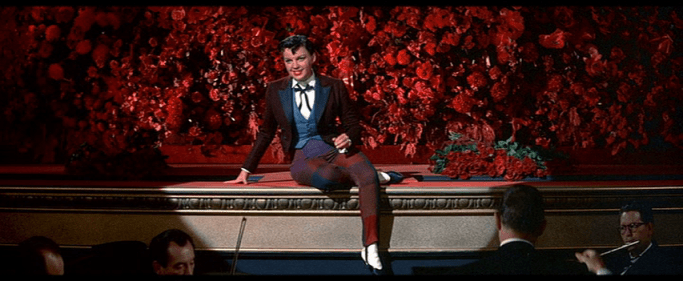
The film took ten months to make at a cost of six million dollars, which was unheard of at that time, and in the end, the running time clocked in at three hours. Shooting started out smoothly, with Judy eagerly coming to the studio and giving it her all, but then her health started to suffer and the stress got to her, causing delays in shooting. The Warners tried to accomodate Judy by having the movie shot at night, but this just added more to the costs because the union workers’ skills were more expensive in the wee sma’s than in the daytime.
In the end, though, despite a mostly favorable critics’ response (read Bosley Crowther’s review here) just under thirty minutes were shaved off of the running time. Some sources place the blame on Harry Warner for the cuts and others on theater owners, but what we do know is that screenwriter Moss Hart was reassured by Jack Warner in a letter that ”in no way did they (the cuts) interfere with the telling of the story.”
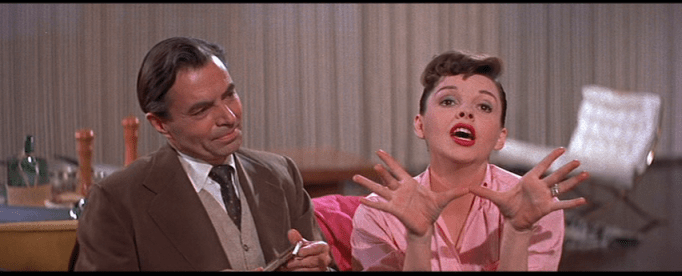
Uh huh, that was a lie, because the studio did more than cut. They committed vivisection, messing up not only the story, but the character development and two of the songs, melting the snipped footage down for its silver content. By way of pouring salt on an already open wound, when the public found out about the cuts made to the film, they stayed away from theaters and it flopped at the box office. Judy and Sid were not only broke, but the studio sued them for the money they had advanced Sid for the production.
Meanwhile, the film they and others had poured so much hard work into had been reduced to a disjointed mess. Cukor later said, “Neither Judy or I could ever look at it again.”
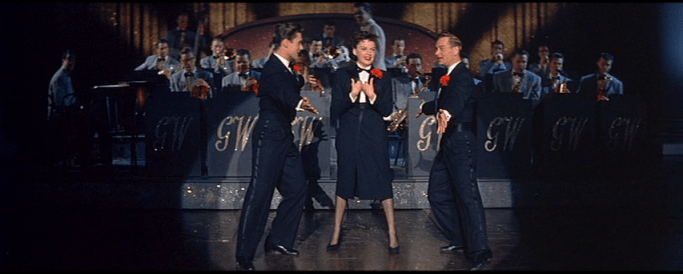
I know the official reasons given for A Star Is Born being cut up the way it was were run-time and profits and all that, but in my opinion it was done out of pure spite. The runtime excuse doesn’t wash, either, seeing as Gone With the Wind runs just under four hours, is still one of the highest-grossing films of all time, and no one has ever wanted to hack it up. Personally, I think Hollywood was collectively mad at Judy for doing what she was able to do best, only in this case they couldn’t control her the way they had before, and that rankled them, because studio execs were used to having full control over every aspect of a star’s life.
Thankfully, most of the lost footage has been restored thanks to historian Ronald Haver, who was given special permission to scour the Warner vaults for any surviving bits. Where Haver couldn’t find footage, he used stills. Thankfully, the entire audio track of the film had also been discovered by an apprentice editor in Warner’s Burbank sound vaults, so between them something passably resembling Cukor and Garland’s original version was cobbled together. The cuts still show, though, because the degraded quality of these snips, all of them outtakes, shows up painfully. Still, film fans everywhere are grateful for the restoration. Too bad most of the movie’s principal players didn’t live to see it.
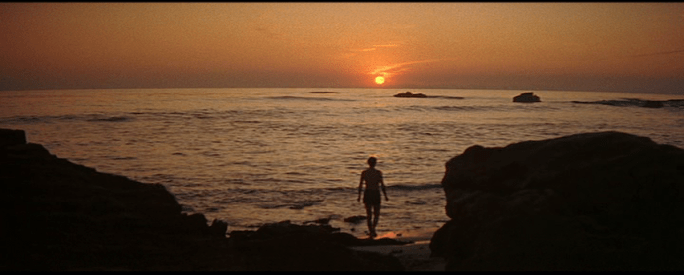
The film itself is still a triumph. It moves quickly, it’s beautifully shot, it’s quintessential Judy in her post-MGM period, and it’s intensely well-drawn. One of the things that struck me about Judy’s performance was how personal the story was to her. She knew what it was like to have makeup artists discussing her so-called flaws right in front of her with varying degrees of tact and consideration and coming out looking like a total stranger. She knew what it was like to see her star rise like Esther Blodgett and then plummet like Norman Maine. She knew what it was like to bury her feelings under a smile as soon as she stepped in front of the cameras. And she knew what it was like to collapse under the weight of a public persona she wasn’t sure if she could live up to.
In the end, though, Judy had the last word.
For more Warner Bros. goodness, please see Constance and Diana at Silver Scenes. Thanks for hosting this, ladies–it was a blast! Thanks for reading, all, and I hope to see you on Tuesday for a new installment of “During World War Two.”
A Star Is Born is available on DVD and Blu-ray from Amazon.
~Purchases made via Amazon Affiliate links found on this site help support Taking Up Room at no extra cost to you.~
If you’re enjoying what you see on Taking Up Room, please subscribe to my Substack page, where you’ll find both free and paid subscriber-only reviews of mostly new and newish movies, documentaries, and shows. I publish every Wednesday and Saturday.
Bibliography
Judy Garland: By Myself. Directed by Susan Lacy, narration by Harris Yulin. Thirteen/WNET, Turner Entertainment and 1515 Productions Limited, 2013.
 Taking Up Room
This is a movie I’ve read a lot about over the years, but still not seen. Your take on it has definitely made me want to see if the library system here happens to have a copy!
LikeLiked by 1 person
Definitely–would love to see what you think of it. 🙂
LikeLike