

How was everyone’s November? In terms of the movies I saw, things went from meh to less than meh to not bad to not too shabby, with a slight dash of What the Heck Did I Just Watch (Looking at you, Freelance). In fairness, though, November’s offerings could have been much, much worse.
For one thing, I tried to review Netflix’s All the Light We Cannot See, only to turn it off about fifteen minutes in because it was so riddled with rookie-level inaccuracies; namely, it has Americans bombing France at night with B-25s in cloud cover. It was the BRITS who did that, guys. Americans always flew in the daytime. And no one flew in cloud cover because they couldn’t fly above it and get their bearings. These planes normally stuck to an altitude of ten thousand feet.
Also, B-25s have two engines, not four. Also, occupied Europe had to observe blackout regulations all through the war, so Marie-Laure wouldn’t have broadcast from a lighted attic with an open window. Did anyone do any research at all when this series was made? Apparently not.
Shame on you, Netflix, but I digress. Without further ado, we’re going to jump in (click on the images for the full reviews)…
What Happens Later

Meg Ryan not only makes her return to the screen after an eight-year absence, but her directorial debut in What Happens Later, about ex-lovers Willa Davis and Bill Davis, who meet up in some Midwestern airport, and, improbably, get snowed in with only themselves and a mysterious (also, slightly creepy) voice on the PA system. They have an entire night to reconnect, hash out their relationship, yell at things and each other, and it all leads…somewhere. Also, the PA system calls for “W. Davis” so often it could be a drinking game. All in all, What Happens Later is one of those movies that wants to be liked, but doesn’t give us much reason to.
Napoleon

Speaking of wanting to be liked, I also saw Ridley Scott’s new Napoleon biopic, a ponderously long and not especially historically accurate misstep. The battle scenes weren’t bad, particularly one that took place on a frozen lake, which added another measure of peril to the proceedings. The scenes between Josephine and Napoleon, on the other hand, well, the best word I can use to describe them is ugh. There’s no passion between the two of them whatsoever because they both want what they want when they want it, and it’s downright creepy sometimes. Napoleon even says, “Nom, nom, nom, nom” to Josephine when he’s feeling randy, as if he’s Cookie Monster in gold braid or something. There are also food fights.
When I saw the film, the older gentleman who was sitting next to me turned to his wife about halfway through and said, “They made Napoleon into a buffoon,” and even though I didn’t hear him officially, I couldn’t help but nod my head in agreement.
Priscilla
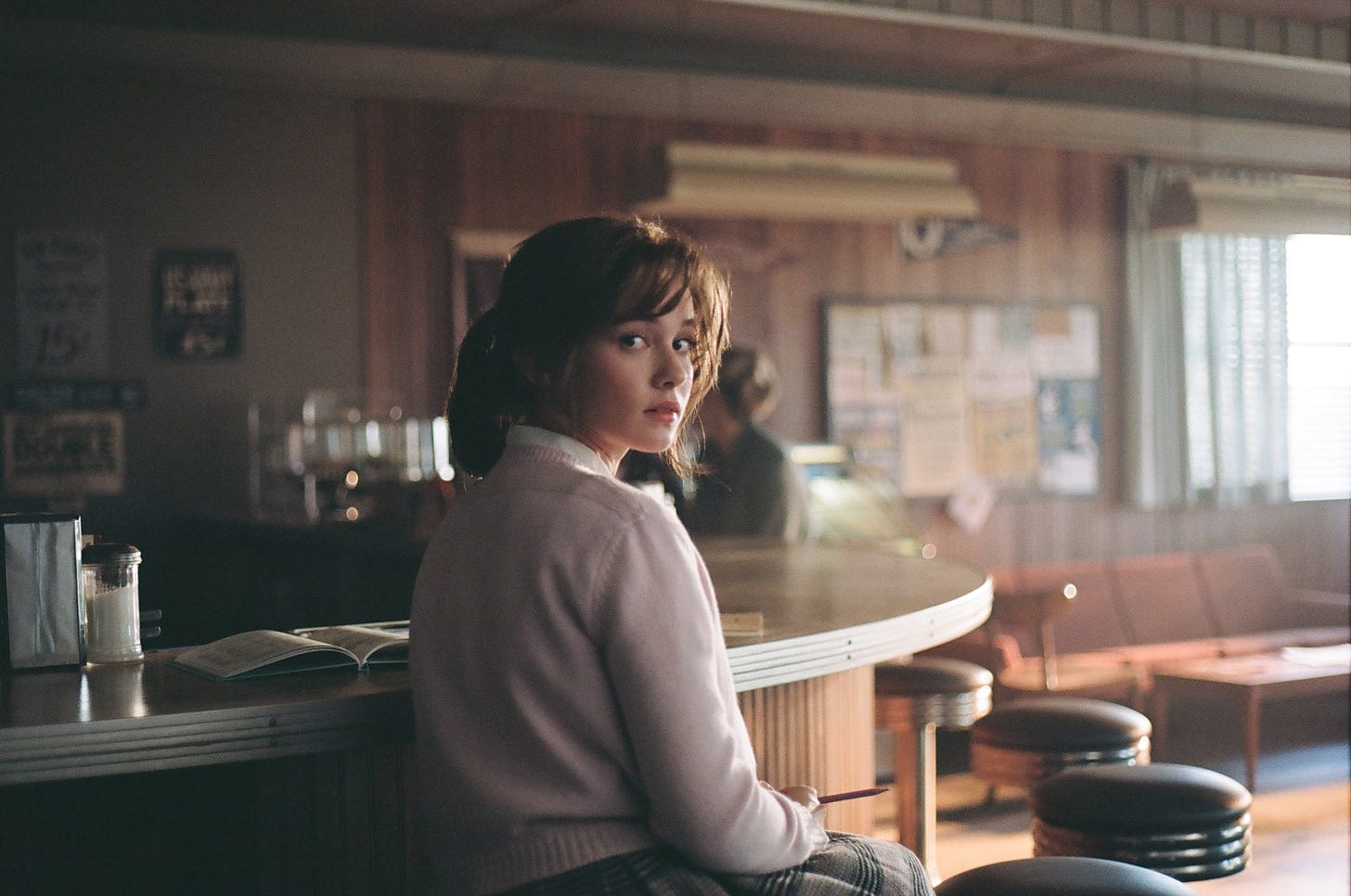
Finally, Priscilla Presley gets to tell her own story…oh, wait, it’s actually not the first time she’s gotten her own biopic or been portrayed onscreen. Sofia Coppola’s new film is based on Priscilla’s 1984 autobiography, Elvis and Me, and Coppola kinda gets things right. I say, “kinda” because the film had a TV movie feel and sports several glaring inaccuracies, such as Priscilla’s high school class in 1959 Germany discussing the Food Pyramid.
Coppola’s movies tend to be hit or miss, and this one was both. Cailee Spaeny puts in a star-making performance as Priscilla, and Jacob Elordi throws the inevitable Austin Butler comparisons to the wind to become his own Elvis, but there was so much more they could have done here.
The Marsh King’s Daughter
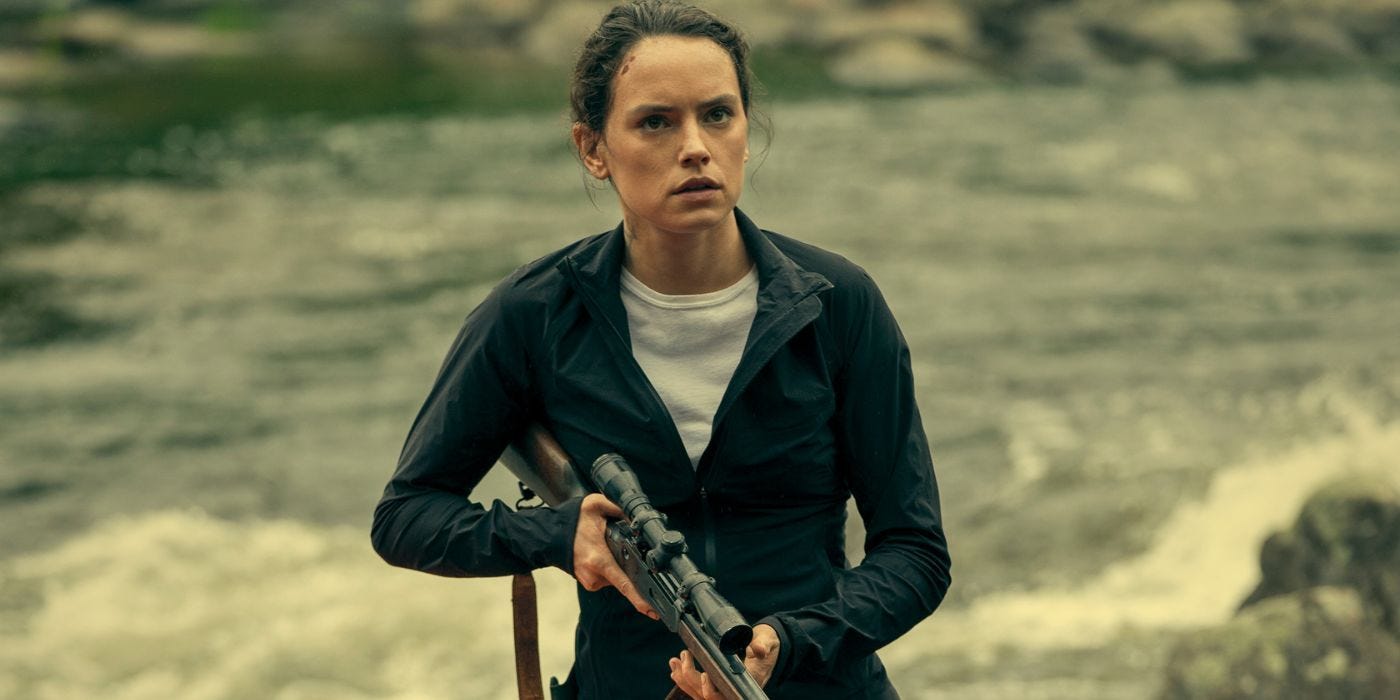
I know this movie has gotten kind of mixed reviews, and a lot depends on prior familiarity with the original novel, but I liked it. It was nice seeing Daisy Ridley in a non-Star Wars role, and her character, Helena was a good fit for her, because Helena is supposed to be cautious and slightly remote since she doesn’t know who to trust. And in yet another nod to the Star Wars universe, Ben Mendehlson plays Helena’s serial killer dad, colloquially known as the Marsh King. This film probably won’t win any awards, but it looks gorgeous and story-wise it doesn’t do too badly.
Mr. Dressup: The Magic of Make-Believe
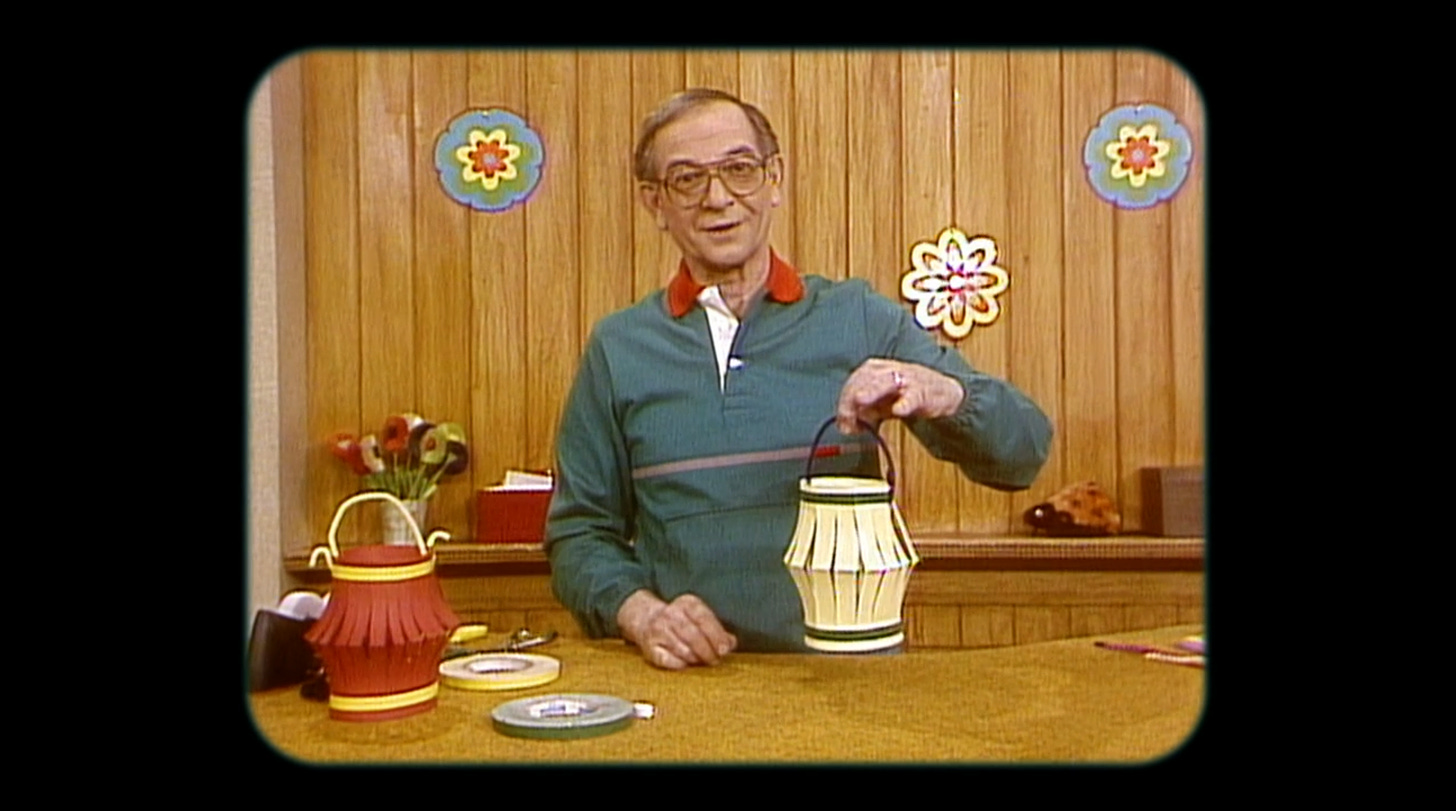
This was, by far, my favorite thing I saw in November and a great way to end the month. Mr. Dressup was children’s program that ran in Canada from 1967 until 1996, and it’s completely natural to point out the similarities between it and Mr. Rogers. There’s a good reason for that, though–Mr. Dressup, whose real name was Ernie Coombs, was good friends with Fred Rogers, and even worked as his assistant in the early nineteen-sixties. The Magic of Make-Believe paints a loving picture of a kindly man who is beloved by Canadians of several generations.
What movies did you see this month? Leave a comment below! Thanks for reading, all, and I hope to see you a week from today with another review…
If you’re enjoying what you see on Taking Up Room, please subscribe to my Substack page, where you’ll find both free and paid subscriber-only reviews of mostly new and newish movies, documentaries, and shows. I publish every Wednesday and Saturday.
 Taking Up Room