
It’s very common knowledge that C.S. Lewis was a brilliant author and professor, but what isn’t often talked about is his poetry, probably because a lot of people over the years haven’t really liked it, not to mention Lewis’s other works, particularly Narnia, cast big, wide shadows. Another possible reason for the avoidance might be due to the idea of poetry being so out of left-field for a guy like Lewis, who avoided frippery despite being a lifelong student and teacher of fantasy, mythology and courtly love. Poems, at least writing them, might seem too fussy for him.
As a fellow English degree holder and writer, though, I completely understand Lewis’s flights into the world of verse, and it seems that just about every writer tries this at one time or another. When one is immersed in the written word and reads the glorious lines of such luminaries as Shakespeare and Tennyson, it’s tempting to take a stab at writing poetry and see whether or not one can hack it.
Well, that and students often take at least one poetry class for their course requirements, so the fling is inevitable.
And yeah, I’ve tried, too, from the time I was around ten. Then I met a guy at university who could have given W.B. Yeats a run for his money and happily shelved my poetry quill, although I still love reading verse. Anyway…
Lewis had an active life in the poetry world, publishing many of his works during his academic career. Since there’s way too much to cover in one blog article, we’ll just look at some of the highlights.
C.S. Lewis published his first poem, “Quam Bene Saturno” in 1913 at the age of fourteen, but it wasn’t until after the First World War that the poetry bug bit him hard. In 1919 Lewis published Spirits In Bondage: A Cycle of Lyrics under the name, Clive Hamilton (Hamilton was Lewis’s mother’s maiden name.), featuring poetry he had written while serving in the Army.
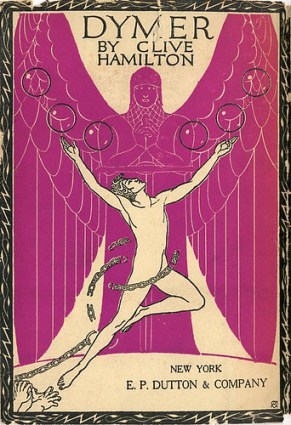
His juggernaut, though, was the epic poem, Dymer, about a young man who struggles with love and lust that brings to mind such epic poets as Homer and Sophocles. The story initially takes place in what’s called “The Perfect City,” where everything, down to who sleeps with whom, is strictly controlled. Dymer rebels at the age of nineteen, killing his teacher and then going out into the wilderness, where he strips naked and revels in creek water flowing over his bare toes. After that he begins a lonely quest for fulfillment and understanding of real feeling. When Dymer comes upon a sumptuously laden table in the forest, he can’t believe he can eat whatever he wants, as opposed to every bite he takes being weighed and doled out by an authority figure in the name of science.
According to Lewis’s diary, he began the poem on April 2, 1922, to be written in “rhyme royal,” and would work on it for the next four years, bouncing ideas off of his professors and colleagues. Dymer would be published in 1926, also under the name, “Clive Hamilton,” and it essentially tanked with the public, possibly because it was too esoteric for the average reader, not to mention free verse was trendy and long form poetry was not.

Perusing it now (listen to an audio version here), it’s not unlike Brave New World by Aldous Huxley, in which the wilderness-dweller has broken away from a society that has been taught almost from birth to seek sexual pleasure. Dymer is almost shockingly racy for those who are familiar with Narnia-era Lewis, and as the years went by he seemed a little embarrassed by it and wouldn’t talk about it. When a new edition of the poem was published in 1950, Lewis said in the intro:
“At its original appearance in 1926, Dymer, like many better books, found some good reviews and almost no readers. The idea of disturbing its repose in the grave now comes from its publishers, not from me, but I have reason for wishing to be present at the exhumation. Nearly a quarter of a century has gone since I wrote it, and in that time things have changed both within me and round me; my old poem might be misunderstood by those who now read it for the first time.”
While most of Lewis’s poems dealt with themes found in literature and mythology, (another of his narrative poems is about Launcelot) we can also find references to his most famous prose works, The Chronicles of Narnia and The Screwtape Letters, which, by extension, show his progression from atheism to deep faith.
In “Wormwood,” Lewis, while writing in character as Screwtape, seems afraid of the abyss he’s peering into, because he goes from Screwtape calling Wormwood an “alternative to God,” and hell being the only real thing while the rest is an illusion, to ending the poem as himself, with “Lord, open not too often my weak eyes to this.”
However, my favorite poem of Lewis’s is one in which he goes outside of his usual subject matter to talk about current events. “On the Atomic Bomb” was published in The Spectator on December 28, 1945. It begins with the lines:
So; you have found an engine that even angels
Might dread. The world plunges,
Shies, snorts, and curvets like a horse in danger.
In the next stanzas, Lewis both acknowledged the uncertainty of the new era but also the certainty. Every human is destined to die; every human is destined to feel pain. It’s a grim business either way, but life goes on. However, he ends thusly:
As if your puny gadget
Could dodge the terrrible logic
Of history! No; the tragic
Road will go on, new generations trudge it.
—–
Narrow and long it stretches,
Wretched for one who marches
Eyes front. He never catches
A glimpse of the fields on each side, the happy orchards. (Poems, pg. 65)
In other words, while the world we live in might be scary and uncertain, beauty and hope always exist.

Poetry might not be the first thing one thinks of when C.S. Lewis comes to mind, if poetry comes to mind at all, but reading it provides an unique opportunity to get inside Lewis’s head in a way his prose never really allows for, and that’s a very enlightening thing, indeed.
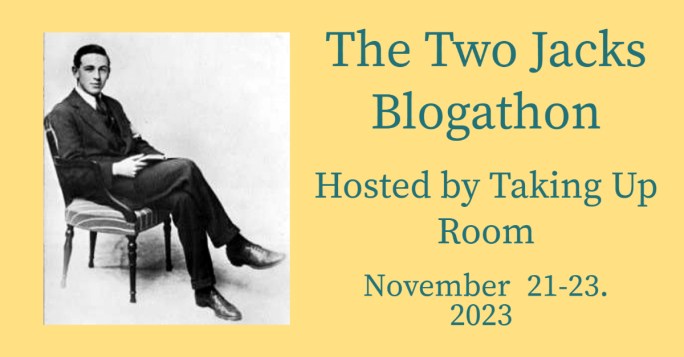
For more of the Two Jacks Blogathon, please click here. Thanks for reading, all, and I hope to see you tomorrow for the blogathon wrap-up.
Poems, Narrative Poems and All My Road Before Me are available to own from Amazon.
~Purchases made via Amazon Affiliate links found on this site help support Taking Up Room at no extra cost to you.~
If you’re enjoying what you see on Taking Up Room, please subscribe to my Substack page, where you’ll find both free and paid subscriber-only reviews of mostly new and newish movies, documentaries, and shows. I publish every Wednesday and Saturday.
Bibliography
Lewis, Clive Staples. All My Road Before Me: The Diary of C.S. Lewis, 1922-1927. New York: Harcourt Brace & Company, 1991.
Lewis, Clive Staples. Narrative Poems. New York: Harcourt Brace & Company, 1969.
Lewis, Clive Staples. Poems. New York: Harcourt Brace & Company, 1964, copyright renewed 1992.
Sayer, George. “C. S. Lewis’s ‘Dymer.’” VII: Journal of the Marion E. Wade Center, vol. 1, 1980, pp. 94–116. JSTOR. Accessed 24 Nov. 2023.
 Taking Up Room
Thanks for sharing some of C.S. Lewis’s poetry – it really “spoke” to me, as they say.
LikeLiked by 1 person
That’s great, Ruth–I’m so glad. 🙂
LikeLike