
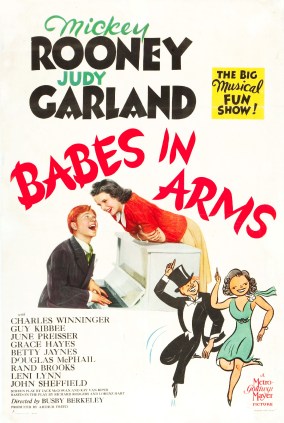
We all know that before there was Rodgers and Hammerstein there was Rodgers and Hart, and their 1937 hit, Babes In Arms became Judy Garland and Mickey Rooney’s third movie and first musical together, not to mention the first of their famous barnyard musicals. It was also Arthur Freed’s first official producer credit and Busby Berkeley’s first director credit.
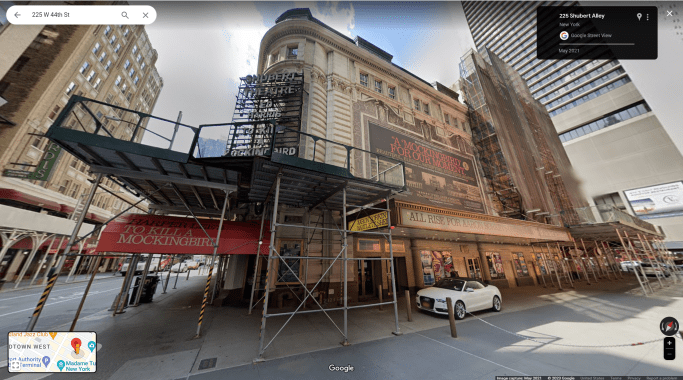
After a two-week trial in Boston, the musical opened on April 14, 1937 at the Shubert Theater in New York City, where it ran for 289 performances, and like many successful properties, it wasn’t long before Hollywood came calling.
Since the movie is what most people are familiar with, here’s a sorta-quick plot summary: Mickey Moran (Mickey Rooney) and his friends are the kids of vaudeville players who live on Long Island, New York. The story starts in 1921 with Mickey’s birth, when Mickey’s dad, Joe (Charles Winninger) revels in his comfortable life as a big-time vaudevillian. His friend, Charlie Maddox (Henry Hull) is less optimistic because there is always the looming spectre of change.
When vaudeville basically goes belly-up a few years after the advent of the talking picture, the old-timers put a tour together to try to revive it. The night they’re at the Moran abode working out their routines, Mickey and the kids show up and prove they have their own singing and dancing chops, namely, Patsy Barton sings swing and Mickey’s sister, Molly (Betty Jaynes) is a fabulous opera singer. Mickey writes songs and has sold one to a publisher. Some of the kids are great dancers.
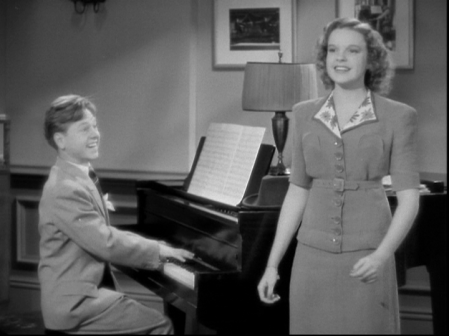
However, the grownups aren’t interested in taking their kids along, and Mickey decides to write a show, hoping that New York producers will come down to see it. Money is, of course, a problem, but the troupe finds a benefactor in Rosalie “Baby” Essex (June Preisser), a former child star, who puts up the money on the condition that she can play the lead role that Mickey wrote for Patsy.
The kids have other troubles as well, as a local woman, Martha Steele (Margaret Hamilton) thinks the kids should be sent to a work farm because their families can’t provide for them. Naturally, none of it ends too unhappily because musical, but there’s some jealousy and misunderstanding on the way.
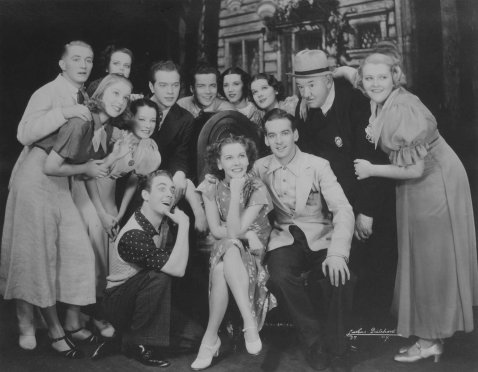
How different is the musical from the movie? Errrrr…quite a bit. The original show is much more political, for one thing. Incidentally, it was choreographed by George Balanchine and featured the Nicholas Brothers and one Ray MacDonald, as well as his sister, Grace.
Most of the changes made between play and film had to do with the music. All but three of the original songs were given the axe, with “The Lady Is A Tramp” used as an instrumental theme song for Baby Rosalie, and what’s interesting is that most of the cut songs became standards on their own merits.
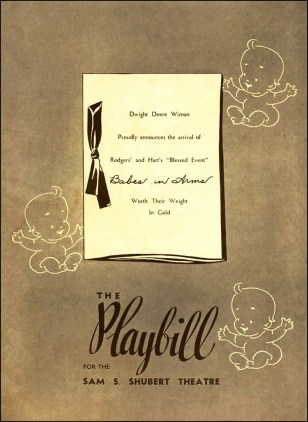
The plot saw plenty of snipping as well. The young hopefuls putting on a show is still very much the impetus of the play, as are the struggling vaudvillian parents and the coming of the talking picture, but in this case the younger characters are already at the work farm and the show is a subplot, with a local theater owner as their adversary instead of the somewhat ambiguous but not entirely unsympathetic Martha Steele. There’s also a lot more intrigue and the characters seem slightly older. One of them, Billie, is a rail-rider who tried and failed to start an acting career in Hollywood, but who is now ready to put down roots. Also, the show’s southern benefactor demands two black performers be removed from the company (Read a fuller plot synopsis here).
What did we get on the big screen? Among other things, there’s Mickey Rooney imitating Clark Gable, or more precisely, Clark Gable with a cold, Mickey Rooney as a very jumpy Lionel Barrymore, plus an uncomfortably dated minstral show. We also get a lot of name-dropping of MGM stars such as Norma Shearer and Garbo in the soaring “God’s Country” number. Most noticeably, we hear quite a few Arthur Freed perennials, such as “You Are My Lucky Star” and “I Cried For You,” plus a new song, “Good Morning,” which was later re-used in Singin’ In the Rain.
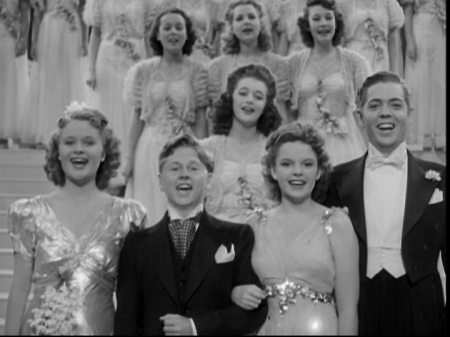
Another difference, and a painful one for audiences in the nineteen-forties, was a lengthy tribute to Franklin Delano Roosevelt and Eleanor Roosevelt’s “My Day” column during the finale. This sequence was cut in 1948, three years after FDR’s death, not to be discovered and reinserted into the film until decades later. Even on today’s pristine-looking DVD restorations the quality of that part of the number is noticeably different than the rest of the movie due to the one surviving print being from a 16mm film.
Babes In Arms made the top twenty movies of 1939, bringing in $9.2 million dollars at the box office, or just over three hundred million in today’s money, which is impressive in a year crowded with hit after hit after hit. The film was also adapted for the Gulf Screen Guild Theater, which broadcast on November 9, 1941.
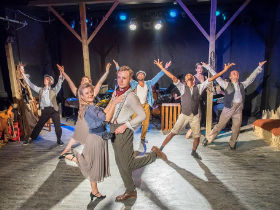
In the years since, Babes In Arms has been revived numerous times both off-Broadway and on-Broadway, but most often in community theater, and most often the version performed is the updated Oppenheimer version from the 1950s. As in George, of course, not J. Robert. This is probably a good thing, because the original is so firmly bound in the culture of the nineteen-thirties, with vaudeville, talking pictures, and the Great Depression. Even then, it’s often looked at as dated, but that doesn’t stop people from enjoying Rodgers and Hart’s fine work.
Another post is on the way tomorrow. Thanks for reading, all, and I hope to see you then…
Babes In Arms is available on DVD from Amazon. The 1989 version of the original Broadway score is available here.
~Purchases made via Amazon Affiliate links found on this site help support Taking Up Room at no extra cost to you.~
If you’re enjoying what you see on Taking Up Room, please look for additional content on Substack, where you’ll find both free and subscriber-only articles. I publish every Wednesday and Saturday.
 Taking Up Room
One thought on “Stage To Screen: Babes In Arms”