

As we’ve talked about on here before, it’s pretty easy to forget that television was in its very early stages of development during the nineteen-thirties. And since it was such an unknown quantity, why not make a movie about it?
Enter 1935’s Murder By Television, starring one typecast former vampire, Hattie McDaniel, and a death ray. Intriguing, right?
Yeah, not so much.
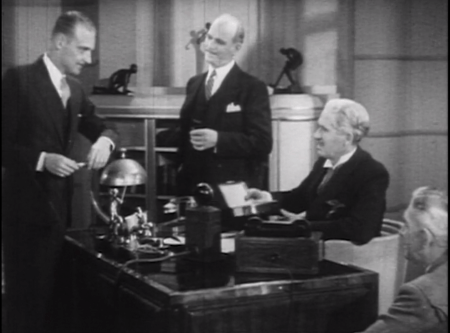
The movie opens with a television executive, Hammond (Henry Hall) checking to see if Professor James Houghland (Charles Hill Mailes) has been located yet. Houghland has invented what we would nowadays call live broadcasting, and the television companies are desperate to buy the invention off of him, but Houghland refuses even though the offer is up to an enormous five million dollars.
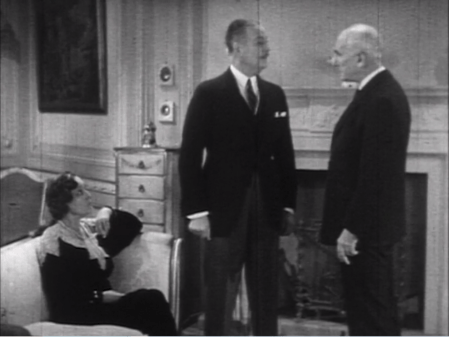
So, the execs try a different tact. They bring in millionaire Richard Grayson (George Meeker) to get Houghland’s invention for them, by hook or by crook, and the less that they know, the better.
Houghland stages a test of his invention at his house one night, with several prominent figures present, among them Grayson, Dr. Henry M. Scofield (Huntley Gordon) and Arthur Perry (Bela Lugosi). The assembled audience watches rapturously as Houghland’s daughter, June (June Collyer) plays the piano and Houghland himself introduces her. To their horror, however, Houghland clutches at his throat and falls over dead.
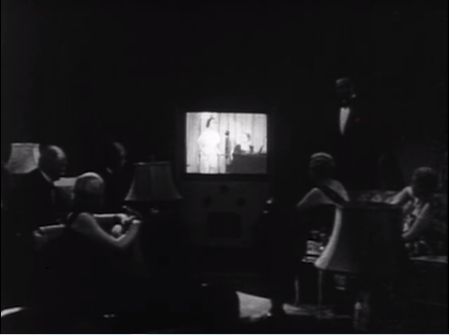
Naturally, the house goes on lockdown, with everyone speculating nervously and waiting for the mystery to play out in one way or another, because they all want to know who killed Houghland and why. Police Chief Nelson (Henry Mowbray) is called and the investigation begins, although it feels like throwing pasta at the wall to see what sticks.
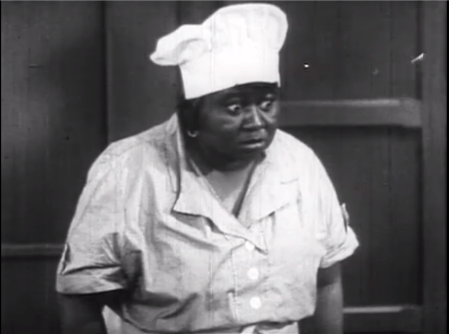
While the house might seem locked down, a variety of characters come in and out of the place pretty much at will, from the police chief to a mysterious prowler household help Ah Ling (Allen Jung) and Isabella (Hattie McDaniel) catch crawling through a window. One by one each suspect is eliminated in one way or another, and only Perry seems to be making any kind of headway in solving the mystery. He seems to have some mysterious advantage that isn’t quite explained, and is apparently capable of rising from the dead, which freaks out the help, not to mention everyone else.
While these actions might seem a bit vampiric, there’s an excellent explanation, and none of it is supernatural or occultish. There’s more to Arthur Perry than meets the eye, but I won’t ruin it because the film deserves at least that much.
I had to watch Murder By Television three times because there was nothing memorable or interesting in it, not to mention, as some have pointed out, a lot of the actors look alike. The dialogue is really clunky. The plot is convoluted; there’s a dark figure in a hat peering in the windows in several scenes but this is never explained, and some of the dialogue is repulsive in its racism. Isabella was awfully subdued and we don’t see much of the winning sassiness McDaniel was so known for.
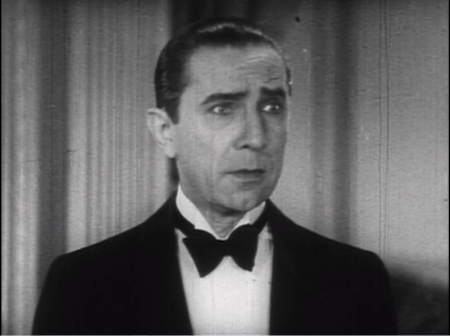
Most awkward of all, Ah Ling had to lay the “Honorable Master” stuff on pretty thickly. I guess this trope wasn’t exactly appreciated in the thirties any more than it is today because later films like Something To Sing About not only made fun of it but called attention to how degrading it was. It looks even more substandard almost ninety years later.
Oh, and Dr. Scofield swears up and down in one scene that phrenology is a legitimate science and he’s going to use it to help find the murderer. It’s pretty laughable even in a movie released in 1935 because that infamous quasi-quackery had fallen out of favor ninety years previously, and indeed, Scofield’s readings of each guest turn out to be inaccurate.
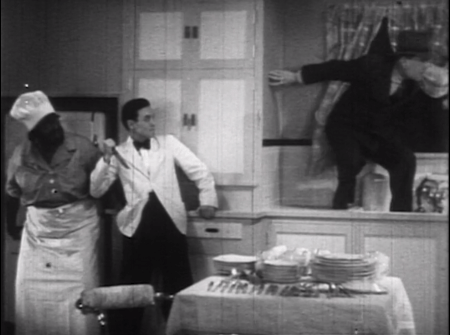
The worst part of the movie is the flow. It’s awfully choppy and sloppy in terms of continuity and story arc, and while some of this can be attributed to the movie transfer being unrestored, it’s hard to tell if we’re looking at wipe cuts or just severely degraded film. Or maybe someone in a cape is floating past, which wouldn’t be inappropriate for a Bela Lugosi movie.
Speaking of Bela Lugosi, my heart goes out to him–the poor man was a decent actor and seemed to be very nice, but he was so typecast. For the rest of his life following the Horace Liveright stage production of Dracula and later the 1931 Universal film, people looked at him and saw Dracula. I briefly fell into that trap as well; there’s a scene in Murder By Television when Perry is lying on the floor and I couldn’t help thinking of Dracula lying in his coffin. Maybe it was the tux that triggered it. Plus, his smile read Dracula to me, even if his character was sympathetic.
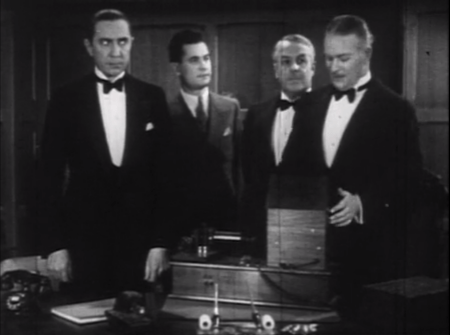
Either way, Lugosi tried so hard in Murder By Television, but something about his performance seemed wooden. To be fair, though, I don’t think James Cagney or Cary Grant could have saved the movie.
The only thing good about Murder By Television was seeing what very early television looked like, or at least the way the movie portrays early television. It’s interesting that the characters in the movie were already very aware that television wasn’t going to be a mere passing fad. Whoever was in control of the technology would have a truly wonderous golden goose on their hands, which would have been true in real life and in the movie.
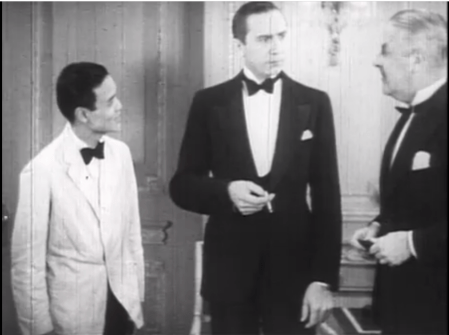
Other than that, no one is going to miss anything if they scroll past Murder By Television. As the guys on the Rerez YouTube channel say, “It’s. Just. Bad.”
Another post is coming up on Monday. Thanks for reading, all…
Murder By Television is available on DVD from Amazon, as well as free to stream for Prime customers.
~Purchases made via Amazon Affiliate links found on this site help support Taking Up Room at no extra cost to you.~
If you’re enjoying what you see on Taking Up Room, please look for additional content on Substack, where you’ll find both free and subscriber-only articles. I publish every Wednesday and Saturday.
 Taking Up Room