
During the break, I took a look at my bookshelves and was struck by how many novelty books I have. You know, the kind of volumes you find in college bookstores or souvenir shops. They’re the books you didn’t know you wanted, and they serve no discernable purpose besides pulling readers out of the everyday. I don’t know how long the series will last, but I guarantee it’ll be unusual. So, let’s go…
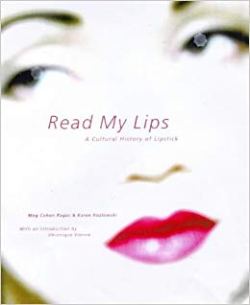
Lipstick is ubiquitous to makeup. Most women wear some form of it. When I had money to spend, I was a lipstick junkie. Who else can relate to this? I still like lipstick. and I love a nice rosy nude, but right now I mostly look and not touch.
(Speaking of looking, here’s Safiya Nygaard melting bags and bags of Sephora lipsticks. It’s one of my favorite videos of 2018.
But I digress.)
I bought 1998’s Read My Lips: A Cultural History of Lipstick at my college bookstore. Co-written by Meg Cohen Ragas and Karen Koslowski, it packs a lot of lippy into one-hundred twenty pages and is a fun, visually stimulating read. The authors don’t just cover the history and cultural phenemenon that is lipstick, but the wide, wide world of selling and manufacturing it.

The message of the book is clear: Lipstick is an instrument of power and individuality. It’s so specific to those who wear it that the FBI keeps every shade of lipstick on file. It can be come-hither or signal untouchability. Or it can be used for more overt purposes. Elizabeth Taylor’s Gloria in Butterfield 8 used it to write “No Sale” on the mirror after waking up in the bed of a married pickup. Even the way women apply their lipstick can be like a fingerprint.
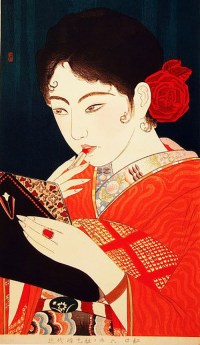
Women have been painting their lips for centuries, of course, and in some centuries aristocratic men have, too. Lipstick has been made of such vibrant materials as kohl, henna, ochre, carmine, crushed ants, beeswax, olive oil, mica, and ground fish scales. Lipstick has gone through varied levels of respectability, when it has either been deemed acceptable for everyone or only acceptable for fast women and actresses. It’s a classic way for women to present themselves as attractive and desirable. Cleopatra, for instance, who wasn’t known for her beauty, was well-versed in the art of charisma, and wielded her lipcolor accordingly.
Read My Lips doesn’t spend much time on lipstick’s earliest history, though, because it wasn’t until the Edwardian era that lipstick became more like what we know today. From that period on, the average woman could wear it without being considered loose. It was also the era in which lipstick was first packaged in tubes instead of pots, only the stick was initially pushed up instead of swiveled.
One factor that helped change public perception of lipstick was the prevalence of motion pictures. Women were inspired by screen luminaries such as Clara Bow, Mary Pickford, and Lilyan Tashman to paint their puckers, because it was all about imitating that allure.
There was another major…ahem…factor in lipstick’s growing popularity: Maksymilian Faktorowicz, better known as Max Factor.
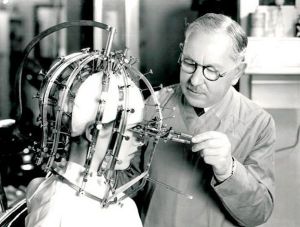
A Polish immigrant to the United States, Max Factor was a beauty guru. Heck, he coined the term, “make-up.” He may not have been making YouTube videos or TV spots, but what we know today as cosmetics wouldn’t exist without people like Factor, and women saw his products as their ticket to movie-worthy faces. He invented lip gloss in 1927 as well as Pan-Cake makeup, which revolutionized both commercial and film cosmetics.
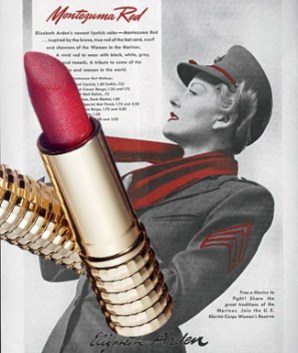
Other gurus of the early twentieth century included Elizabeth Arden, Helena Rubenstein, and the House of Westmore, all of whom made tremendous strides in the development of skin care and beauty aids. In fact, there was an undeclared competition between Arden, Westmore, and Factor for who would rule the screen makeup scene. Spoiler alert: Max Factor won.

And film makeup artists have long been sought out for their advice. One of these was Jack Dawn, the head of MGM’s makeup department, who was regularly featured in fashion magazines. Among his plethora of tips, he recommended women bathe their hands in olive oil before going to bed. One magazine ran a beauty quiz attributed to him. As he was a pioneer of film makeup and prosthetics, he was highly trusted.
The nineteen-fifties are when lipstick really took off as an industry, and its production and marketing are where Read My Lips stays the longest. Lipstick is big, big business. It comes in pots or tubes. The point of the stick can be teardrop-shaped, fingernail-shaped or just a plain slant. It can be bought for as little as a dollar or as much as $14 million. Not kidding. H. Couture’s Beauty Diamond tube takes the cake. They also sold a mascara for $14 million. There’s no online vendor of these products, either–suffice it to say, the H. Couture domain name has been bought, so it’s doubtful if they’re even around anymore.

In the nineteen-fifties, though, lipstick cost about six cents to produce and there were roughly four hundred brands on the market. As time went on, colors started to become more diverse, with oranges and fuschias joining the party, as opposed to the variations on red and pink. Nowadays, of course, we have everything from the classics to browns to black to bright colors, and there’s an anything-goes philosophy as to which shades women gravitate to.
The nineteen-fifties brought another change to how lipstick was and is packaged. The names of the shades became more creative and less on-point in terms of describing each color. Revlon was one of the leaders in this, with names like “Cherries In the Snow” or “Fire and Ice,” both of which are still produced today. Companies such as BeneFit and Hard Candy got dangerous too, going for the even more playful monikers, “But, Officer,” and “Schizo,” respectively.

The book is also chock full of side-bars, including one of makeup artists telling what lipstick means to them, how they wear it, and what it does for them. Annemarie Iverson and Linda Wells both buy several tubes of the same shade so they always have one with them. Jean Godfrey-June replaces her shades as new ones catch her eye. Another sidetrip details why red is such a powerful color for lips and what it takes to wear it successfully. Overall, the book moves quickly and keeps the interest level high, with intelligent, deft observations.
Read My Lips is kind of like watching The Birds, only with makeup, because whoever reads it may never look at a tube of lipstick the same way ever again. Or, like me, they’ll want to run, not walk, to the nearest Sephora.
Thanks for reading, and check back here Saturday, when we dip into Crystal’s Made In 1938 Blogathon. Hope to see you then…
Bibliography
Koslowski, Karen, and Meg Cohen Ragas. Read My Lips: A Cultural History of Lipstick. San Francisco: Chronicle Books, 1998.
Scarfone, Jay, and William Stillman. The Wizardry of Oz: The Artistry and Magic of the 1939 M-G-M Classic. New York: Gramercy Books, 1999.
 Taking Up Room